Best time to dive Alor
Remote reefs with strong currents and cold upwellings: fields of anemones, pristine hard coral and muck diving in Kalabahi Bay.
At a glance
- Best months
- About April to November, in the dry season
- Water
- 22–29°CAbout 26–29°C most of the year, but upwellings can drop it to 22°C or lower. 5 mm and a hoodWetsuit month by month →
- Visibility
- 15–35 m
- Current
- StrongOften strong in the Pantar Strait; some sites are only dived at slack tide
- Certification
- AdvancedMinimum Advanced
- How you dive
- Land-based or liveaboard
When to go
About April to November, in the dry season; the coldest upwellings usually come around August to October.
- JanuaryOff seasonWater 28–29°CRainy
Wet season; many operators closed.
- FebruaryOff seasonWater 28–29°CRainy
Wet season; rough seas.
- MarchGoodBest for: Reefs and fish life, Macro and crittersWater 28–29°CSome rain
Rains easing; some operators reopen.
- AprilPeak seasonBest for: Reefs and fish lifeWater 27–28°CDry
Season starts; warm water and clear seas.
- MayPeak seasonBest for: Reefs and fish lifeWater 27–28°CDry
Good conditions. A good month.
- JunePeak seasonBest for: Reefs and fish lifeWater 26–28°CDry
Dry season; first cold upwellings.
- JulyPeak seasonBest for: Reefs and fish lifeWater 25–27°CDry
Cooler water at times; clear.
- AugustPeak seasonBest for: Reefs and fish lifeWater 23–27°CDry
Cold upwellings likely; bring 5 mm and a hood.
- SeptemberPeak seasonBest for: Reefs and fish lifeWater 22–27°CDry
Coldest upwellings; very clear water.
- OctoberPeak seasonBest for: Reefs and fish lifeWater 22–27°CDry
Cold patches; good visibility.
- NovemberGoodBest for: Reefs and fish life, Macro and crittersWater 26–28°CSome rain
Water warms; season ends late in the month.
- DecemberGoodBest for: Reefs and fish life, Macro and crittersWater 27–29°CRainy
Rains begin; fewer trips.
What makes each month
Each thing worth diving here is rated on its own, month by month: its own season first, then held back a step when the weather is poor or the water is unusually cold for this place. The calendar above takes the best of them. Cold only counts against a month when the highlight does not come with it, so a macro site is never judged by manta-and-visibility rules.
- Reefs and fish life
Clown Valley and the seamounts are clearest in the dry season; August to October upwellings bring the best visibility and patches of 22°C water.
- Macro and critters
Muck diving in Kalabahi Bay whenever operators are open; our sources show no seasonal peak.
- Weather and sea
- Water °C292929282827262525252728
Overview
Alor is a group of islands in East Nusa Tenggara, Indonesia, east of Flores and north of Timor. The Pantar Strait between Alor and Pantar is a channel between the Flores Sea and the Savu Sea, so strong currents bring cold, nutrient-rich water onto the reefs.
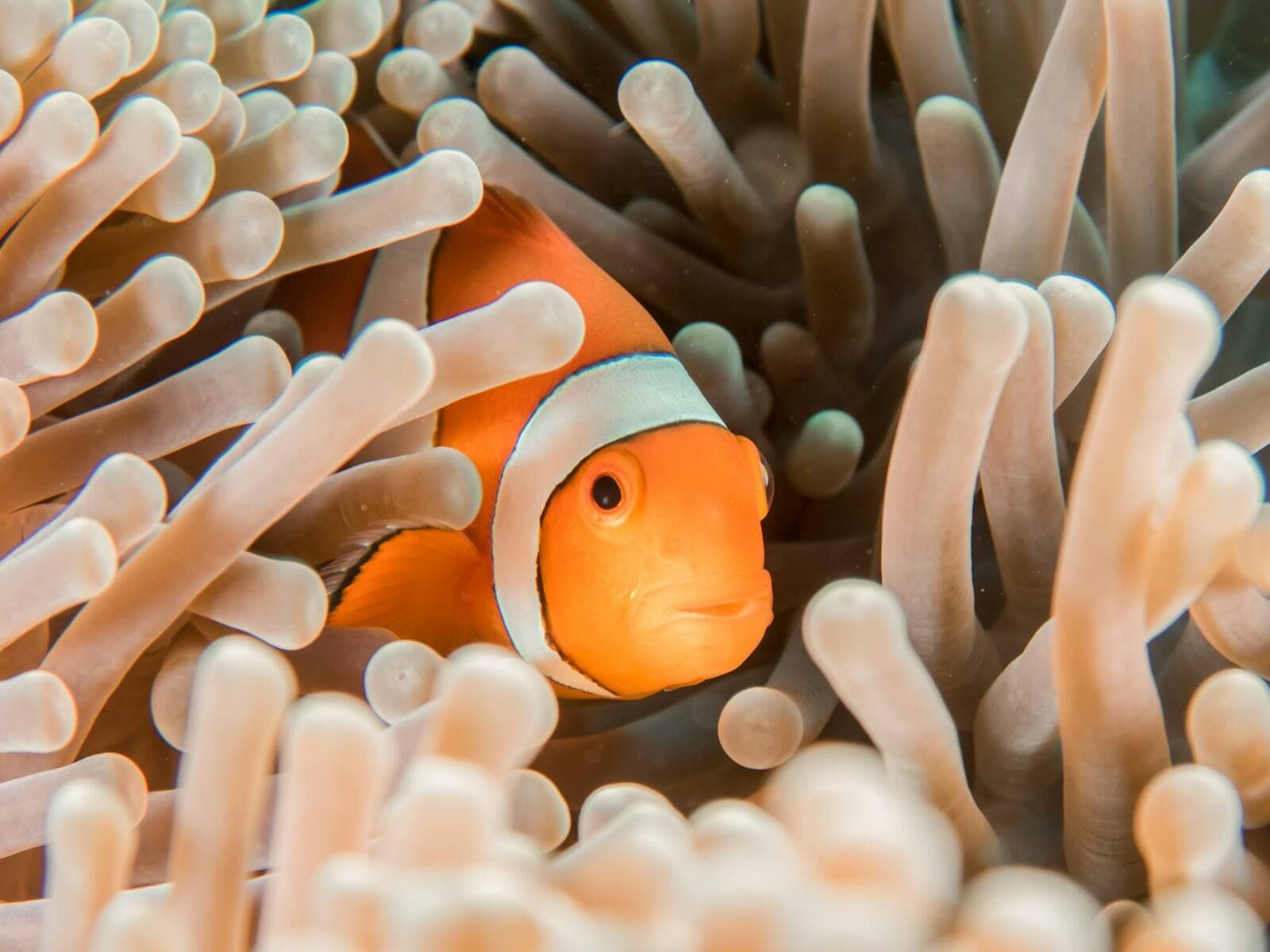
The reefs are among the healthiest in Indonesia, with walls of hard and soft coral and big schools of fish. Clown Valley is known for a slope covered in anemones and anemonefish, and dives there often start at Sharks Galore, where blacktip and grey reef sharks can be seen. Kal's Dream is a seamount with swarms of anthias and the chance of pelagics, but it is only dived when the current allows. In Kalabahi Bay, sites such as Mucky Mosque offer muck diving for frogfish, nudibranchs and other small life.
The water is usually 26–29°C, but upwellings can bring sudden cold water down to about 22°C or lower, especially around August to October. The main season is about April to November. Alor is reached by small dive resorts and by liveaboards, often on routes between Komodo and the Banda Sea.
Getting there and how you dive
Getting there
Fly to Kupang (Timor) or Bali and connect to Alor (Mali Airport) near Kalabahi. Many divers visit on a liveaboard from Flores or Kupang.
Who it suits
Advanced Open Water with experience in current. Operators often ask for around 50 logged dives, and some sites are dropped when the current is too strong.
Dive sites
- Kal's DreamSeamount in the Pantar Strait with swarms of anthias, schooling fish and pelagics; very strong current, dived only at the right tide.
- Clown ValleySlope covered in anemones and anemonefish; often cold.
- Sharks GaloreReef where blacktip and grey reef sharks are often seen; dives often drift on to Clown Valley.
- The CathedralWall with overhangs and swim-throughs; strong current at times.
- The BoardroomWall with healthy hard coral and big fish.
- Mucky MosqueMuck site in Kalabahi Bay with frogfish, nudibranchs and small critters.
- BabylonWall and slope with dense soft coral and reef fish.
- The Edge (Ternate)Soft-coral slope to about 10 m, then a wall that drops far beyond diving depth; current-swept.
- The Arch (Ternate)Large arch at about 20–30 m draped in whip corals and gorgonians. Advanced.
- Pertamina Pier (Kalabahi)Black-sand muck under the fuel pier in Kalabahi Bay; frogfish, octopus and nudibranchs, little current.
- Kepa WallWall off Kepa island with sea fans and reef fish; currents pick up at the corners.
- Pura East WallSteep wall along the east side of Pura with dense soft coral; drift when the current runs.
- Kalabahi Bay muckSheltered black-sand slopes inside Kalabahi Bay; rhinopias, mimic octopus and ghost pipefish at times.
- Buaya IslandReef around a small island in the strait; turtles, schooling fish and colourful hard coral.
- Beang Abang (Pantar)Reef slopes on the Pantar side of the strait; healthy coral and reef sharks on the points.
- Anemone City (Pura)Fields of anemones on a sloping reef off Pura, close to Clown Valley.
What you'll see
Know the risks
- Strong, changeable current and down-currents
- Sudden cold water from upwellings
- Remote: limited medical help and flights
Plan the trip
- Liveaboards
Liveaboards reach sites day boats can't. Compare routes, nights and prices.
How to choose a liveaboard - Dive shops
Where Alor dive centres are based and what to check before you book. Shop list in progress.
How to choose a dive shop - Dates and people
Post your dates and how many of you. Divers who know the boats and shops, or are going the same weeks, reply in the community.
Find divers / ask dates - Dive insurance
Remote sites and strong currents make evacuation costly. Check your policy covers diving to the depth you plan.
Dive accident cover from DAN ↗
Some of these links may earn us a commission at no cost to you. It never changes what we recommend. How this site is funded
Ask other divers
Questions
When is the best time to dive Alor?
About April to November, in the dry season; the coldest upwellings usually come around August to October. Peak months on our calendar: April, May, June, July, August, September, October.
What is the water temperature in Alor?
About 26–29°C most of the year, but upwellings can drop it to 22°C or lower. 5 mm and a hood.
Can Open Water divers dive Alor?
Advanced Open Water with experience in current. Operators often ask for around 50 logged dives, and some sites are dropped when the current is too strong.
How strong is the current in Alor?
Often strong in the Pantar Strait; some sites are only dived at slack tide.
What should divers watch out for in Alor?
Strong, changeable current and down-currents. Sudden cold water from upwellings. Remote: limited medical help and flights.
Sources
- Zublu: Alor
- Dive The World: Alor liveaboard diving
- Underwater Asia: Alor dive guide
- Asia Dive Site: Alor
- Indonesia Travel: Dive Alor's 5 superb dive spots
- Zublu: Alor's top dive sites
Last reviewed 2026-11. Where sources disagree we use the more conservative range.