Anilao
Nudibranchs, frogfish and pygmy seahorses a short drive from Manila.
At a glance
- Best months
- November to May
- Water
- 23–29°CAbout 23–26°C from January to March, 27–29°C later in the year. 3 mm in summer, 5 mm in the cool months
- Visibility
- 9–25 m
- Current
- ModerateMostly mild at the macro sites; can be strong at exposed points such as Beatrice Rock and Mainit Point
- Certification
- AdvancedSome sites possible for Open Water
- How you dive
- Land-based
When to go
November to May; January to May usually has the least storm risk.
Overview
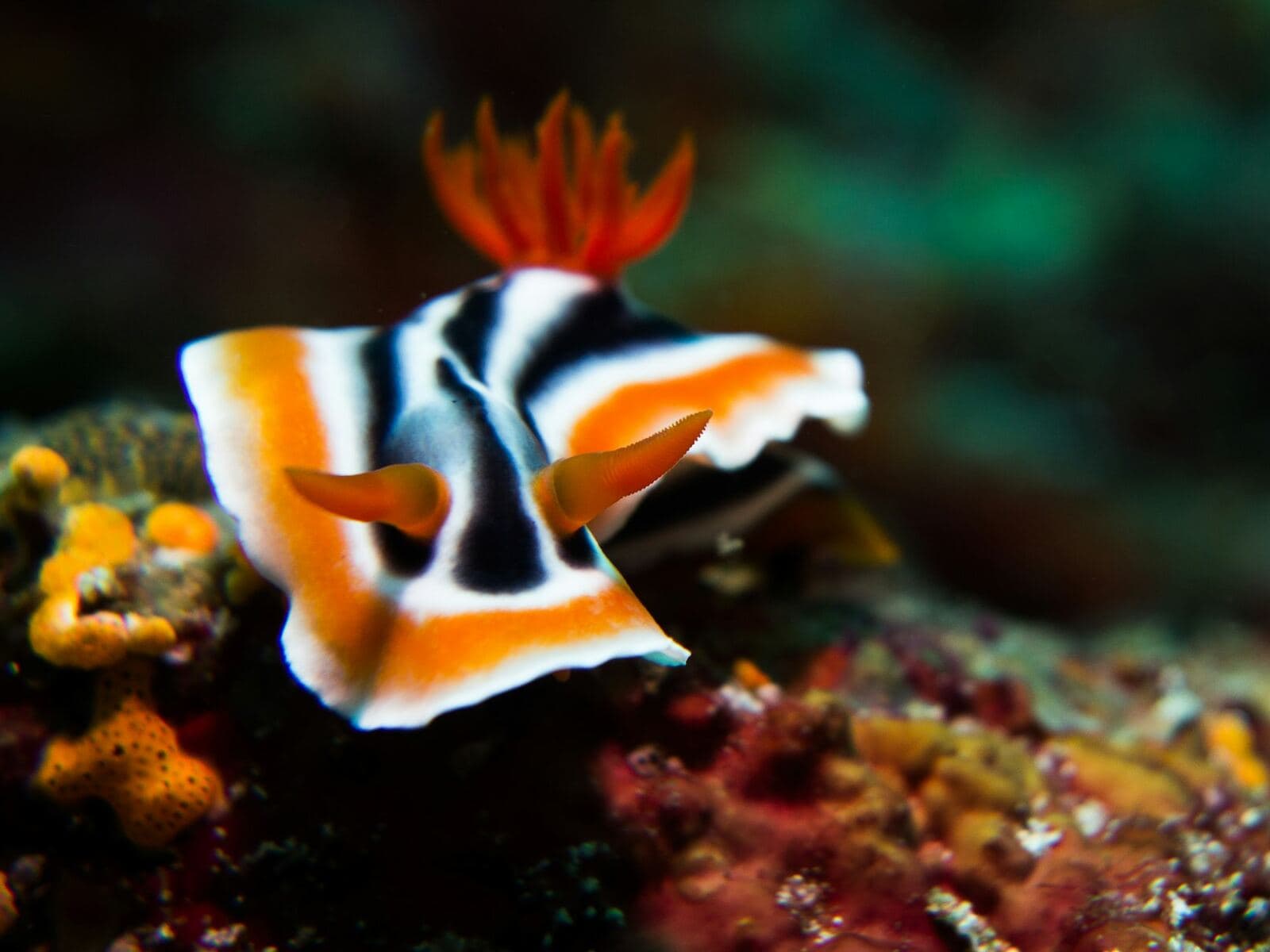
Anilao is a stretch of coast in Batangas province, usually two and a half to three hours by road south of Manila. It is one of the best-known macro destinations in Asia. Photographers come for the nudibranchs, which appear in a huge range of colours and shapes, and for frogfish, seahorses, octopus and pygmy seahorses on sea fans.
There are around fifty dive sites, and most are 10 to 30 minutes by small boat from the resorts. Many are sheltered slopes and muck sites with little current, which suits Open Water divers and anyone who wants long, slow dives. The exposed points in the Maricaban Strait are different. Sites such as Beatrice Rock and Mainit Point can have strong current, so they suit Advanced divers who are comfortable in moving water. Anilao is also known for blackwater night dives, where divers hang over deep water to look at drifting larval animals.
Water is usually 27 to 29°C from about mid-March to the end of the year, but it can drop to around 23 to 26°C from January to March, so a 5 mm suit is sensible then. Visibility is often around 10 to 15 m and can be better on the outer reefs.
The main season runs from about October or November to May, and January to May usually brings the least storm risk. June to September is the southwest monsoon and typhoon season. Diving continues, but rain reduces visibility and storms can cancel days, so leave flexibility in your plans.
Who it suits
Open Water is enough for the sheltered muck and reef sites. Advanced Open Water and drift experience are recommended for the current-swept points.
Dive sites
- Twin RocksSlope with schooling jacks and dense reef life from the shallows to deep water.
- Secret BayBlack sand and rubble slope; a classic muck dive for octopus, seahorses and frogfish.
- Kirby's RockSmall wall dropping to about 30 m; golden pygmy seahorses on the gorgonians.
- Cathedral RockCoral grown on two pinnacles around 13 m, with a small underwater cross; easy and colourful.
- Beatrice RockPinnacle with swarming anthias and strong current at times. Advanced.
What you'll see
Know the risks
- Strong current and down-currents at exposed points, often stronger around full moon
- Typhoon season, highest risk roughly June to September
- Early rains can reduce visibility at shore sites
Sources
- Bluewater Dive Travel: Diving in Anilao
- Dive Adventures: Anilao, Philippines
- Dive The World: Anilao dive sites
Last reviewed 2026-10. Where sources disagree we use the more conservative range.