Best time to dive Banda Islands
The old Spice Islands: a lava flow that became a coral garden, steep walls, and hammerheads at offshore islands in season.
At a glance
- Best months
- March to April and September to November, between the monsoons
- Water
- 26–30°CAbout 26–30°C. 3 mmWetsuit month by month →
- Visibility
- 15–40 m
- Current
- ModerateMild around Banda Neira; stronger at the outer islands and seamounts
- Certification
- AdvancedSome sites possible for Open Water
- How you dive
- Land-based or liveaboard
When to go
March to April and September to November, between the monsoons; hammerheads mostly September to November at offshore islands.
- JanuaryGoodBest for: Reefs and fish lifeWater 28–29°CSome rain
Northwest monsoon; some days rough.
- FebruaryGoodBest for: Reefs and fish lifeWater 28–29°CSome rain
Northwest monsoon; fewer trips.
- MarchPeak seasonBest for: Reefs and fish lifeWater 28–30°CSome rain
Calm between the monsoons. A good month.
- AprilPeak seasonBest for: Reefs and fish lifeWater 28–30°CSome rain
Calm and clear. One of the best months.
- MayGoodBest for: Reefs and fish lifeWater 28–29°CSome rain
Southeast monsoon approaching.
- JuneOff seasonWater 27–28°CRainy
Southeast monsoon; rough Banda Sea.
- JulyOff seasonWater 26–27°CRainy
Rough seas; most operators closed.
- AugustOff seasonWater 26–27°CRainy
Windy; few trips.
- SeptemberGoodBest for: Reefs and fish life, HammerheadsWater 26–28°CSome rain
Winds ease; hammerhead season begins.
- OctoberPeak seasonBest for: Reefs and fish life, HammerheadsWater 27–29°CDry
Calm; peak hammerhead month at offshore islands.
- NovemberPeak seasonBest for: Reefs and fish life, HammerheadsWater 28–29°CDry
Calm and clear; hammerheads. A good month.
- DecemberGoodBest for: Reefs and fish lifeWater 28–29°CSome rain
Season ends; northwest monsoon starts.
What makes each month
Each thing worth diving here is rated on its own, month by month: its own season first, then held back a step when the weather is poor or the water is unusually cold for this place. The calendar above takes the best of them. Cold only counts against a month when the highlight does not come with it, so a macro site is never judged by manta-and-visibility rules.
- Reefs and fish life
Lava Flow and the walls are best between the monsoons, March to April and September to November.
- HammerheadsComes with the cold water
Hammerheads at remote islands such as Manuk, mostly September to November; sightings vary a lot by year.
- Weather and sea
- Water °C292929292928272727282929
Overview
The Banda Islands are a small group of volcanic islands in the Banda Sea, in Indonesia's Maluku province. For centuries they were the world's only source of nutmeg, and the town of Banda Neira still has Dutch forts and colonial buildings.
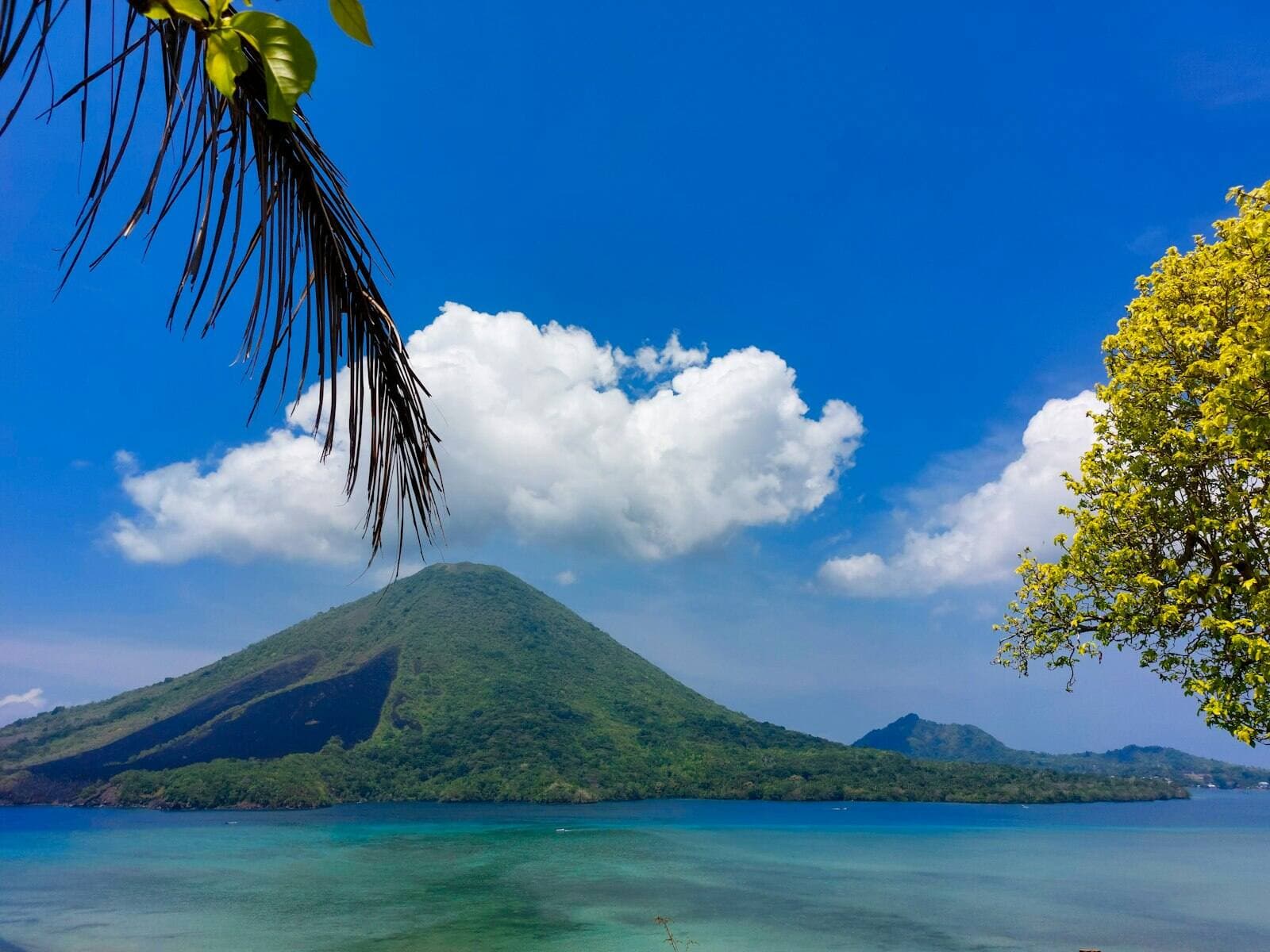
The best-known dive is Lava Flow, on the slope of the Gunung Api volcano, where lava ran into the sea in 1988. Hard coral grew back over the flow quickly and is now dense and healthy. Around the islands there are steep walls with big fish and soft coral, at Pulau Ai, Pulau Hatta and Batu Kapal, and the harbour at Banda Neira has mandarinfish at dusk. Out in the Banda Sea, islands and seamounts such as Manuk are known for sea snakes and, in season, hammerheads; most divers reach these on liveaboards.
The water is about 26–30°C, and visibility on the walls is often 30 m or more. The best months are between the monsoons, about March to April and September to November. A few small operators work from Banda Neira in season, and liveaboards visit on routes between Ambon, Alor and Raja Ampat.
Getting there and how you dive
Getting there
Fly to Ambon, then take a small flight or a fast ferry to Banda Neira when they run. Many divers come on a liveaboard from Ambon or Maumere.
Who it suits
Open Water is enough for the reefs around Banda Neira. Hammerhead dives at remote islands are in blue water and suit Advanced Open Water divers.
Dive sites
- Lava FlowSlope of Gunung Api where lava reached the sea in 1988, now covered in dense hard coral.
- Batu Kapal"Ship Rock": pinnacle with walls, schooling fish and occasional sharks.
- Pulau AiIsland west of Banda Neira with steep walls, soft coral and big fish.
- Pulau HattaRemote island east of Banda Neira with clear water and coral walls.
- SjahrirSmall island off Banda Neira with reef slopes and turtles.
- Banda Neira HarbourShallow harbour where mandarinfish mate at dusk.
- Pulau RunIsland at the western end of the group, famous in spice-trade history, with walls and reef.
- ManukVolcanic island far south of Banda with many sea snakes and, at times, hammerheads; liveaboard only.
- Pulau KerakaTiny island off Banda Neira with coral slopes and reef fish, close to town.
- Batu Udang (Pulau Ai)Wall off Pulau Ai where currents bring reef sharks and schooling fish.
- Tanjung Batu Payong (Pulau Ai)Steep wall dropping to about 60 m; gorgonians and pelagic chances. Advanced.
- Skaru (Hatta)Small atoll-like reef just off Pulau Hatta with clear water and big hard corals.
- Karang HattaReef south-east of Hatta known for huge schools of fusiliers.
- Hatta Blue HoleHard-coral garden blanketing an old lava flow off Hatta, dropping into blue water.
- Pulau Gunung Api northBlack volcanic slopes on the north side of Gunung Api; sea snakes and reef fish.
What you'll see
Know the risks
- Very remote; few flights and limited medical help
- Southeast monsoon from about June to August makes the Banda Sea rough
- Hammerhead sightings vary a lot from year to year
Plan the trip
- Liveaboards
Liveaboards reach sites day boats can't. Compare routes, nights and prices.
How to choose a liveaboard - Dive shops
Where Banda Islands dive centres are based and what to check before you book. Shop list in progress.
How to choose a dive shop - Dates and people
Post your dates and how many of you. Divers who know the boats and shops, or are going the same weeks, reply in the community.
Find divers / ask dates - Dive insurance
Most travel policies exclude scuba or cap the depth. Check yours covers diving before you go.
Dive accident cover from DAN ↗
Some of these links may earn us a commission at no cost to you. It never changes what we recommend. How this site is funded
Ask other divers
Questions
When is the best time to dive Banda Islands?
March to April and September to November, between the monsoons; hammerheads mostly September to November at offshore islands. Peak months on our calendar: March, April, October, November.
What is the water temperature in Banda Islands?
About 26–30°C. 3 mm.
Can Open Water divers dive Banda Islands?
Open Water is enough for the reefs around Banda Neira. Hammerhead dives at remote islands are in blue water and suit Advanced Open Water divers.
How strong is the current in Banda Islands?
Mild around Banda Neira; stronger at the outer islands and seamounts.
What should divers watch out for in Banda Islands?
Very remote; few flights and limited medical help. Southeast monsoon from about June to August makes the Banda Sea rough. Hammerhead sightings vary a lot from year to year.
Sources
- Divernet: Diving the Banda Sea, Indonesia's kingdom of the fish
- Ocean Earth Travels: Diving the Banda Sea, hammerheads and spice islands
- Ocean Gardener: Banda Neira, discovering a hidden paradise
- Zublu: Banda Sea and Forgotten Islands
- Nigel Marsh Photography: Banda Sea
- Dive The World: Banda Islands dive sites
Last reviewed 2026-11. Where sources disagree we use the more conservative range.