Belize Barrier Reef
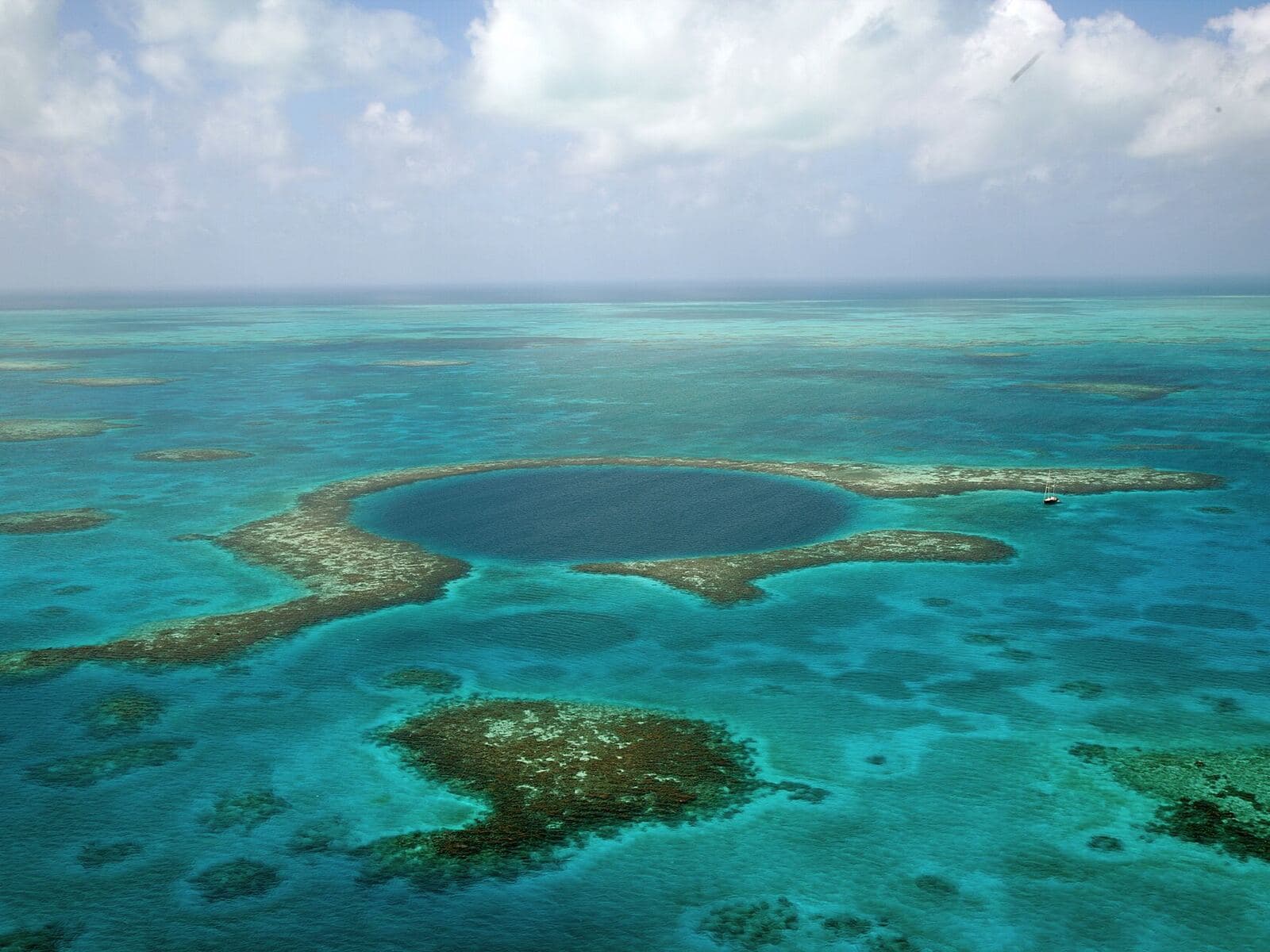
Offshore atolls, steep walls and the deep descent into the Great Blue Hole.

At a glance
- Best months
- April and May
- Water
- 25–29°CAbout 25–26°C in the cooler months and up to 29°C from August to October; a 3 mm suit suits most divers
- Visibility
- 15–30 m
- Current
- ModerateMild on the sheltered reefs; strong with surge at exposed points such as The Elbow
- Certification
- AdvancedSome sites possible for Open Water
- How you dive
- Land-based or liveaboard
When to go
April and May; February to June is generally good. September and October carry the highest hurricane risk.
Overview
The Belize Barrier Reef runs along the coast of Belize and is often described as the largest barrier reef in the northern hemisphere. Its reserve system is a UNESCO World Heritage Site. Beyond it lie three offshore atolls, Turneffe, Lighthouse Reef and Glover's Reef, where steep walls drop into deep blue water and visibility is usually better than on the inner reef. The best-known dive is the Great Blue Hole, a near-circular sinkhole in the middle of Lighthouse Reef.
Diving here ranges from easy to demanding. Many reefs inside the barrier and on the sheltered side of the atolls are calm and suit Open Water divers. The Blue Hole is different: it is a short, deep dive to around 40 m where stalactites hang under ledges, so operators usually ask for Advanced Open Water and keep bottom time strict. Exposed points such as The Elbow at Turneffe can have strong current and surge.
The dry season, roughly February to May, usually brings the calmest seas, and April to June is often named as the peak for divers. Whale sharks gather at Gladden Spit in the south around the full moons of about March to June to feed on snapper spawn, although sightings are never certain. The wet season from June to November brings rain, lower visibility near the coast and hurricane risk, highest in September and October.
Divers stay on the cayes, such as Ambergris Caye or Caye Caulker, or at resorts on the atolls, and take day boats. Trips to the Blue Hole from the northern cayes take two to three hours each way. Liveaboards cover Lighthouse Reef and Turneffe in more depth. Park fees apply at the protected sites, so check current rates with your operator.
Who it suits
Open Water for many reef dives. Advanced Open Water for the Great Blue Hole, which goes to around 40 m, and for the stronger-current atoll sites.
Dive sites
- Great Blue Hole (Lighthouse Reef)Circular sinkhole; descent to around 40 m among stalactites, reef sharks possible. Short bottom time, Advanced.
- Half Moon Caye Wall (Lighthouse Reef)Drop-off with coral buttresses and swim-throughs; eagle rays, turtles, barracuda.
- The Elbow (Turneffe Atoll)Southern tip where currents meet; jacks, snappers, eagle rays. Current and surge, not for beginners.
- Gladden Spit (southern Belize)Marine reserve where whale sharks may feed on fish spawn around the spring full moons; no guarantees.
What you'll see
Know the risks
- Deep, short dive in the Blue Hole (around 40 m)
- Strong current and surge at exposed points
- Hurricane season June to November, highest risk September and October
- Long boat rides of 2 to 3 hours each way to the outer atolls
Sources
- Liveaboard.com: Best time to dive in Belize
- Dive The World: Belize liveaboards, climate and best time to visit
- Travel Belize: Whale sharks in Belize
- PADI Blog: Dive sites in Belize
Last reviewed 2026-10. Where sources disagree we use the more conservative range.