Cenotes of the Yucatán
Guided cavern dives through flooded limestone halls lit by beams of sunlight.
At a glance
- Best months
- November to March
- Water
- 24–25°CFresh water at about 24–25°C all year. 3–5 mm wetsuit; 5 mm if you feel the cold
- Visibility
- 20–50 m
- Current
- MildVery little to none
- Certification
- AdvancedSome sites possible for Open Water
- How you dive
- Land-based
When to go
November to March (dry season); diving runs all year, but June to October brings hurricane risk and heavy rain.
Overview
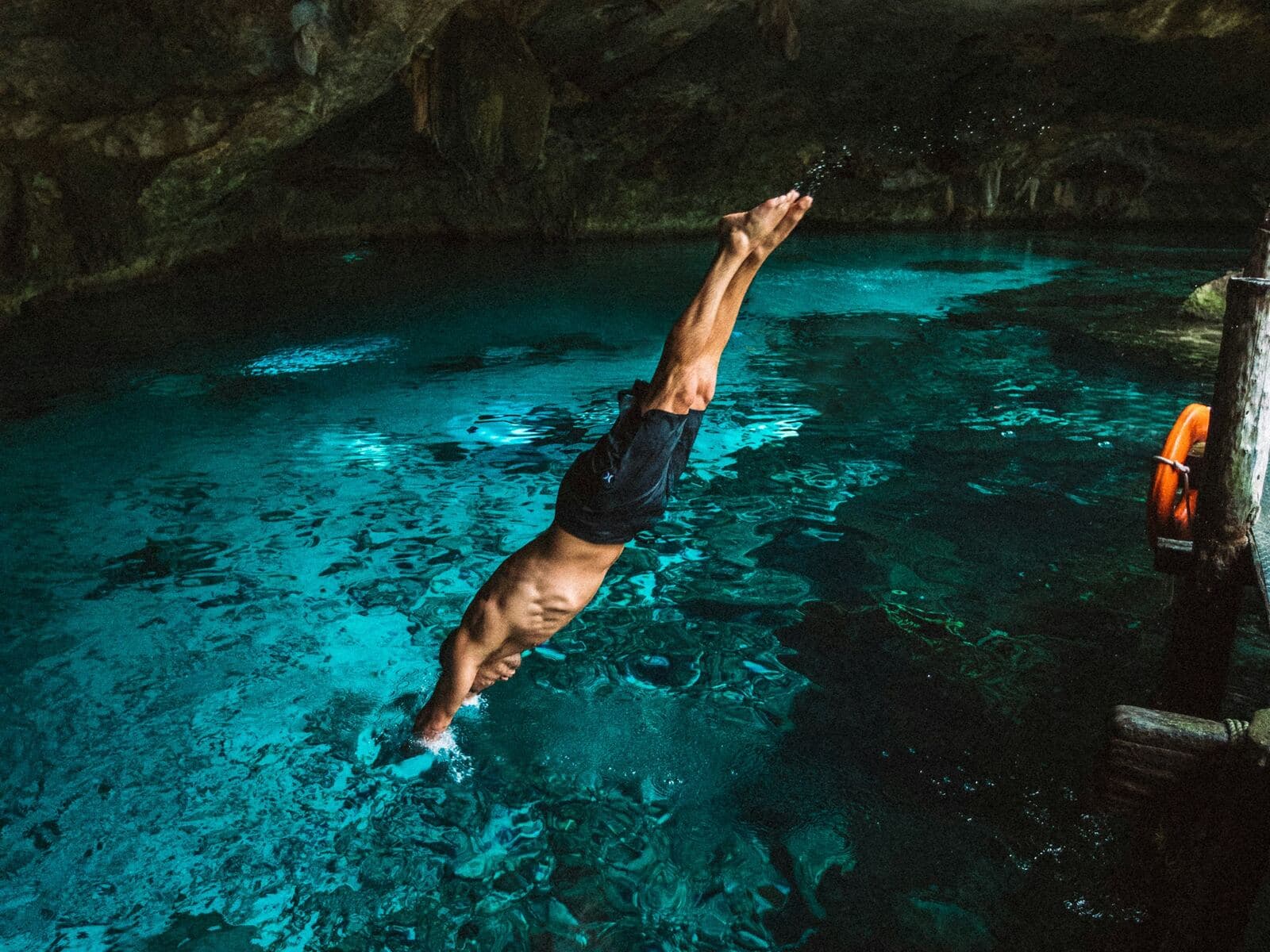
The Yucatán Peninsula in Mexico has no rivers on the surface. Rain soaks into the limestone and flows through long, flooded cave systems. Where the roof has collapsed, a cenote opens to the sky, and many of them, especially around Tulum and Playa del Carmen, have become dive sites. The water is fresh, still and remarkably clear, and sunlight falls through openings in long, bright beams onto stalactites and rock formations.
Recreational cenote diving is cavern diving, not cave diving. You follow a fixed guideline with a qualified cave diving guide, usually in small groups of up to four divers, and you stay within the daylight zone, where natural light from the entrance is always visible. Common limits are a depth of about 20 to 30 m and a distance of about 60 m from the surface. Going beyond the daylight zone is cave diving and needs separate, formal cave training and equipment. Do not attempt it on a guided cavern tour.
Most operators accept Open Water divers, but many ask for a minimum number of logged dives, a recent dive and sometimes a checkout dive in the sea first. Deeper sites such as Angelita usually require Advanced Open Water or a Deep specialty. Because there is a rock ceiling above you for much of the dive, good buoyancy and careful finning are essential. Poor technique stirs up silt and can quickly reduce visibility for everyone.
Water temperature stays at about 24 to 25°C all year, so a 3 mm wetsuit suits many divers and 5 mm is more comfortable if you feel the cold. Cenotes can be dived year-round. November to March is the dry season and usually the most reliable time, while June to October brings heavy rain and hurricane risk, which can affect access and visibility at some open cenotes.
Who it suits
Open Water minimum at most operators, often with a minimum number of logged dives and a recent dive; deeper sites such as Angelita usually need Advanced Open Water or Deep. Excellent buoyancy and trim matter more than the card.
Dive sites
- Dos OjosTwo connected cenotes with guided cavern lines; shallow, about 10 m, classic first cavern dive.
- Tajma HaCavern with strong light beams and a clear halocline; maximum about 15 m.
- Chac MoolShallow cavern to about 12 m with a pronounced halocline; good for first-timers.
- AngelitaOpen shaft with a hydrogen sulphide cloud at about 30 m; deep dive, Advanced or Deep certification.
What you'll see
Know the risks
- Overhead environment: no direct ascent to the surface
- Silt-outs if you kick up the floor
- Going beyond the daylight zone without cave training
Sources
- Deep Dark Diving: Safety rules for cavern diving
- Cave Diving in Mexico: Cavern diving in the Riviera Maya
- Alert Diver: Cult dive, Cenote Dos Ojos
- Underwater Photography Guide: Diving the Mexico cenotes
Last reviewed 2026-10. Where sources disagree we use the more conservative range.