Best time to dive Coron
Japanese supply ships sunk in 1944, plus a freshwater lake with a warm thermocline.
At a glance
- Best months
- November to May is the dry season
- Water
- 25–31°CAbout 25–27°C from December to February and 28–31°C from April to October. 3 mm most of the yearWetsuit month by month →
- Visibility
- 5–20 m
- Current
- MildUsually little current on the wrecks, though tidal flow can pick up around some of them
- Certification
- AdvancedSome sites possible for Open Water
- How you dive
- Land-based or liveaboard
When to go
November to May is the dry season; March to May often has the best visibility.
- JanuaryPeak seasonWater 25–27°CDry
Dry season with northeast winds; coolest water of the year.
- FebruaryPeak seasonWater 25–27°CDry
Dry and settled. Good wreck conditions.
- MarchPeak seasonWater 26–28°CDry
Dry, warming water; visibility improves.
- AprilPeak seasonWater 27–30°CDry
Hot and dry. Often the best visibility of the year.
- MayPeak seasonWater 28–31°CDry
Hot; last month before the rains. Good visibility.
- JuneGoodHeld at Good by the weatherWater 28–31°CSome rain
Southwest monsoon arrives; some rough days.
- JulyGoodWater 28–30°CRainy
Wet season and typhoon risk; boats go out on calm days.
- AugustGoodWater 28–30°CRainy
Wet season and typhoon risk; leave spare days.
- SeptemberGoodWater 28–30°CRainy
Wet season; visibility in the bay is often low.
- OctoberGoodWater 28–30°CSome rain
Rains ease but typhoons are still possible.
- NovemberPeak seasonWater 27–29°CSome rain
Dry season starts. Good month for wrecks.
- DecemberPeak seasonWater 26–28°CDry
Dry season. Busy around Christmas.
What makes each month
Each thing worth diving here is rated on its own, month by month: its own season first, then held back a step when the weather is poor or the water is unusually cold for this place. The calendar above takes the best of them. Cold only counts against a month when the highlight does not come with it, so a macro site is never judged by manta-and-visibility rules.
- WWII wrecks
Dry season from November to May; visibility in the bay is best from March to May and often low in the wet season.
- Weather and sea
- Water °C262627293030292929292827
Overview
Coron is a town on Busuanga Island at the northern end of Palawan. On 24 September 1944, US Navy aircraft attacked a Japanese supply fleet sheltering in the bay, and about a dozen of those ships now lie in 10–45 m of water. Most are cargo and supply ships, plus a seaplane tender, the Akitsushima.
The wrecks are the main draw. Several, such as the Olympia Maru and Okikawa Maru, have decks at 10–20 m that Open Water divers can explore from the outside, while trained divers can go into holds, corridors and engine rooms. The Irako, at about 40 m, is for experienced divers. Between wrecks, dive shops visit Barracuda Lake, a freshwater lake inside the limestone cliffs of Coron Island, where a layer of warm salt water lies under the fresh water.
The dry season runs from about November to May, and March to May often has the best visibility. Visibility in the bay is lower than on open reefs, usually 5–15 m, because the wrecks lie in sheltered, plankton-rich water. June to October is the southwest monsoon and typhoon season; diving continues on calm days, but some trips are cancelled.
Getting there and how you dive
Getting there
Fly to Busuanga (Francisco B. Reyes Airport) from Manila, Cebu or Clark, then about 30 minutes by road to Coron town. Ferries also run from Manila and El Nido.
Who it suits
Several wrecks have decks at 10–20 m and suit Open Water divers. Entering the holds and engine rooms, and the deeper wrecks such as Irako, need Advanced Open Water and wreck training.
Dive sites
- Okikawa MaruLarge tanker sitting upright, deck at about 12 m and bottom at about 26 m; often some current.
- AkitsushimaSeaplane tender on its side at about 36 m, the only warship among the Coron wrecks; schools of fish over the hull.
- IrakoRefrigerated supply ship, upright in about 40 m; well preserved and full of fish. For experienced divers.
- Olympia MaruCargo ship on its side in about 25 m, with large open holds; often the first wreck for new wreck divers.
- Kogyo MaruCargo ship on its side with construction materials and a small bulldozer in the holds, about 22–34 m.
- Morazan MaruCargo ship on its side in about 25 m, with easy swim-throughs.
- East Tangat GunboatSmall gunboat in shallow water off Tangat Island, a good second dive with reef fish.
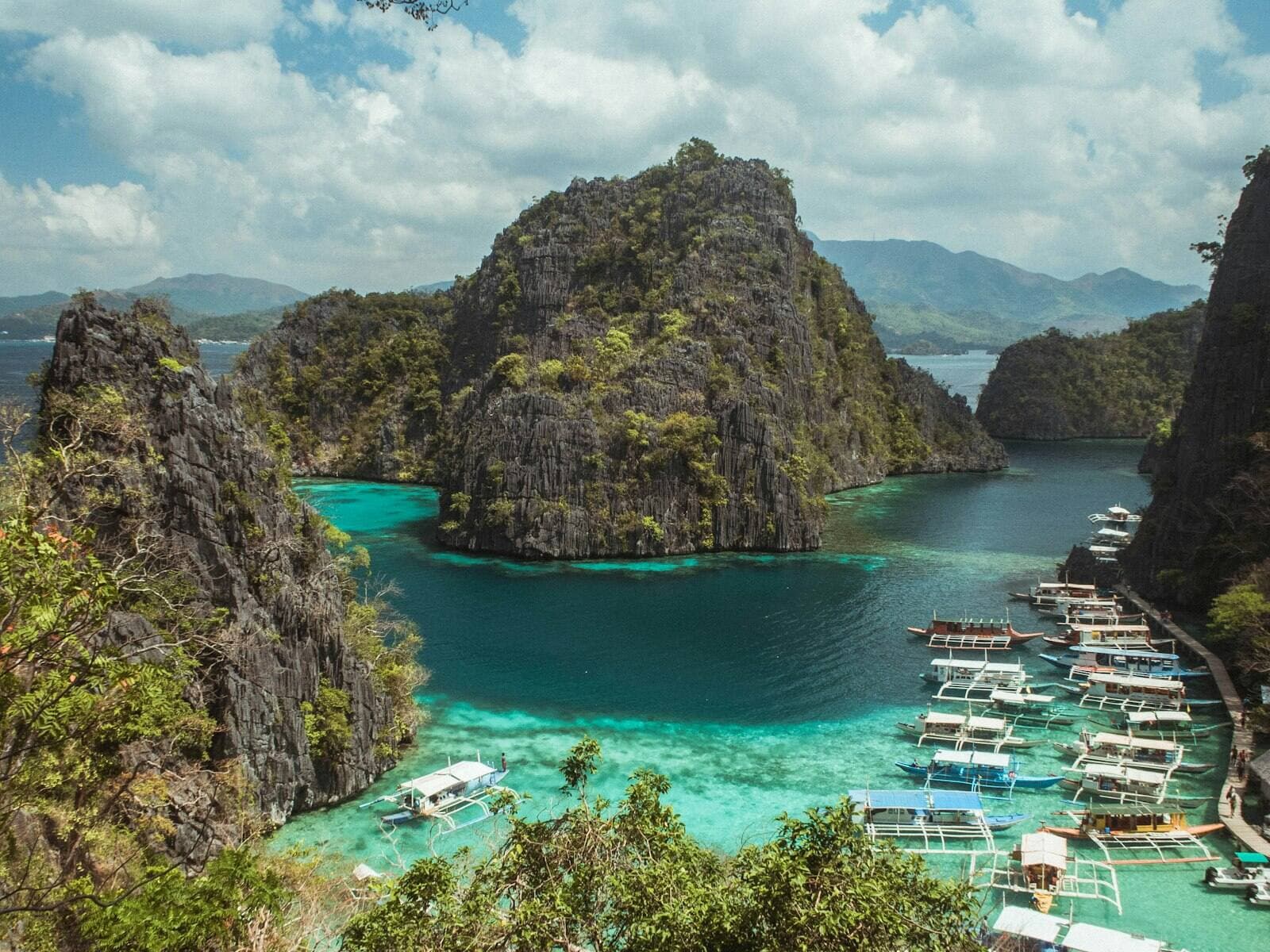
- Barracuda LakeFreshwater lake in Coron Island's limestone cliffs; the water warms sharply below the thermocline.
- Lusong GunboatSmall gunboat in very shallow water, its stern breaking the surface at low tide; easy and good for snorkelling.
- Skeleton WreckRemains of a small ship's frame in shallow water near a beach; easy dive or snorkel.
- Kyokuzan MaruLarge Japanese cargo wreck upright on sand north-east of Busuanga, near Black Island; trucks still in the hold. Day trip or liveaboard.
- Teru Kaze Maru35 m Japanese submarine chaser east of Sangat; bow at about 4 m sloping to 20 m. Easy, good for beginners.
- Black Island Wreck (Nanshin Maru)Small tanker upright on sand at about 32 m off Black Island; often combined with a beach stop.
- Siete PecadosShallow marine park of seven islets near Coron town; corals, reef fish and turtles.
- Cayangan LakeBrackish lake on Coron Island with clear water and limestone walls; more swim than dive.
- Kogyo Maru bow (Coron Bay)Japanese supply ship lying on its starboard side at about 34 m; cargo of construction materials.
What you'll see
Know the risks
- Penetration: silt-outs and tight spaces; enter only with training and a guide
- Typhoon season, roughly June to October, can cancel boat days
- Visibility in the bay is often only 5–15 m
Plan the trip
- Liveaboards
Liveaboards reach sites day boats can't. Compare routes, nights and prices.
How to choose a liveaboard - Dive shops
Where Coron dive centres are based and what to check before you book. Shop list in progress.
How to choose a dive shop - Dates and people
Post your dates and how many of you. Divers who know the boats and shops, or are going the same weeks, reply in the community.
Find divers / ask dates - Dive insurance
Most travel policies exclude scuba or cap the depth. Check yours covers diving before you go.
Dive accident cover from DAN ↗
Some of these links may earn us a commission at no cost to you. It never changes what we recommend. How this site is funded
Ask other divers
Questions
When is the best time to dive Coron?
November to May is the dry season; March to May often has the best visibility. Peak months on our calendar: January, February, March, April, May, November, December.
What is the water temperature in Coron?
About 25–27°C from December to February and 28–31°C from April to October. 3 mm most of the year.
Can Open Water divers dive Coron?
Several wrecks have decks at 10–20 m and suit Open Water divers. Entering the holds and engine rooms, and the deeper wrecks such as Irako, need Advanced Open Water and wreck training.
How strong is the current in Coron?
Usually little current on the wrecks, though tidal flow can pick up around some of them.
What should divers watch out for in Coron?
Penetration: silt-outs and tight spaces; enter only with training and a guide. Typhoon season, roughly June to October, can cancel boat days. Visibility in the bay is often only 5–15 m.
Sources
- DIVE Magazine: Wrecks of Coron Bay
- PADI blog: Where to dive in Coron, Philippines
- SSI: Scuba diving in Coron, the ultimate guide to wreck diving
- Bluewater Dive Travel: Coron diving
- Dive Site Directory: Coron
Last reviewed 2026-11. Where sources disagree we use the more conservative range.