Best time to dive Fernando de Noronha
Brazil's best diving: clear Atlantic water, spinner dolphins, turtles and reef sharks around a protected volcanic archipelago.
At a glance
- Best months
- Diveable all year
- Water
- 26–28°CAbout 26–28°C all year. 3 mmWetsuit month by month →
- Visibility
- 15–40 m
- Current
- ModerateMild on the sheltered inner-sea side; more current and swell on the outer sites
- Certification
- Open WaterMinimum Open Water
- How you dive
- Land-based
When to go
Diveable all year; August to December usually has the calmest seas and clearest water, with the best visibility around September and October.
- JanuaryGoodWater 27–28°CSome rain
Northern swells on the inner sea some days; outer sites calmer.
- FebruaryGoodWater 27–28°CSome rain
Swells on the inner sea; rain begins.
- MarchGoodWater 27–28°CRainy
Rainy season; visibility lower.
- AprilGoodWater 27–28°CRainy
Wettest months; still diveable.
- MayGoodWater 27–28°CRainy
Rain; outer sea can be rough.
- JuneGoodWater 26–27°CRainy
Rain eases late; southeast winds.
- JulyGoodWater 26–27°CSome rain
Drier; seas settle.
- AugustPeak seasonWater 26–27°CDry
Dry season begins; visibility improves. A good month.
- SeptemberPeak seasonWater 26–27°CDry
Calm and very clear. One of the best months.
- OctoberPeak seasonWater 26–27°CDry
Best visibility; calm inner sea.
- NovemberPeak seasonWater 26–27°CDry
Calm and clear. A good month.
- DecemberPeak seasonWater 27–28°CDry
Good diving; first northern swells late in the month; busy over the holidays.
What makes each month
Each thing worth diving here is rated on its own, month by month: its own season first, then held back a step when the weather is poor or the water is unusually cold for this place. The calendar above takes the best of them. Cold only counts against a month when the highlight does not come with it, so a macro site is never judged by manta-and-visibility rules.
- Reefs and fish life
Calmest seas and clearest water from August to December, best around September and October.
- Weather and sea
- Water °C282828282827272727272728
Overview
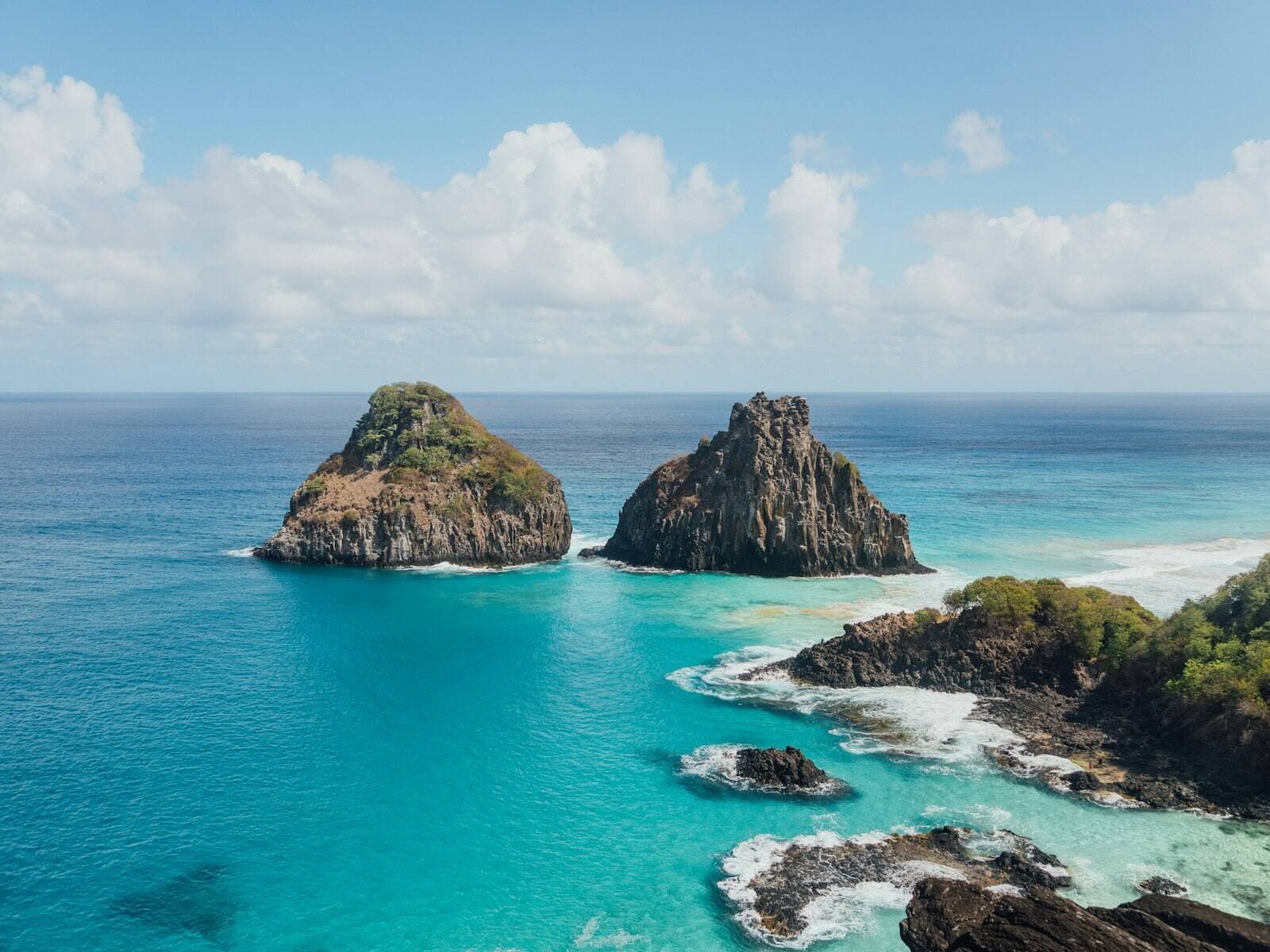
Fernando de Noronha is a volcanic archipelago about 350 km off northeastern Brazil, in the South Atlantic. Most of it is a national marine park, and the number of visitors is limited, so the reefs are in good condition and the water is often very clear.
Divers see turtles, reef sharks, rays, and big schools of fish on volcanic rock, arches and small caves. Pedras Secas is a group of rocks with swim-throughs, and Cabeço das Cordas, Ilha do Meio and Buraco das Cabras are other popular dives. The Corveta Ipiranga, a Brazilian Navy corvette that sank in 1983, lies deep and is a technical dive. Spinner dolphins gather in Baía dos Golfinhos most mornings and are watched from the cliff or from boats.
The water is about 26–28°C all year. The island has two sides: the inner sea faces Brazil and is calmer for most of the year, while the outer sea faces the Atlantic. Visibility is usually best from about August to October.
Getting there and how you dive
Getting there
Fly to Fernando de Noronha from Recife or Natal. Visitors pay a daily environmental fee and a national park fee on arrival or online.
Who it suits
Open Water is enough for most sites. The Corveta Ipiranga wreck is a deep technical dive.
Dive sites
- Pedras SecasGroup of rocks breaking the surface with arches and swim-throughs at about 8–25 m; turtles and schooling fish.
- Cabeço das CordasRocky pinnacle with reef fish, turtles and, at times, reef sharks.
- Ilha do MeioReef around a small island off the inner sea with turtles and rays.
- Buraco das CabrasRocky site with holes and overhangs full of fish.
- Laje Dois IrmãosReef by the Dois Irmãos rocks, with turtles and schooling fish.
- Morro de ForaRock on the outer sea with walls, big fish and occasional sharks.
- Ponta da SapataWestern tip of the island with an arch, current and pelagic fish; for experienced divers.
- Corveta IpirangaBrazilian Navy corvette that sank in 1983, lying deep; a technical dive.
- Baía dos GolfinhosBay where spinner dolphins rest most mornings; protected, watched from the cliff or by boat, no diving.
- RessurretaDrift dive along the reef with turtles and reef fish.
- CagarrasRocks off the island with reef fish and turtles.
- Ponta da MacaxeiraReef point with fish and coral.
- IuiasReef site near Pedras Secas.
- CaracaúCalm inner-sea site with no current; suitable for beginners.
What you'll see
Know the risks
- Daily visitor fee and a separate national park fee; numbers are capped
- Northern swells from about December to March affect the inner-sea side
- Expensive and small: book diving and lodging well ahead
Plan the trip
- Dive shops
Where Fernando de Noronha dive centres are based and what to check before you book. Shop list in progress.
How to choose a dive shop - Dates and people
Post your dates and how many of you. Divers who know the boats and shops, or are going the same weeks, reply in the community.
Find divers / ask dates - Dive insurance
Most travel policies exclude scuba or cap the depth. Check yours covers diving before you go.
Dive accident cover from DAN ↗
Some of these links may earn us a commission at no cost to you. It never changes what we recommend. How this site is funded
Ask other divers
Questions
When is the best time to dive Fernando de Noronha?
Diveable all year; August to December usually has the calmest seas and clearest water, with the best visibility around September and October. Peak months on our calendar: August, September, October, November, December.
What is the water temperature in Fernando de Noronha?
About 26–28°C all year. 3 mm.
Can Open Water divers dive Fernando de Noronha?
Open Water is enough for most sites. The Corveta Ipiranga wreck is a deep technical dive.
How strong is the current in Fernando de Noronha?
Mild on the sheltered inner-sea side; more current and swell on the outer sites.
What should divers watch out for in Fernando de Noronha?
Daily visitor fee and a separate national park fee; numbers are capped. Northern swells from about December to March affect the inner-sea side. Expensive and small: book diving and lodging well ahead.
Sources
- Divernet: Noronha, an Atlantic diving hotspot
- PADI blog: The best time of year to dive in Brazil
- Scuba Diving: 4 thrilling dive destinations in Brazil
- Scuba Travel: Diving Brazil
- ScubaGo: Fernando de Noronha
- Johann & Sandra: Fernando de Noronha dive sites
Last reviewed 2026-11. Where sources disagree we use the more conservative range.