Best time to dive Florida Keys
The only living coral barrier reef in the continental US, and a trail of big sunken ships.
At a glance
- Best months
- April to July for warm, calm water
- Water
- 22–31°CAbout 22–24°C in January and February, rising to 29–30°C in July and August. 3 mm in summer, 5 mm in winterWetsuit month by month →
- Visibility
- 10–30 m
- Current
- ModerateLight to moderate on the shallow reefs; the Gulf Stream can push strong current across the deep wrecks
- Certification
- Open WaterMinimum Open Water
- How you dive
- Land-based
When to go
April to July for warm, calm water; diveable all year. Hurricane season runs June to November, busiest August to October.
- JanuaryGoodWater 22–24°CDry
Coolest water, about 22–24°C. Cold fronts can blow out boats for a few days; clear water between them.
- FebruaryGoodWater 22–24°CDry
Cool and dry; winter fronts still pass through. Busy high season on land.
- MarchGoodWater 23–25°CDry
Warming water and fewer fronts; spring-break crowds.
- AprilPeak seasonWater 25–26°CDry
Calmer seas and about 25°C; a good month for the wrecks.
- MayPeak seasonWater 26–28°CSome rain
Warm and often flat; the rainy season starts late in the month.
- JunePeak seasonWater 28–29°CRainy
Warm and calm; afternoon thunderstorms. Hurricane season begins.
- JulyPeak seasonWater 29–30°CRainy
Warm, calm, busy. Lobster sport season in late July fills the boats.
- AugustGoodWater 29–31°CRainy
Warmest water. Coral spawning is often reported a few nights after the August full moon. Hurricane risk rising.
- SeptemberOff seasonWater 29–30°CRainy
Peak hurricane month and the quietest time for crowds; watch the forecast.
- OctoberGoodWater 27–29°CRainy
Still warm; storms possible early in the month.
- NovemberGoodWater 25–27°CSome rain
Cooling, drier and windier as the first fronts arrive. Hurricane season ends.
- DecemberGoodWater 23–25°CDry
Cool water and holiday crowds; fronts can cancel boats.
What makes each month
Each thing worth diving here is rated on its own, month by month: its own season first, then held back a step when the weather is poor or the water is unusually cold for this place. The calendar above takes the best of them. Cold only counts against a month when the highlight does not come with it, so a macro site is never judged by manta-and-visibility rules.
- Reefs and wrecks
Warm, calm water from April to July; winter fronts cancel boats and September is the hurricane peak.
- Weather and sea
- Water °C232324262729303030282624
Overview
The Florida Keys are a chain of islands curving about 200 km southwest from the tip of Florida to Key West, linked by one road, the Overseas Highway. A few kilometres offshore, on the Atlantic side, runs the Florida Reef: the only living coral barrier reef in the continental United States. The reef and the waters around it are protected as the Florida Keys National Marine Sanctuary.
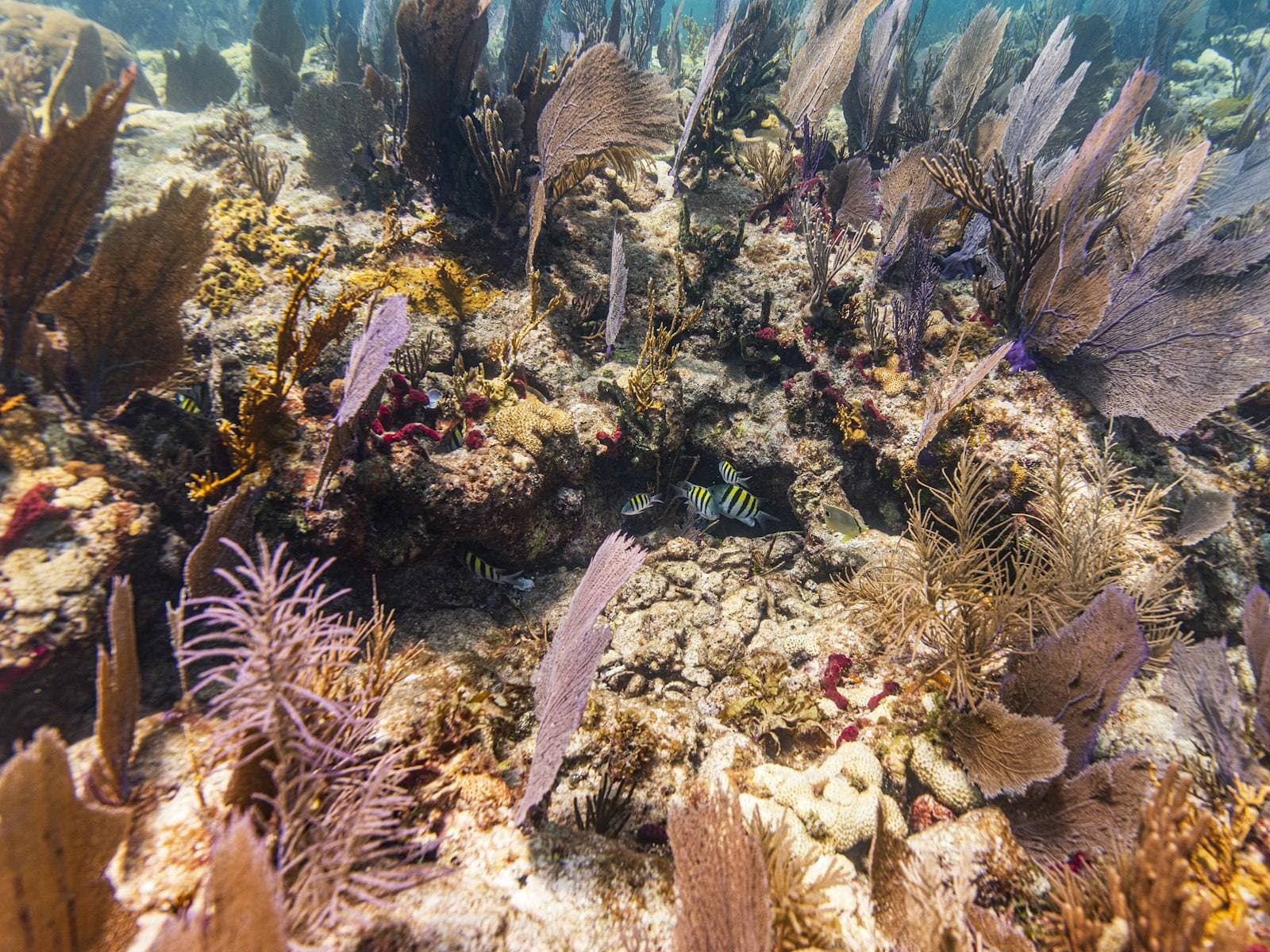
Most reef dives are shallow, around 5–15 m, on spur-and-groove coral with reef fish, nurse sharks, turtles and moray eels. Key Largo is the busiest base: its best-known sites are Molasses Reef, French Reef and the bronze Christ of the Abyss statue at Key Largo Dry Rocks. Further down the chain, Looe Key near Big Pine Key and Sombrero Reef near Marathon are protected reefs with clear water.
The Keys are also known for wrecks sunk on purpose as artificial reefs. The Spiegel Grove, a 155 m landing ship sunk off Key Largo in 2002, lies at about 40 m, with its upper decks from about 15 m. The coast guard cutters Duane and Bibb lie nearby at 30–40 m, and the 160 m USNS Vandenberg was sunk off Key West in 2009. These are dives for experienced divers, and current from the Gulf Stream can be strong. The Florida Keys Shipwreck Trail lists nine historic wrecks with mooring buoys.
Water runs from about 22°C in winter to 30°C in late summer. Late spring and early summer usually bring the calmest seas. Hurricane season is June to November, and winter cold fronts can cancel boats for a few days at a time.
Getting there and how you dive
Getting there
Fly to Miami (about an hour by road to Key Largo) or to Key West. Marathon has a small airport; the Overseas Highway links every island.
Who it suits
Open Water for the shallow reefs. The deep wrecks (Spiegel Grove, Duane, Vandenberg) sit at 30–40 m and usually need Advanced Open Water, and some operators ask for wreck or nitrox experience.
Dive sites
- Christ of the Abyss (Key Largo Dry Rocks)Bronze statue of Christ in about 7 m on a shallow reef; easy dive and snorkel.
- Molasses ReefLarge spur-and-groove reef at 3–20 m with moorings all along it; reef fish, turtles and the odd nurse shark.
- French ReefLedges and swim-throughs at about 6–15 m with schooling grunts and snapper.
- Spiegel Grove155 m navy landing ship sunk in 2002; bottom about 40 m, upper decks from about 15 m. Current can be strong; experienced divers.
- USCGC DuaneCoast guard cutter sitting upright in about 36 m south of Molasses Reef, often with current and barracuda.
- BenwoodFreighter wreck from 1942 broken up in 8–15 m off Key Largo; easy and full of fish.
- Sombrero ReefProtected reef by a lighthouse off Marathon with coral fingers in 3–10 m.
- Looe KeyProtected reef off Big Pine Key with spur-and-groove coral in 3–12 m and clear water.
- USNS Vandenberg160 m missile-tracking ship sunk off Key West in 2009; bottom about 43 m, superstructure from about 15 m.
- Grecian RocksShallow reef off Key Largo with elkhorn coral; easy and good for snorkellers too.
- Elbow ReefReef with scattered old wreck remains, including the City of Washington.
- Carysfort ReefNorthernmost lighthouse reef off Key Largo; spur-and-groove coral.
- Eagle Wreck (Islamorada)Freighter broken in two at about 33 m; current and big fish.
- Alligator ReefLighthouse reef off Islamorada; shallow coral and fish.
- Thunderbolt (Marathon)Former cable-laying ship sunk off Marathon at about 36 m.
- Adolphus Busch (Big Pine)Freighter sunk as a reef off Looe Key at about 30 m.
- Cayman Salvager (Key West)Small wreck off Key West, about 27 m.
- Joe's Tug (Key West)Small tug on the sand off Key West, about 20 m.
- Western SamboProtected reef off Key West with coral and reef fish.
- Pickles ReefReef off Key Largo with colourful reef fish and old cement barrels.
- Conch ReefReef and wall off Islamorada with sponges and research-station history.
- Coffins Patch (Marathon)Patch reef off Marathon; deeper parts for advanced divers.
What you'll see
Know the risks
- Hurricanes and tropical storms June to November
- Winter cold fronts bring wind and cancel boats
- Current and depth on the large wrecks
- Heavy boat traffic; always fly a dive flag
Plan the trip
- Dive shops
Where Florida Keys dive centres are based and what to check before you book. Shop list in progress.
How to choose a dive shop - Dates and people
Post your dates and how many of you. Divers who know the boats and shops, or are going the same weeks, reply in the community.
Find divers / ask dates - Dive insurance
Most travel policies exclude scuba or cap the depth. Check yours covers diving before you go.
Dive accident cover from DAN ↗
Some of these links may earn us a commission at no cost to you. It never changes what we recommend. How this site is funded
Ask other divers
Questions
When is the best time to dive Florida Keys?
April to July for warm, calm water; diveable all year. Hurricane season runs June to November, busiest August to October. Peak months on our calendar: April, May, June, July.
What is the water temperature in Florida Keys?
About 22–24°C in January and February, rising to 29–30°C in July and August. 3 mm in summer, 5 mm in winter.
Can Open Water divers dive Florida Keys?
Open Water for the shallow reefs. The deep wrecks (Spiegel Grove, Duane, Vandenberg) sit at 30–40 m and usually need Advanced Open Water, and some operators ask for wreck or nitrox experience.
How strong is the current in Florida Keys?
Light to moderate on the shallow reefs; the Gulf Stream can push strong current across the deep wrecks.
What should divers watch out for in Florida Keys?
Hurricanes and tropical storms June to November. Winter cold fronts bring wind and cancel boats. Current and depth on the large wrecks. Heavy boat traffic; always fly a dive flag.
Sources
- Florida Keys & Key West: Wreck Trek dive log
- DAN Alert Diver: The Florida Keys Shipwreck Trail
- Scuba Diving: Florida Keys wreck guide
- Dive.site: Scuba diving in the Florida Keys
- Sea Dwellers Dive Center: Hurricane season in the Florida Keys
- Current Results: Average water temperatures at Key West
- Florida Keys: top 10 dives, wrecks and reefs
Last reviewed 2026-11. Where sources disagree we use the more conservative range.