Rangiroa and Fakarava
Ride the incoming tide through atoll passes lined with grey reef sharks.
At a glance
- Best months
- June to October
- Water
- 26–29°CAbout 26°C in the austral winter, 29°C in summer. 3 mm wetsuit
- Visibility
- 15–30 m
- Current
- StrongStrong tidal currents in the passes; dives are timed for the incoming tide
- Certification
- AdvancedMinimum Advanced
- How you dive
- Land-based or liveaboard
When to go
June to October (drier, grouper spawning in Fakarava around the June or July full moon); December to March for hammerheads in Rangiroa.
Overview
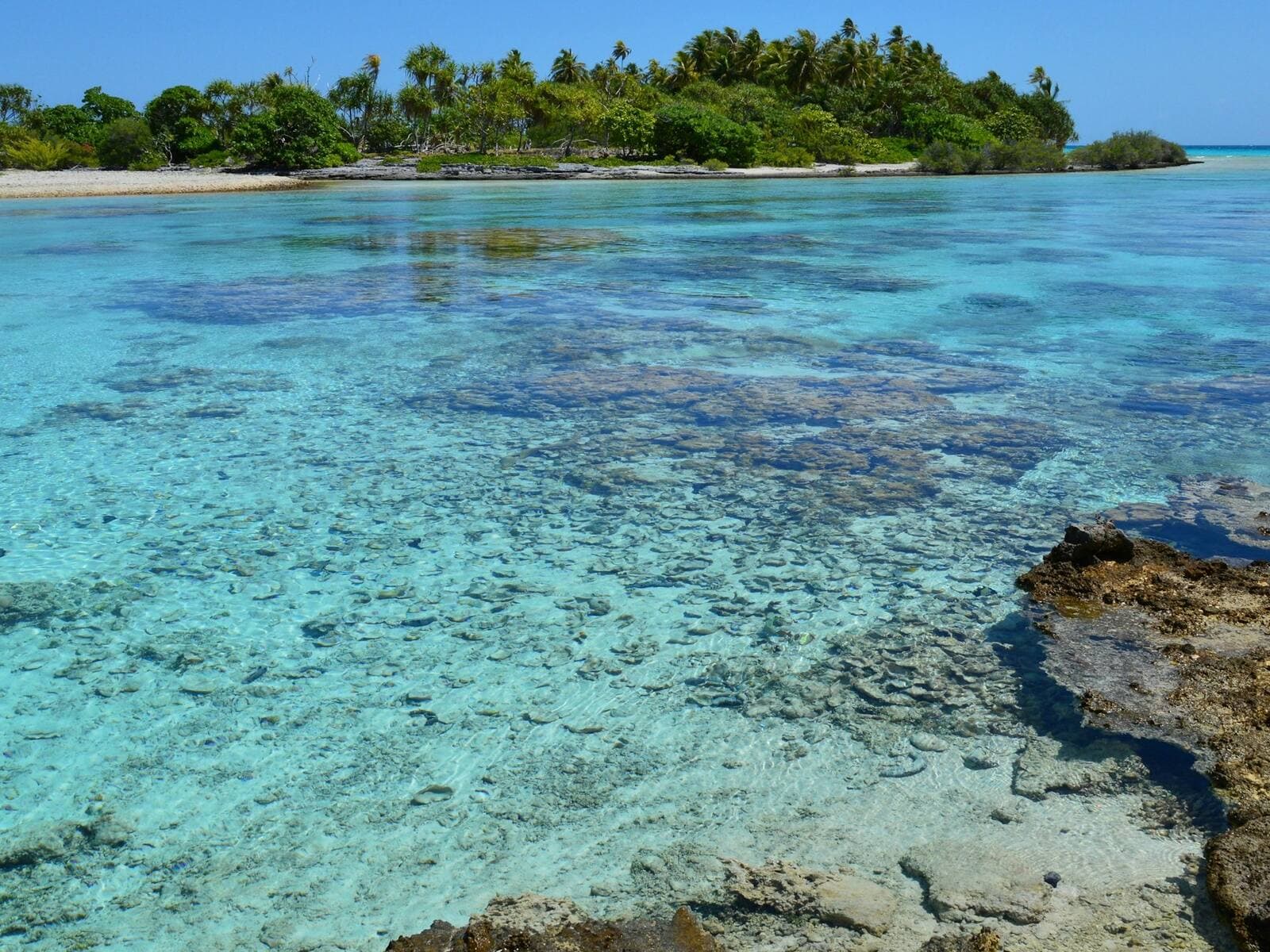
Rangiroa and Fakarava are coral atolls in the Tuamotu Archipelago of French Polynesia, northeast of Tahiti. Each atoll is a ring of low islands around a huge lagoon, connected to the ocean by narrow passes. Twice a day the tide pushes ocean water through these passes, and the current brings in sharks, schooling fish, rays and dolphins. Fakarava is part of a UNESCO biosphere reserve.
Diving here means drift diving. Boats drop divers outside the pass on the incoming tide, and the current carries everyone into the lagoon past reef walls where grey reef sharks hold in the flow. At Rangiroa's Tiputa Pass, bottlenose dolphins often play in the tidal wave at the entrance. At Fakarava's South Pass, hundreds of grey reef sharks can gather in what is often called the wall of sharks. Currents in the passes are strong, and in Fakarava's North Pass they can exceed three knots, so Advanced Open Water and real drift experience are recommended. Operators plan every dive around the tide table.
The water is about 26 to 29°C and visibility is often 15 to 30 m or more. Diving is possible all year, and the best time depends on what you want to see. Great hammerheads visit Tiputa Pass mainly from about December to March. In Fakarava, groupers gather to spawn in the South Pass around the full moon in June or July, attracting even more sharks. June to October is the drier season, although the southeast wind can make crossings rough.
Most divers stay on the atolls and dive with local centres, while a few liveaboards combine several atolls on one trip. These are remote islands, so check your dive insurance and plan conservatively.
Who it suits
Advanced Open Water and drift experience recommended for the passes. Lagoon dives and the gentler South Pass at Fakarava can suit less experienced divers on the right tide.
Dive sites
- Tiputa Pass (Rangiroa)Incoming-tide drift with grey reef sharks, dolphins and seasonal hammerheads. Advanced.
- Garuae / North Pass (Fakarava)Wide pass with fast current, often over three knots; sharks, eagle rays, big schools. Advanced.
- Tumakohua / South Pass (Fakarava)Shallower, gentler pass with the 'wall of sharks'; grouper spawning around the June or July full moon.
What you'll see
Know the risks
- Strong tidal current; an outgoing tide can carry divers out to sea
- Remote atolls far from a recompression chamber
- Cyclone season, roughly November to April
Sources
- Tahiti Tourisme: Drift diving in Rangiroa
- Bluewater Dive Travel: Scuba diving in Rangiroa
- DAN Alert Diver: A tale of two passes (Fakarava)
- Far and Away Adventures: Diving Fakarava North Pass
Last reviewed 2026-10. Where sources disagree we use the more conservative range.