Best time to dive Kimbe Bay
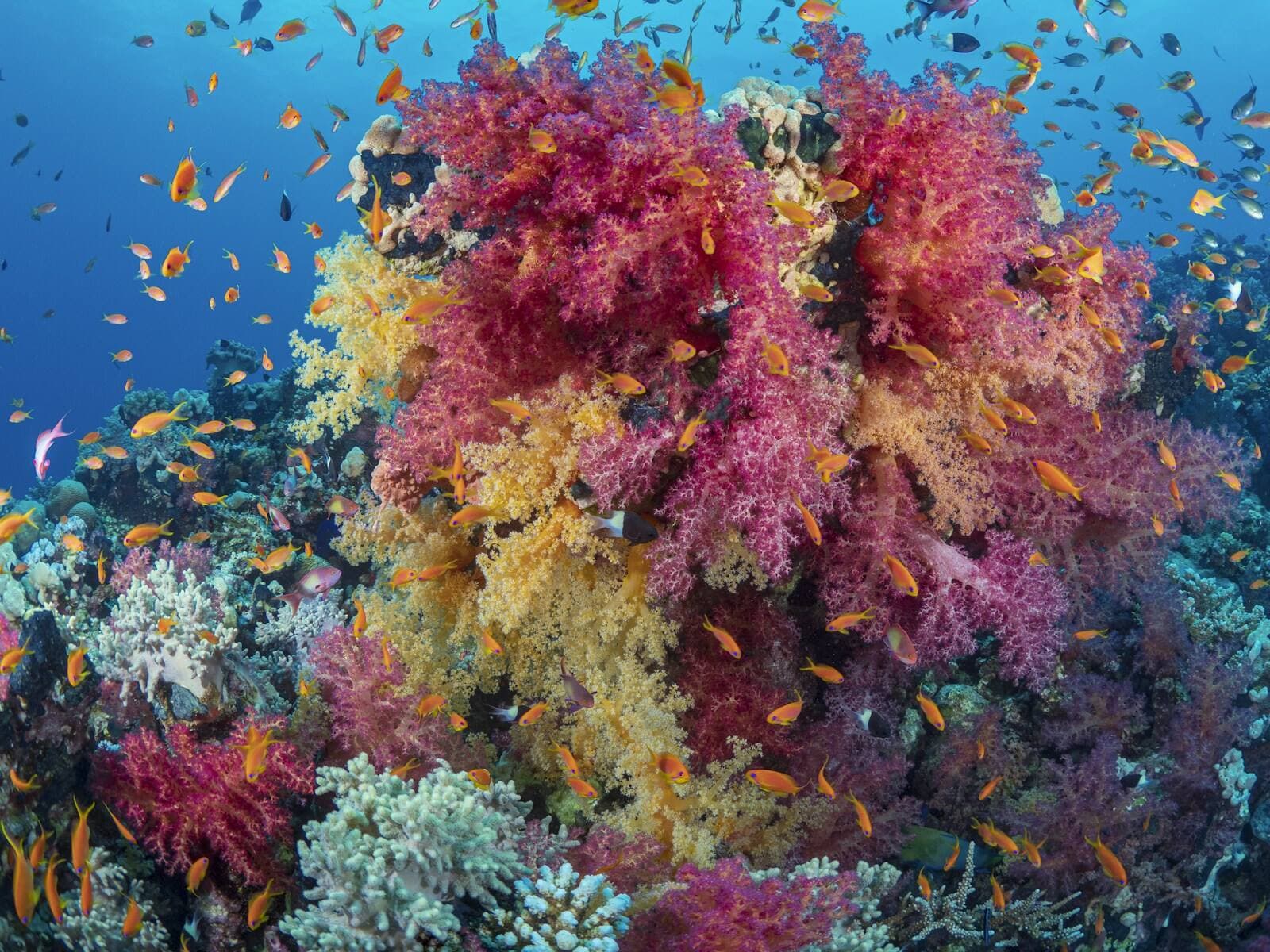
Seamounts and reefs rising from deep water, with huge sea fans, barracuda and very high coral diversity.
At a glance
- Best months
- May to June and September to November for the calmest seas
- Water
- 27–31°CAbout 28°C in October to 31°C in February. A 3 mm suit or rash vestWetsuit month by month →
- Visibility
- 10–40 m
- Current
- ModerateMild to moderate around the seamounts; stronger on some tides
- Certification
- Open WaterMinimum Open Water
- How you dive
- Land-based or liveaboard
When to go
May to June and September to November for the calmest seas; July and August bring southeast winds.
- JanuaryGoodWater 30–31°CRainy
Wet season; rain can lower visibility near shore.
- FebruaryGoodWater 30–31°CRainy
Warmest water; wet season.
- MarchGoodWater 29–31°CRainy
Wet season continues; outer seamounts stay clearer.
- AprilGoodWater 29–30°CSome rain
Rains ease; conditions improve.
- MayPeak seasonWater 29–30°CDry
Calm seas and good visibility. One of the best months.
- JunePeak seasonWater 28–30°CDry
Calm and clear. One of the best months.
- JulyGoodWater 28–29°CDry
Southeast trade winds; choppy crossings.
- AugustGoodWater 28–29°CDry
Trade winds continue; visibility can drop.
- SeptemberPeak seasonWater 28–29°CDry
Winds ease; good diving returns.
- OctoberPeak seasonWater 28–29°CDry
Calm and clear. One of the best months.
- NovemberPeak seasonWater 28–30°CSome rain
Calm with warming water. A good month.
- DecemberGoodWater 29–30°CRainy
Wet season begins.
What makes each month
Each thing worth diving here is rated on its own, month by month: its own season first, then held back a step when the weather is poor or the water is unusually cold for this place. The calendar above takes the best of them. Cold only counts against a month when the highlight does not come with it, so a macro site is never judged by manta-and-visibility rules.
- Seamounts and soft coral
Calmest seas in May to June and September to November; July and August bring southeast winds.
- Weather and sea
- Water °C313130303029292929292930
Overview
Kimbe Bay is a large bay on the north coast of New Britain, in Papua New Guinea. The bay is deep, and dozens of seamounts and reefs rise from the depths almost to the surface. It sits in the Coral Triangle and is known for the variety of its corals.
Most diving is on the seamounts, where the tops at 5–15 m are covered in hard coral and the walls drop away with giant sea fans, barrel sponges and soft coral. Schools of barracuda, jacks and batfish are common, with reef sharks, turtles and, sometimes, dolphins and pilot whales in the bay. Walindi Plantation Resort, near the town of Kimbe, pioneered diving here, and the liveaboard FeBrina runs trips from it to Kimbe Bay and further afield.
The water is about 28–31°C all year. The wet season, roughly December to April, can lower visibility; July and August bring southeast trade winds and choppier seas. May to June and September to November are often the calmest, clearest months, with visibility from 15 m to over 30 m on the outer seamounts.
Getting there and how you dive
Getting there
Fly to Port Moresby, then on to Hoskins airport, about 45 minutes by road from Walindi.
Who it suits
Open Water is enough for most reefs. The tops of the seamounts are at 5–15 m, but they drop to great depth, so buoyancy and depth discipline matter.
Dive sites
- Bradford ShoalsOne of the bay's three big seamounts: coral-covered top, sea fans and schooling fish on the walls.
- Inglis ShoalsLarge seamount with barracuda, jacks and reef sharks around the top.
- Joelle's ReefSeamount known for big sea fans, barrel sponges and a resident barracuda school.
- Susan's ReefReef with huge sea fans and whip corals, a favourite of wide-angle photographers.
- South EmmaReef with soft corals, anemones and dense reef fish.
- Restorf IslandSmall island reef with coral slopes, turtles and reef fish; often a second dive.
- Otto's ReefOffshore reef with barracuda, hard coral and occasional pelagics.
- Christine's ReefSeamount in Kimbe Bay with soft coral, sea fans and schooling fish.
- North EmmaSeamount near South Emma; reef fish and barracuda.
- Malupa ReefOne of the signature Kimbe seamounts; dense fish life and big fans.
- Zero Fighter wreckWWII Japanese Zero sitting nearly intact in shallow water.
- Witu IslandsRemote volcanic islands north-west of Kimbe; walls and muck, by liveaboard.
- Father's ReefsOffshore reefs below the Father volcano, reached by liveaboard; big fish and coral.
What you'll see
Know the risks
- Remote: limited flights, medical help and chamber access
- Wet season, roughly December to April, can lower visibility
- Seamounts drop to great depth: watch your depth
Plan the trip
- Liveaboards
Liveaboards reach sites day boats can't. Compare routes, nights and prices.
How to choose a liveaboard - Dive shops
Where Kimbe Bay dive centres are based and what to check before you book. Shop list in progress.
How to choose a dive shop - Dates and people
Post your dates and how many of you. Divers who know the boats and shops, or are going the same weeks, reply in the community.
Find divers / ask dates - Dive insurance
Most travel policies exclude scuba or cap the depth. Check yours covers diving before you go.
Dive accident cover from DAN ↗
Some of these links may earn us a commission at no cost to you. It never changes what we recommend. How this site is funded
Ask other divers
Questions
When is the best time to dive Kimbe Bay?
May to June and September to November for the calmest seas; July and August bring southeast winds. Peak months on our calendar: May, June, September, October, November.
What is the water temperature in Kimbe Bay?
About 28°C in October to 31°C in February. A 3 mm suit or rash vest.
Can Open Water divers dive Kimbe Bay?
Open Water is enough for most reefs. The tops of the seamounts are at 5–15 m, but they drop to great depth, so buoyancy and depth discipline matter.
How strong is the current in Kimbe Bay?
Mild to moderate around the seamounts; stronger on some tides.
What should divers watch out for in Kimbe Bay?
Remote: limited flights, medical help and chamber access. Wet season, roughly December to April, can lower visibility. Seamounts drop to great depth: watch your depth.
Sources
- Divernet: The wonders of Walindi, a guide to Kimbe Bay
- Dive Adventures: Kimbe Bay and Walindi
- Bluewater Dive Travel: Walindi Plantation Resort
- WWF Coral Triangle blog: Beautiful Walindi, Kimbe Bay
Last reviewed 2026-11. Where sources disagree we use the more conservative range.