Kona
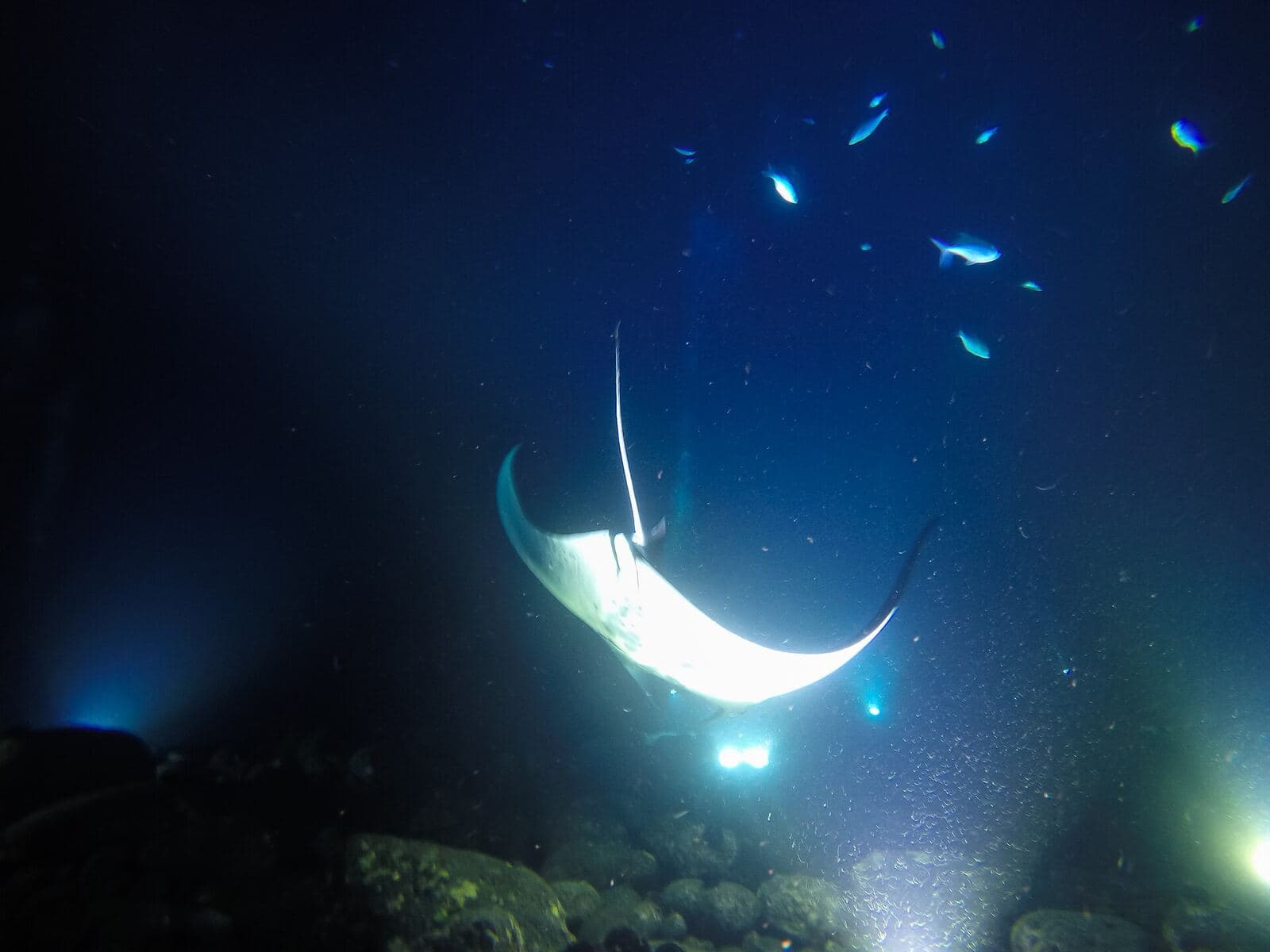
Manta rays at night, lava tubes and arches by day.
.jpg)
At a glance
- Best months
- June to September for the calmest seas and warmest water
- Water
- 24–28°CAbout 24–25°C in winter and 26–28°C in late summer; a 3 mm full suit is common
- Visibility
- 20–30 m
- Current
- MildUsually light along the sheltered west coast; stronger at exposed points
- Certification
- Open WaterMinimum Open Water
- How you dive
- Land-based
When to go
June to September for the calmest seas and warmest water; diveable all year.
Overview
Kona is the dry west coast of the Big Island of Hawaii. The volcanoes Mauna Loa and Hualālai block the trade winds, so the coast stays relatively calm for most of the year. Lava flows shaped the reef into arches, tubes and caverns, and green turtles, moray eels and Hawaiian reef fish are common.
Kona is best known for its manta ray night dive. Boats anchor at Manta Village near Keauhou Bay or at Garden Eel Cove, divers settle on the bottom and point their lights upward, and the plankton they attract brings manta rays in to feed. Mantas live here all year, and operators report seeing them on most nights, though sightings are never guaranteed. The other well-known night dive is blackwater: divers hang on a tether a few kilometres offshore over very deep water to watch small drifting animals. Operators usually ask for Advanced Open Water and around 50 logged dives for it.
Most reef dives are easy. Current is usually light and the water ranges from about 24°C in winter to 28°C in late summer, so Kona suits newer divers as well as experienced ones. Exposed areas, such as the far south of the island, have stronger current and are only for experienced divers.
Diving runs all year. Summer, roughly June to September, brings the warmest water and the calmest seas. Winter brings north swells that can make some shore entries unsafe, but it is also humpback whale season, roughly November to March. Boat diving from Kailua-Kona and Honokōhau Harbor is the main option, with shore diving at sites such as Two Step on calmer days.
Who it suits
Open Water for the reef dives and the manta night dive. Blackwater dives usually need Advanced Open Water and around 50 logged dives.
Dive sites
- Manta Village (Keauhou Bay)Night dive at about 10 m; mantas feed on plankton in dive lights. Usually little current.
- Garden Eel Cove (Manta Heaven)Second manta night site north of the airport; a little deeper, current possible. Garden eels by day.
- Golden ArchesLava arches and tubes at about 9–18 m covered in coral; easy boat dive.
- Turtle PinnacleShallow pinnacle where green turtles come to be cleaned.
What you'll see
Know the risks
- Winter north swells close some shore entries
- Night diving and boat traffic at the manta sites
- Blackwater dives over very deep water, tethered to the boat
Sources
- Kona Honu Divers: Best season for diving in Kona
- Kona Honu Divers: Blackwater dive
- PADI Blog: 7 top dive sites around Hawaii's Big Island
- Bluewater Dive Travel: Kona dive travel guide
Last reviewed 2026-10. Where sources disagree we use the more conservative range.