Best time to dive Malapascua
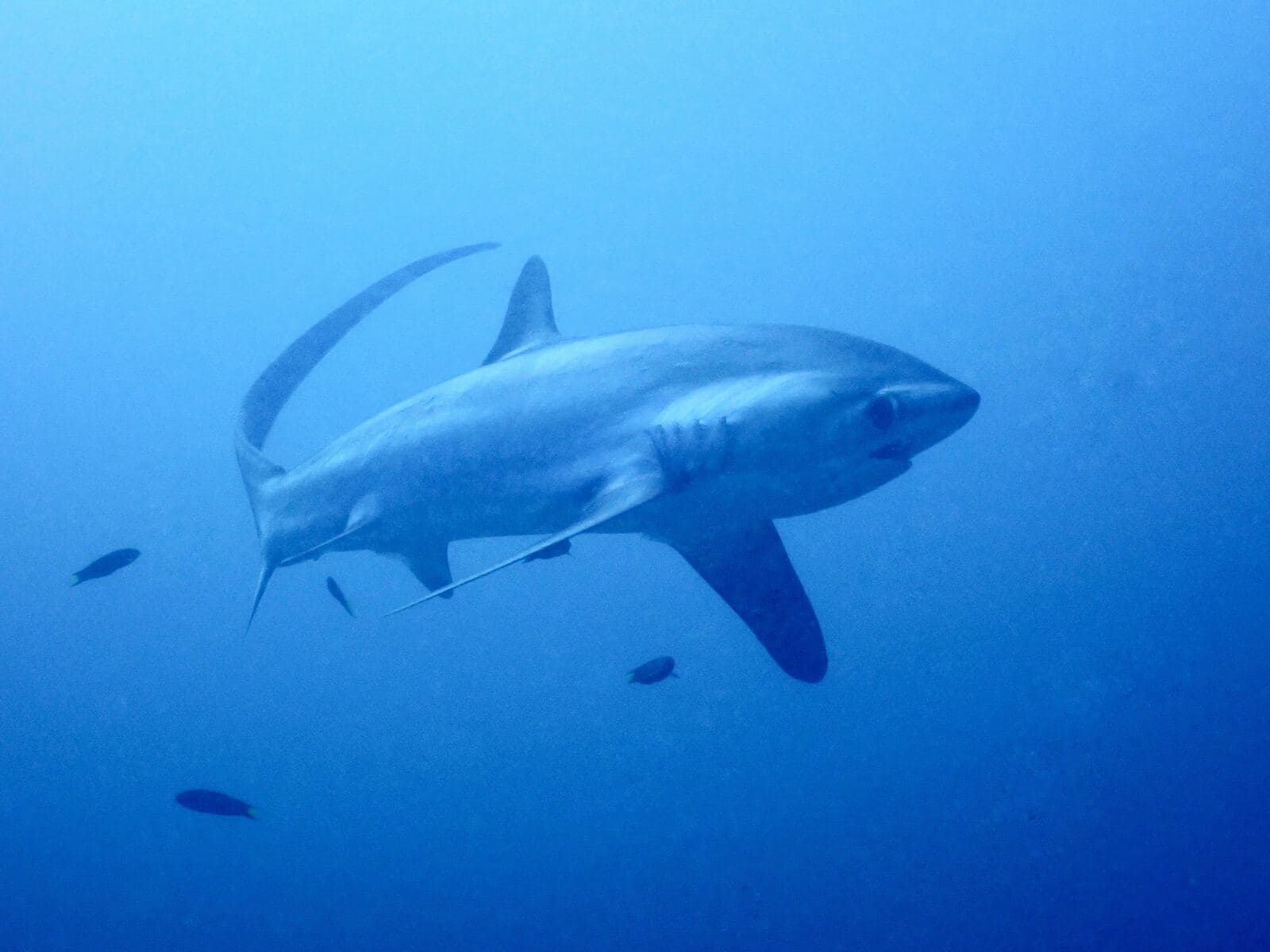
Dawn dives to watch thresher sharks visit their cleaning stations.
At a glance
- Best months
- March to May for the calmest seas
- Water
- 24–30°CAbout 25°C in January, up to about 29°C in May. 3 mm, or 5 mm in the cooler monthsWetsuit month by month →
- Visibility
- 10–25 m
- Current
- ModerateUsually mild to moderate; can pick up on the shoals and around Gato Island
- Certification
- AdvancedSome sites possible for Open Water
- How you dive
- Land-based
When to go
March to May for the calmest seas; threshers are seen all year.
- JanuaryGoodBest for: Thresher sharks, Macro and crittersWater 26–27°CSome rain
Cooler water, and northeast winds can make the crossing to Monad Shoal choppy. Threshers are seen all year.
- FebruaryGoodBest for: Thresher sharks, Macro and crittersWater 26–27°CDry
Winds easing. At about 26–27°C many divers wear 5 mm on the dawn dives.
- MarchPeak seasonBest for: Thresher sharksWater 27°CDry
Calm seas and clear water begin; a good month for threshers and Gato Island.
- AprilPeak seasonBest for: Thresher sharksWater 28°CDry
Calm, dry and warming; one of the best months.
- MayPeak seasonBest for: Thresher sharksWater 28–29°CDry
Warm, calm and often the clearest water of the year.
- JuneGoodBest for: Thresher sharks, Macro and crittersWater 29–30°CSome rain
The warmest water; rain becomes more frequent.
- JulyGoodBest for: Thresher sharks, Macro and crittersWater 29°CRainy
Typhoon season begins. Diving goes on, but boats stay in when storms pass.
- AugustGoodBest for: Thresher sharks, Macro and crittersWater 29°CRainy
Wet, with typhoon risk; the thresher dive runs on calm days.
- SeptemberGoodBest for: Thresher sharks, Macro and crittersWater 29°CRainy
Typhoon season continues, with fewer visitors.
- OctoberGoodBest for: Thresher sharks, Macro and crittersWater 29°CRainy
The last month of the main typhoon window; still warm at about 29°C.
- NovemberGoodBest for: Thresher sharks, Macro and crittersWater 28–29°CRainy
Rain and wind ease, though late-season storms are possible.
- DecemberGoodBest for: Thresher sharks, Macro and crittersWater 27–28°CSome rain
Northeast winds return, with cooling water and choppier seas.
What makes each month
Each thing worth diving here is rated on its own, month by month: its own season first, then held back a step when the weather is poor or the water is unusually cold for this place. The calendar above takes the best of them. Cold only counts against a month when the highlight does not come with it, so a macro site is never judged by manta-and-visibility rules.
- Thresher sharks
Threshers at Monad Shoal all year; March to May has the calmest crossings and clearest water.
- Macro and critters
Macro and muck sites all year.
- Weather and sea
- Water °C272727282930292929292928
Overview
Malapascua is a small island off the northern tip of Cebu in the Philippines. It is famous for pelagic thresher sharks, which rise from deep water in the early morning to be cleaned on Monad Shoal, a seamount a short boat ride from the island. Watching them glide past with their long, curved tails is one of the most distinctive encounters in Asian diving.
The thresher dive is simple in style but not shallow. Boats leave before sunrise, and divers kneel or hover on the plateau at about 25 to 30 metres and wait quietly near the cleaning stations. Advanced Open Water is the usual recommendation, nitrox is widely offered to extend bottom time, and flash photography is not allowed. Many operators also dive Kimud Shoal, where local rules reportedly require less experienced divers to go with a dive professional. Sightings are frequent but never guaranteed.
Away from the sharks, Malapascua has varied easy diving. Gato Island is a marine reserve with a tunnel that cuts through the rock, whitetip reef sharks resting under ledges and plenty of macro. Shallow reef and muck sites close to the island suit newer divers, and the Doña Marilyn ferry wreck offers a deeper dive.
Threshers are seen year-round. March to May usually brings the calmest seas and good visibility, typically 15 to 25 m. The typhoon season runs roughly from July to October and can bring rough surface conditions, reduced visibility and cancelled days, so leave spare days if you travel then. Water is about 25°C in January and around 29°C by May.
Who it suits
Advanced Open Water recommended for Monad Shoal, where divers wait at about 25–30 m. At Kimud Shoal, local rules reportedly let Open Water divers join only with a dive professional.
Dive sites
- Monad ShoalSeamount with thresher cleaning stations at about 25–30 m; dawn dives, no strobes. Advanced.
- Kimud ShoalSecond thresher site; local rules reportedly require less experienced divers to go with a pro.
- Gato IslandMarine reserve with a tunnel through the island, whitetip sharks and macro. Better for experienced divers.
- Doña Marilyn wreckFerry sunk in a 1988 typhoon, lying to about 32 m; rays and whitetips. Partly salvaged.
- LighthouseShallow sand and seagrass with mandarinfish at dusk.
- Chocolate IslandSmall island reef with corals, macro and reef fish.
- Calanggaman IslandDay trip with walls and sandbanks to the south.
- Lapus LapusMalapascua's best coral and a favourite for macro: nudibranchs, frogfish and pygmy seahorses.
- Bugtong BatoLarge pinnacle teeming with fish life; for intermediate and experienced divers.
- Dakit DakitShallow reef off Malapascua, about 15 m max; easy and good for night dives.
- BantigueShallow reef off the south of Malapascua, about 12 m max.
- Capitancillo IslandMarine sanctuary on an islet south of Malapascua; colourful reef, day trip.
- Gato Island TunnelSwim-through tunnel at Gato where whitetip reef sharks rest; sea snakes outside.
- Deep SlopeSloping reef near Malapascua with mandarinfish at dusk.
What you'll see
| Animal | J | F | M | A | M | J | J | A | S | O | N | D |
|---|---|---|---|---|---|---|---|---|---|---|---|---|
| Thresher sharksMonad Shoal at dawn, all year. March to May has the calmest seas. | January: possible | February: possible | March: possible | April: possible | May: possible | June: possible | July: possible | August: possible | September: possible | October: possible | November: possible | December: possible |
Know the risks
- Deep dives at dawn; nitrox helps but watch no-decompression limits
- Typhoon season, roughly July to October
- Thresher sightings are never guaranteed
Compare
Plan the trip
- Dive shops
2 dive centres and day boats at Malapascua, where they are based and what to check before you book.
See Malapascua dive shops - Dates and people
Post your dates and how many of you. Divers who know the boats and shops, or are going the same weeks, reply in the community.
Find divers / ask dates - Dive insurance
Most travel policies exclude scuba or cap the depth. Check yours covers diving before you go.
Dive accident cover from DAN ↗
Some of these links may earn us a commission at no cost to you. It never changes what we recommend. How this site is funded
Ask other divers
Questions
When is the best time to dive Malapascua?
March to May for the calmest seas; threshers are seen all year. Peak months on our calendar: March, April, May.
What is the water temperature in Malapascua?
About 25°C in January, up to about 29°C in May. 3 mm, or 5 mm in the cooler months.
Can Open Water divers dive Malapascua?
Advanced Open Water recommended for Monad Shoal, where divers wait at about 25–30 m. At Kimud Shoal, local rules reportedly let Open Water divers join only with a dive professional.
How strong is the current in Malapascua?
Usually mild to moderate; can pick up on the shoals and around Gato Island.
What should divers watch out for in Malapascua?
Deep dives at dawn; nitrox helps but watch no-decompression limits. Typhoon season, roughly July to October. Thresher sightings are never guaranteed.
Sources
- Liveaboard.com: Best time to dive in Malapascua
- Bluewater Dive Travel: Malapascua Island diving
- Zublu: Thresher sharks of Malapascua
- Sea Explorers: Diving Kimud Shoal, new MPA rules
- Malapascua Island weather by month (weather2travel)
- Divein: best dive sites in Malapascua
Last reviewed 2026-10. Where sources disagree we use the more conservative range.