Best time to dive Malta and Gozo
Clear Mediterranean water, wrecks and limestone caverns you can reach from the shore.
At a glance
- Best months
- June to October
- Water
- 15–26°CAbout 15°C in winter (semi-dry or drysuit) to 26°C in AugustWetsuit month by month →
- Visibility
- 20–40 m
- Current
- MildMostly mild
- Certification
- Open WaterMinimum Open Water
- How you dive
- Land-based
When to go
June to October; September and October are often the best balance.
- JanuaryOff seasonWater 15–17°CRainy
Cold water, so a thick wetsuit or a drysuit. Winter wind and rain can close exposed sites for days. Few divers.
- FebruaryOff seasonWater 14–16°CRainy
Usually the coldest water of the year, about 15°C. Wind and rough seas are common; sites are quiet when diveable.
- MarchOff seasonWater 14–17°CSome rain
Water still about 15°C. The weather starts to settle, but bad days can still stop diving.
- AprilOff seasonWater 15–18°CSome rain
Water about 16°C and still cold. Some operators start their season. Bad weather can still cancel dives.
- MayGoodWater 16–21°CSome rain
Water warms to about 19°C on average. Visibility is often good and sites are quieter than in summer.
- JunePeak seasonWater 20–25°CDry
Water about 22°C and seas usually calm, with little or no rain. Summer visibility is often 30 m or more.
- JulyPeak seasonWater 23–27°CDry
Water about 25°C, so a thin wetsuit is enough. Calm and dry. Popular sites such as Dwejra get crowded; jellyfish possible.
- AugustPeak seasonWater 24–28°CDry
Warmest water of the year, about 26°C. Calm seas and good visibility, but the busiest month at shore sites.
- SeptemberPeak seasonWater 24–27°CSome rain
Water still about 25°C with good visibility and fewer people than August. The first autumn storms are possible late in the month.
- OctoberPeak seasonWater 21–24°CSome rain
Water about 23°C. Mostly settled, but autumn wind can blow hard and shut north and west coast sites for days.
- NovemberGoodWater 19–23°CRainy
Water about 21°C and cooling. Often wet and windy, so expect some lost days. Quiet sites.
- DecemberOff seasonWater 16–19°CRainy
Water about 17 to 18°C, so a thick wetsuit or a drysuit. Winter wind and rain often affect the sea state.
What makes each month
Each thing worth diving here is rated on its own, month by month: its own season first, then held back a step when the weather is poor or the water is unusually cold for this place. The calendar above takes the best of them. Cold only counts against a month when the highlight does not come with it, so a macro site is never judged by manta-and-visibility rules.
- Wrecks and caverns
Calm seas, 22–26°C water and 30 m visibility from June to October; winter water is about 15°C with frequent lost days.
- Weather and sea
- Water °C161516171923252626232118
Cold for here
Overview
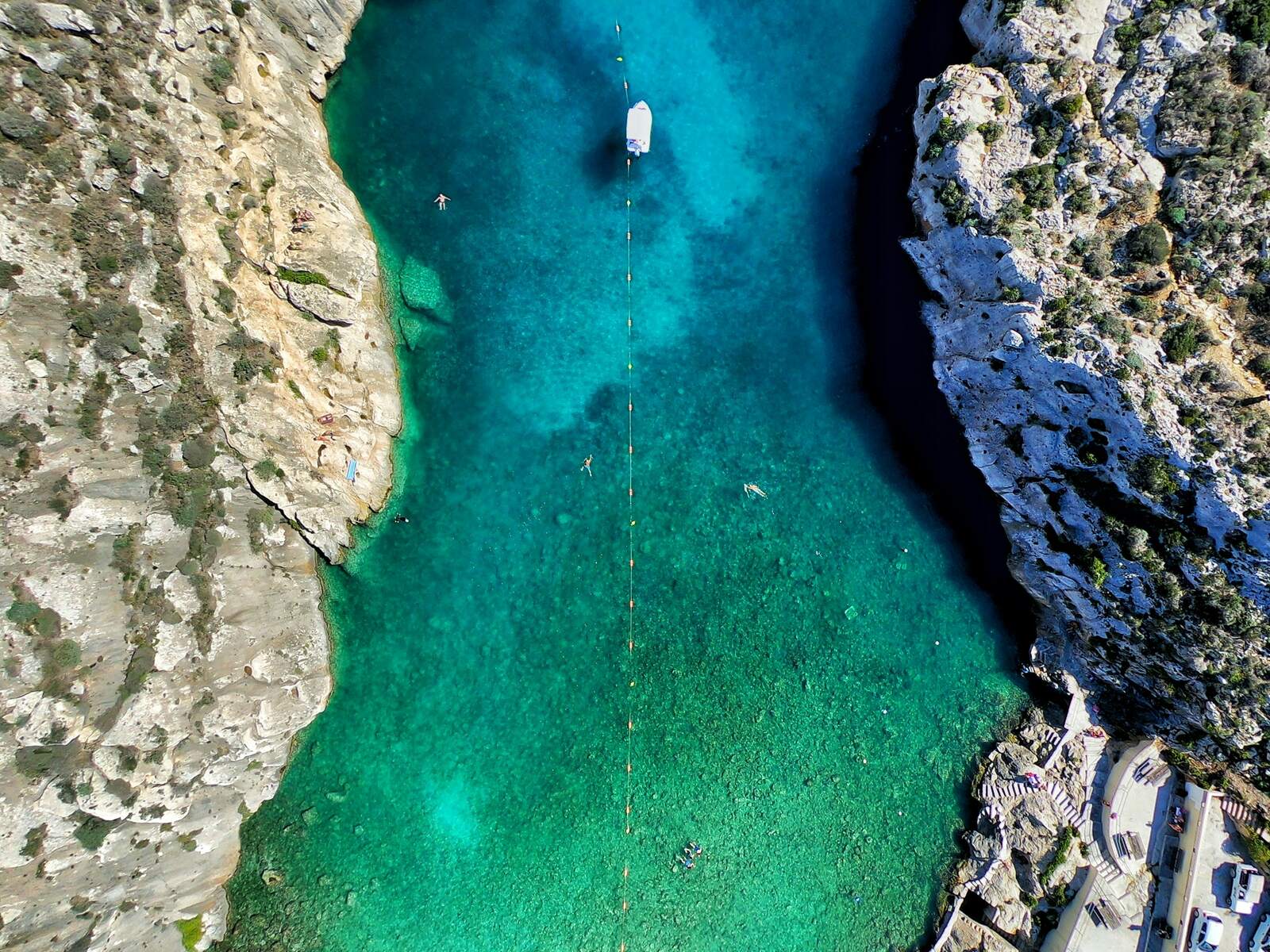
Malta and its smaller sister island Gozo, in the middle of the Mediterranean, offer some of Europe's best warm-season diving. The water is very clear, the limestone coast is full of caverns, arches and swim-throughs, and there are many wrecks, from small boats to purpose-sunk ferries.
Much of the diving is from the shore, which makes it flexible and good value. Currents are generally mild. Marine life is typical of the Mediterranean rather than tropical, and the scenery is the main draw.
The best time is June to October, when the water is 22 to 26°C. September and October keep the summer warmth with fewer crowds. Diving continues in winter, but the water falls to about 15°C and rough weather can close sites.
Getting there and how you dive
Getting there
Fly to Malta, then take the Gozo Channel ferry from Ċirkewwa to Mġarr, which carries cars and foot passengers around the clock and takes about 25 minutes. A foot-passenger fast ferry also runs from Valletta to Mġarr in about 45 minutes.
How you dive
Most Gozo diving is from the shore: dive centres, many based around Marsalforn, drive divers and tanks to the sites. The Blue Hole and the Inland Sea at Dwejra are shore dives reached by a rocky path from the car park, and are often done on the same day.
Who it suits
Open Water friendly. Deeper wrecks and caverns need Advanced certification and the right training.
Dive sites
- Blue Hole (Gozo)Shore dive through a rock pool and arch to the open sea, near the former Azure Window; to about 25 m.
- Inland Sea (Gozo)Tunnel from a lagoon out to a deep wall; shore entry, weather-dependent.
- Um El Faroud (Malta)110 m wreck scuttled as an artificial reef, around 30 to 36 m. Advanced; penetration needs training.
- Cirkewwa: P29 and Rozi (Malta)Shore dive to two purpose-sunk wrecks; P29 reaches about 35 m.
- Santa Maria Caves (Comino)Shallow caves you swim through end to end; octopus, lobsters and morays.
- Wied il-Mielaħ (Gozo)Window arch and wall with blue water.
- Xatt l-Aħmar wrecks (Gozo)Scuttled ferries including MV Karwela; intact wrecks, moderate to deep.
- Reqqa Point (Gozo)Northern point with a steep wall and big fish.
- HMS Maori (Valletta)WWII destroyer wreck in shallow water near Valletta.
- Blue Grotto (Malta)Caves and arches off the south coast of Malta.
- Lantern Point (Comino)Point off Comino with a chimney swim-through and a wall to 40 m. Advanced.
- Irqieqa Point (Comino)Thin finger of land on Comino's south-west tip with a sheer drop to 40 m.
- Crystal Lagoon (Comino)Clear shallow lagoon with caves on the outside; easy.
- Billinghurst Cave (Gozo)Long cave near Għasri, about 100 m deep into the cliff; advanced.
- Coral Cave (Gozo)Large cave mouth near Dwejra with soft coral on the walls.
- Fungus Rock (Gozo)Rock off Dwejra with walls dropping past 40 m; boat dive.
- Imperial Eagle (Malta)Ferry wreck at 35–40 m off north-east Malta, near the Christ statue.
- Blenheim Bomber (Malta)WWII bomber at about 42 m off Xrobb l-Għaġin. Technical depth.
- Għar Lapsi (Malta)Shore dive from a sea-level inlet with caves and swim-throughs; good for training.
What you'll see
Know the risks
- Cold water from December to April
- Rough weather can close sites
- Overhead environments need proper training
Plan the trip
- Dive shops
5 dive centres and day boats at Malta and Gozo, where they are based and what to check before you book.
See Malta and Gozo dive shops - Dates and people
Post your dates and how many of you. Divers who know the boats and shops, or are going the same weeks, reply in the community.
Find divers / ask dates - Dive insurance
Most travel policies exclude scuba or cap the depth. Check yours covers diving before you go.
Dive accident cover from DAN ↗
Some of these links may earn us a commission at no cost to you. It never changes what we recommend. How this site is funded
Ask other divers
Questions
When is the best time to dive Malta and Gozo?
June to October; September and October are often the best balance. Peak months on our calendar: June, July, August, September, October.
What is the water temperature in Malta and Gozo?
About 15°C in winter (semi-dry or drysuit) to 26°C in August.
Can Open Water divers dive Malta and Gozo?
Open Water friendly. Deeper wrecks and caverns need Advanced certification and the right training.
How strong is the current in Malta and Gozo?
Mostly mild.
What should divers watch out for in Malta and Gozo?
Cold water from December to April. Rough weather can close sites. Overhead environments need proper training.
Sources
- Sea temperature by month: Gozo
- Original Diving: Best time to dive in Gozo
- TDI: Ten best dive sites in Malta and Gozo
- Guide Me Malta: 9 diving spots in the Maltese islands
- Meerestemperatur.de: Sea temperature in Gozo by month
- Malta Uncovered: Gozo weather
- The Bucket List Company: Best time for scuba diving in Gozo
- Big World Small Pockets: Ferries to Gozo from Malta
- Visit Gozo: Top 10 diving sites in Gozo and Comino
- SSI: Blue Hole Diving Gozo, Marsalforn
- Visit Malta: boat dives
Last reviewed 2026-10. Where sources disagree we use the more conservative range.