Best time to dive Maui
The sunken crater of Molokini, the lava cathedrals of Lanai and humpback whales singing in winter.
At a glance
- Best months
- May to October for calmer seas and warmer water
- Water
- 23–27°CAbout 23–24°C in February and March and 26–27°C in late summer. 3 mm, or 5 mm in winterWetsuit month by month →
- Visibility
- 15–40 m
- Current
- ModerateUsually light inside Molokini and at the south shore sites; the Back Wall is a drift and the channel to Lanai can be rough
- Certification
- Open WaterMinimum Open Water
- How you dive
- Land-based
When to go
May to October for calmer seas and warmer water; December to April for humpback whales. Diveable all year.
- JanuaryGoodWater 24–25°CSome rain
Humpback whale season; whale song often heard underwater. Winter swell on north and west shores.
- FebruaryGoodWater 23–24°CSome rain
Peak whale season and some of the coolest water, about 23–24°C.
- MarchGoodWater 23–24°CSome rain
Whales still around; cool water and changeable weather.
- AprilGoodWater 24–25°CDry
Whales leaving; conditions settling.
- MayPeak seasonWater 25–26°CDry
Calmer, warmer; good month for Lanai and the Back Wall.
- JunePeak seasonWater 25–26°CDry
Settled summer weather; south swells can stir up the south shore.
- JulyPeak seasonWater 26–27°CDry
Warm and usually calm in the mornings; busy summer season.
- AugustPeak seasonWater 26–27°CDry
Among the warmest water of the year.
- SeptemberPeak seasonWater 26–27°CDry
Warm water and fewer visitors.
- OctoberPeak seasonWater 26–27°CSome rain
Warm; quieter season before the whales return.
- NovemberGoodWater 25–26°CSome rain
Cooling slightly; first winter swells. Early humpbacks may arrive.
- DecemberGoodWater 24–25°CSome rain
Humpbacks arriving; holiday crowds.
What makes each month
Each thing worth diving here is rated on its own, month by month: its own season first, then held back a step when the weather is poor or the water is unusually cold for this place. The calendar above takes the best of them. Cold only counts against a month when the highlight does not come with it, so a macro site is never judged by manta-and-visibility rules.
- Molokini, turtles and lava caverns
Calmer, warmer water from May to October. Humpbacks from December to April are mostly heard underwater, not seen.
- Weather and sea
- Water °C252424252626272727272625
Overview
Maui is the second-largest Hawaiian island, and most diving happens off its dry, sheltered south and west coasts. Boats leave from Ma'alaea Harbor and Kihei, usually early in the morning before the trade winds pick up.
The best-known dive is Molokini, a crescent-shaped volcanic crater a few kilometres off the south coast that is now a marine reserve. Inside the crater, reef slopes run from about 10 m with very clear water and plenty of reef fish; outside, the Back Wall drops far beyond recreational depth and is dived as a drift by experienced divers. Reef's End, at the tip of the crescent, often has bigger fish.
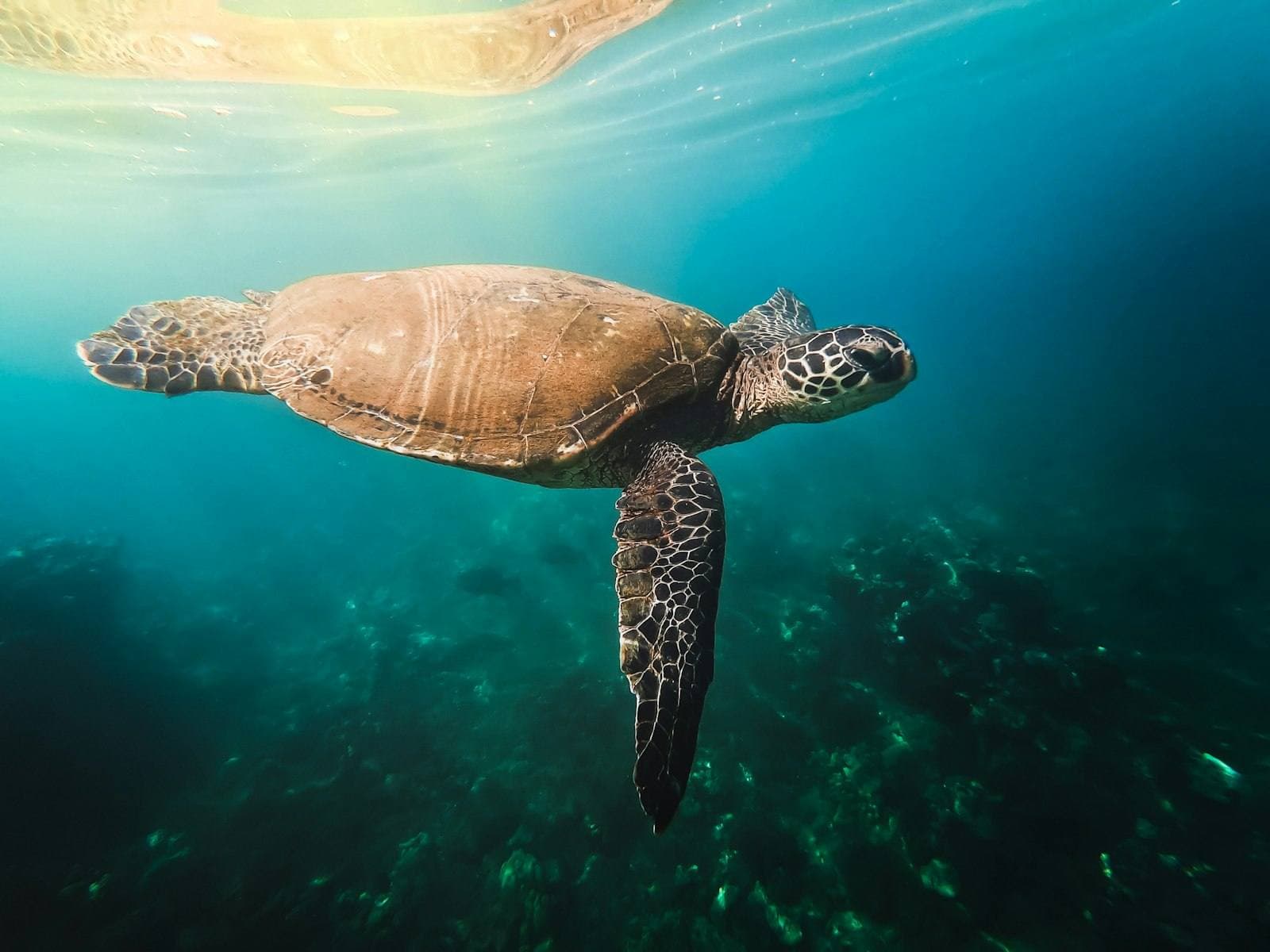
Boats also cross to Lanai, about 40 minutes away, for the First and Second Cathedrals, large lava caverns with light beaming through holes in the roof. Along the south coast, Turtle Town and Five Caves near Makena are easy dives with green turtles, lava formations and small caverns, and the St. Anthony, a small wreck sunk as an artificial reef in 1997, lies off Kihei.
Water is about 23–27°C year round. Summer brings the calmest seas, while December to April is humpback whale season, when divers often hear whales singing underwater.
Getting there and how you dive
Getting there
Fly to Kahului (OGG) on Maui, with direct flights from the US mainland and via Honolulu.
Who it suits
Open Water for Molokini's inside, Turtle Town and the Lanai Cathedrals. Molokini's Back Wall is a deep drift for Advanced Open Water divers.
Dive sites
- Molokini Back WallDrift along the outer wall of the crater, which drops far below recreational depth; clear water, pelagics possible. Advanced.
- Molokini inside craterReef slopes inside the crescent from about 10 m with very clear water and dense reef fish; easy.
- Reef's End (Molokini)Tip of the crater's crescent where the reef drops into deeper water; reef sharks and bigger fish.
- First Cathedral (Lanai)Large lava cavern off Lanai with light beams through holes in the roof; about 40 minutes by boat from Maui.
- Second Cathedral (Lanai)Second lava cavern with several openings and swim-throughs.
- St. Anthony wreckSmall longline fishing boat sunk off Kihei in 1997 as an artificial reef, in about 20 m; turtles and frogfish.
- Turtle Town (Maluaka)Shallow lava reef off Maluaka Beach with many green turtles.
- Five Caves (Makena Landing)Lava arches and small caves in about 10–18 m with turtles and white-tip reef sharks.
- Black Rock (Kaanapali)Shore dive along a lava point at Kaanapali Beach, to about 10 m; turtles. Some operators report reef decline here.
- Mokuho'oniki (Molokai)Rock off Molokai where schools of hammerheads are often seen; rough channel crossing.
- Fish Rain (Molokai)Advanced drift dive with big fish.
- Mala WharfCollapsed pier off Lahaina with turtles and whitetips under the rubble.
- Honolua BayNorthwest marine conservation bay; shore dive in calm summer seas.
- Ulua BeachEasy Wailea shore dive with turtles and reef fish.
- Fish Bowl (Molokai)Molokai reef with lots of small fish life.
What you'll see
| Animal | J | F | M | A | M | J | J | A | S | O | N | D |
|---|---|---|---|---|---|---|---|---|---|---|---|---|
| Humpback whalesWinter visitors from Alaska; often heard singing underwater. Sources give December or January to April, sometimes into May. | January: best | February: best | March: best | April: possible | May: not expected | June: not expected | July: not expected | August: not expected | September: not expected | October: not expected | November: not expected | December: possible |
Know the risks
- Afternoon trade winds make the channels rough
- Deep, current-swept drift on the Back Wall
- Winter swells can close some shore entries
Plan the trip
- Dive shops
Where Maui dive centres are based and what to check before you book. Shop list in progress.
How to choose a dive shop - Dates and people
Post your dates and how many of you. Divers who know the boats and shops, or are going the same weeks, reply in the community.
Find divers / ask dates - Dive insurance
Most travel policies exclude scuba or cap the depth. Check yours covers diving before you go.
Dive accident cover from DAN ↗
Some of these links may earn us a commission at no cost to you. It never changes what we recommend. How this site is funded
Ask other divers
Questions
When is the best time to dive Maui?
May to October for calmer seas and warmer water; December to April for humpback whales. Diveable all year. Peak months on our calendar: May, June, July, August, September, October.
What is the water temperature in Maui?
About 23–24°C in February and March and 26–27°C in late summer. 3 mm, or 5 mm in winter.
Can Open Water divers dive Maui?
Open Water for Molokini's inside, Turtle Town and the Lanai Cathedrals. Molokini's Back Wall is a deep drift for Advanced Open Water divers.
How strong is the current in Maui?
Usually light inside Molokini and at the south shore sites; the Back Wall is a drift and the channel to Lanai can be rough.
What should divers watch out for in Maui?
Afternoon trade winds make the channels rough. Deep, current-swept drift on the Back Wall. Winter swells can close some shore entries.
Sources
- SSI: The ultimate guide to Maui scuba diving
- Bluewater Dive Travel: Maui diving
- Scuba Diving: Ultimate guide to scuba diving Maui
- Dive.site: Maui
- SSI: St. Anthony wreck
- In2Scuba Diving Maui: Black Rock Kaanapali
- Lahaina Divers: Maui overview
Last reviewed 2026-11. Where sources disagree we use the more conservative range.