Best time to dive Monterey Bay
Cold, green, wildly alive: kelp forests, sea otters overhead and some of the best shore diving in the US.
At a glance
- Best months
- September to November, when the bay is calmest and clearest
- Water
- 10–15°CAbout 10–12°C in spring and 13–15°C in late summer and autumn; colder at depth. Drysuit or 7 mm with hood and glovesWetsuit month by month →
- Visibility
- 3–18 m
- Current
- MildLittle current at the sheltered shore sites; surge and swell are the main issues
- Certification
- AdvancedSome sites possible for Open Water
- How you dive
- Land-based
When to go
September to November, when the bay is calmest and clearest; diveable all year.
- JanuaryGoodWater 11–13°CRainy
Winter storms and big swell close sites some days; clear water on calm days.
- FebruaryGoodWater 11–12°CRainy
Rain and swell; gray whales migrating past offshore.
- MarchGoodWater 10–12°CSome rain
Spring upwelling starting; colder, greener water.
- AprilGoodWater 10–11°CDry
Usually the coldest water, about 10°C, and plankton blooms. Gray whales heading north.
- MayGoodWater 10–12°CDry
Upwelling and wind; visibility often low but life is rich.
- JuneGoodWater 11–13°CDry
Kelp canopy thickening; visibility variable.
- JulyGoodWater 12–14°CDry
Summer fog and wind; humpback whales feeding in the bay.
- AugustGoodWater 13–15°CDry
Warming slightly; conditions improving.
- SeptemberPeak seasonWater 13–15°CDry
Start of the best season: calmer seas, clearer water.
- OctoberPeak seasonWater 13–15°CDry
Often the clearest water of the year.
- NovemberPeak seasonWater 12–14°CSome rain
Still good before the winter storms arrive.
- DecemberGoodWater 11–13°CRainy
Storms and swell begin; plan around the forecast.
What makes each month
Each thing worth diving here is rated on its own, month by month: its own season first, then held back a step when the weather is poor or the water is unusually cold for this place. The calendar above takes the best of them. Cold only counts against a month when the highlight does not come with it, so a macro site is never judged by manta-and-visibility rules.
- Kelp forest and invertebrates
Calmest seas and clearest water from September to November; spring upwelling brings 10°C green water but rich life.
- Weather and sea
- Water °C121211111112131414141312
Overview
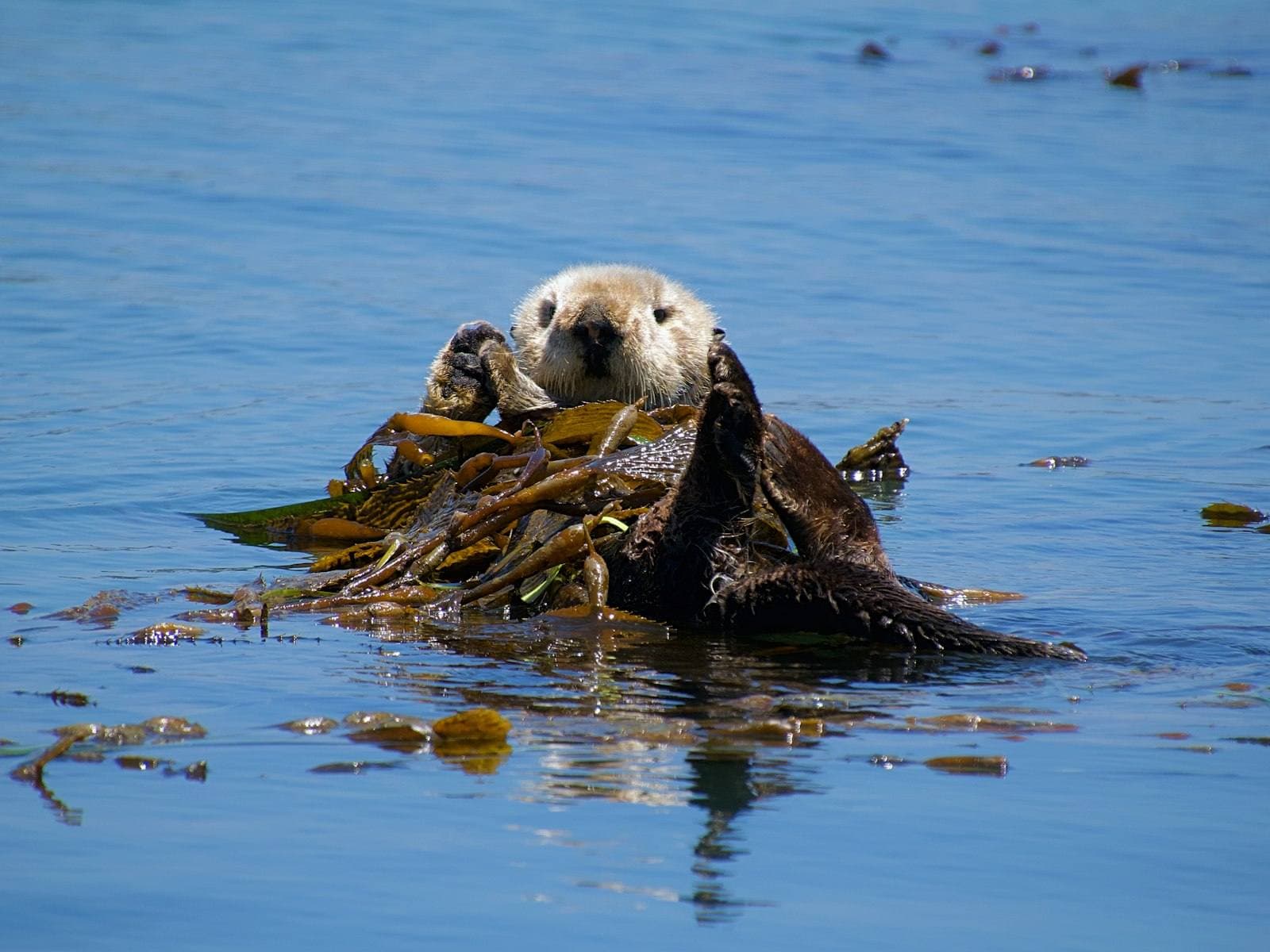
Monterey Bay, about two hours south of San Francisco, is the centre of California's cold-water diving. The Monterey Bay National Marine Sanctuary covers the bay, and cold, nutrient-rich water welling up from a deep submarine canyon feeds giant kelp forests, rockfish, lingcod, nudibranchs, anemones and a crowd of marine mammals. Sea otters float in the kelp overhead and harbor seals often come close to divers.
Most diving is from shore. The Breakwater at San Carlos Beach in Monterey is the classic training site: a gentle sandy entry, kelp, sea lions on the breakwater and depths from 5 to about 20 m. Lovers Point and McAbee Beach are nearby. South of Carmel, Point Lobos State Natural Reserve is one of the best dives on the coast; diving is only allowed at Whalers Cove and Bluefish Cove, with a reservation and a limited number of buddy teams per day.
The water is cold all year, about 10–15°C. A US marine sanctuary page puts typical visibility at about 6–9 m, with peaks around 18 m from September to November, when upwelling eases and the swell is smallest. Spring upwelling turns the water green and cold, and winter storms can close sites for days.
Getting there and how you dive
Getting there
Fly to San Francisco or San Jose and drive about two hours, or to the small Monterey Regional Airport.
Who it suits
Open Water divers with cold-water training can dive the Breakwater and Lovers Point. Point Lobos and Monastery Beach have harder entries; more experience helps.
Dive sites
- Breakwater (San Carlos Beach)Gentle sandy entry next to the harbour breakwater; kelp, sea lions and invertebrates in 5–20 m. The classic training site.
- Metridium FieldBoat dive off the Breakwater onto a field of white Metridium anemones at about 20–25 m.
- McAbee BeachSmall beach on Cannery Row with a sandy entry, kelp and rocky reef.
- Lovers PointSheltered cove in Pacific Grove with kelp and rocky reef in 5–15 m.
- Whalers Cove (Point Lobos)Entry point for Point Lobos; kelp, harbor seals and rockfish in a no-take reserve. Reservation required.
- Bluefish Cove (Point Lobos)Long surface swim or boat from Whalers Cove; walls and pinnacles to about 25 m with dense invertebrate life.
- Monastery BeachSteep beach in Carmel with kelp and a deep canyon close to shore; dangerous shore break, experienced divers only.
- Coral Street (Chase)Site off Coral Street inside Point Pinos; exposed to wind and swell.
- Copper Roof House (Carmel)Relatively easy reef at the far end of Carmel Beach.
- Stillwater Cove (Pebble Beach)Sheltered cove in Carmel Bay with kelp and rocky reef.
- Butterfly House (Carmel)Kelp and rock reef off a Carmel landmark house.
- Hopkins Deep WallBoat site near Hopkins Marine Station with a wall and invertebrates.
- Eric's PinnacleCalm boat site off Otter Cove with vertical rock and lots of fish.
- Tanker Reef (Shale Beds)Shale reef off Del Monte Beach, easy boat ride from the Breakwater.
What you'll see
Know the risks
- Cold water year round
- Surf entries; Monastery Beach is steep with dangerous shore break
- Spring upwelling can drop visibility to a few metres
Plan the trip
- Dive shops
Where Monterey Bay dive centres are based and what to check before you book. Shop list in progress.
How to choose a dive shop - Dates and people
Post your dates and how many of you. Divers who know the boats and shops, or are going the same weeks, reply in the community.
Find divers / ask dates - Dive insurance
Most travel policies exclude scuba or cap the depth. Check yours covers diving before you go.
Dive accident cover from DAN ↗
Some of these links may earn us a commission at no cost to you. It never changes what we recommend. How this site is funded
Ask other divers
Questions
When is the best time to dive Monterey Bay?
September to November, when the bay is calmest and clearest; diveable all year. Peak months on our calendar: September, October, November.
What is the water temperature in Monterey Bay?
About 10–12°C in spring and 13–15°C in late summer and autumn; colder at depth. Drysuit or 7 mm with hood and gloves.
Can Open Water divers dive Monterey Bay?
Open Water divers with cold-water training can dive the Breakwater and Lovers Point. Point Lobos and Monastery Beach have harder entries; more experience helps.
How strong is the current in Monterey Bay?
Little current at the sheltered shore sites; surge and swell are the main issues.
What should divers watch out for in Monterey Bay?
Cold water year round. Surf entries; Monastery Beach is steep with dangerous shore break. Spring upwelling can drop visibility to a few metres.
Sources
- Monterey Bay National Marine Sanctuary: Dive in and explore
- California State Parks: Point Lobos State Natural Reserve
- California State Parks: Whalers Cove
- Scuba Diving: Point Lobos State Reserve
- Undercurrent: Monterey and Point Lobos report
- Diving Lore: top dive sites in Monterey
Last reviewed 2026-11. Where sources disagree we use the more conservative range.