Best time to dive Ningaloo Reef
Whale sharks, humpbacks and mantas off a fringing reef that starts at the beach.
At a glance
- Best months
- March to September: whale sharks from about March to July, humpbacks from about July to October
- Water
- 21–29°CAbout 26–29°C in late summer, falling to about 21–23°C from July to September. 5 mm in winterWetsuit month by month →
- Visibility
- 8–30 m
- Current
- ModerateTidal current at Navy Pier and the Muiron Islands; the lagoon is usually calm
- Certification
- Open WaterMinimum Open Water
- How you dive
- Land-based
When to go
March to September: whale sharks from about March to July, humpbacks from about July to October.
- JanuaryGoodBest for: Navy Pier and Coral Bay reefsWater 26–28°CSome rain
Hot summer with strong afternoon winds; cyclone risk. Turtle hatching on the beaches.
- FebruaryGoodBest for: Navy Pier and Coral Bay reefsWater 27–29°CSome rain
Warmest water; cyclone risk is highest.
- MarchGoodBest for: Whale sharks, humpbacks and mantas, Navy Pier and Coral Bay reefsWater 27–28°CSome rain
Whale shark season usually begins; coral spawning after the full moon. Cyclones still possible.
- AprilPeak seasonBest for: Whale sharks, humpbacks and mantasWater 26–27°CDry
Whale shark season; warm water and calmer weather.
- MayPeak seasonBest for: Whale sharks, humpbacks and mantasWater 24–26°CDry
Peak whale shark season; mantas around Coral Bay.
- JunePeak seasonBest for: Whale sharks, humpbacks and mantasWater 23–24°CDry
Whale sharks still common; first humpbacks arrive.
- JulyPeak seasonBest for: Whale sharks, humpbacks and mantasWater 22–23°CDry
End of whale shark season, start of humpback swims. Cooler water.
- AugustPeak seasonBest for: Whale sharks, humpbacks and mantasWater 21–22°CDry
Humpback season; coolest water, 5 mm recommended.
- SeptemberPeak seasonBest for: Whale sharks, humpbacks and mantasWater 22–23°CDry
Humpbacks with calves; winds start to rise.
- OctoberGoodBest for: Whale sharks, humpbacks and mantas, Navy Pier and Coral Bay reefsWater 23–24°CDry
Last humpbacks; windy days more common.
- NovemberGoodBest for: Navy Pier and Coral Bay reefsWater 24–25°CDry
Hot and windy; turtle nesting begins.
- DecemberGoodBest for: Navy Pier and Coral Bay reefsWater 25–26°CSome rain
Summer heat and wind; cyclone season starts.
What makes each month
Each thing worth diving here is rated on its own, month by month: its own season first, then held back a step when the weather is poor or the water is unusually cold for this place. The calendar above takes the best of them. Cold only counts against a month when the highlight does not come with it, so a macro site is never judged by manta-and-visibility rules.
- Whale sharks, humpbacks and mantasComes with the cold water
Whale sharks from about March to July and humpbacks from July to October; both are snorkel swims. Mantas around Coral Bay.
- Navy Pier and Coral Bay reefs
Diveable all year; January to March is cyclone season.
- Weather and sea
- Water °C272828272524232223242526
Cold for here
Overview
Ningaloo Reef runs for about 300 km along the coast of Western Australia, from Exmouth in the north to Red Bluff south of Coral Bay. It is a fringing reef: in many places the coral starts a few metres off the beach. The Ningaloo Coast is a UNESCO World Heritage Site.
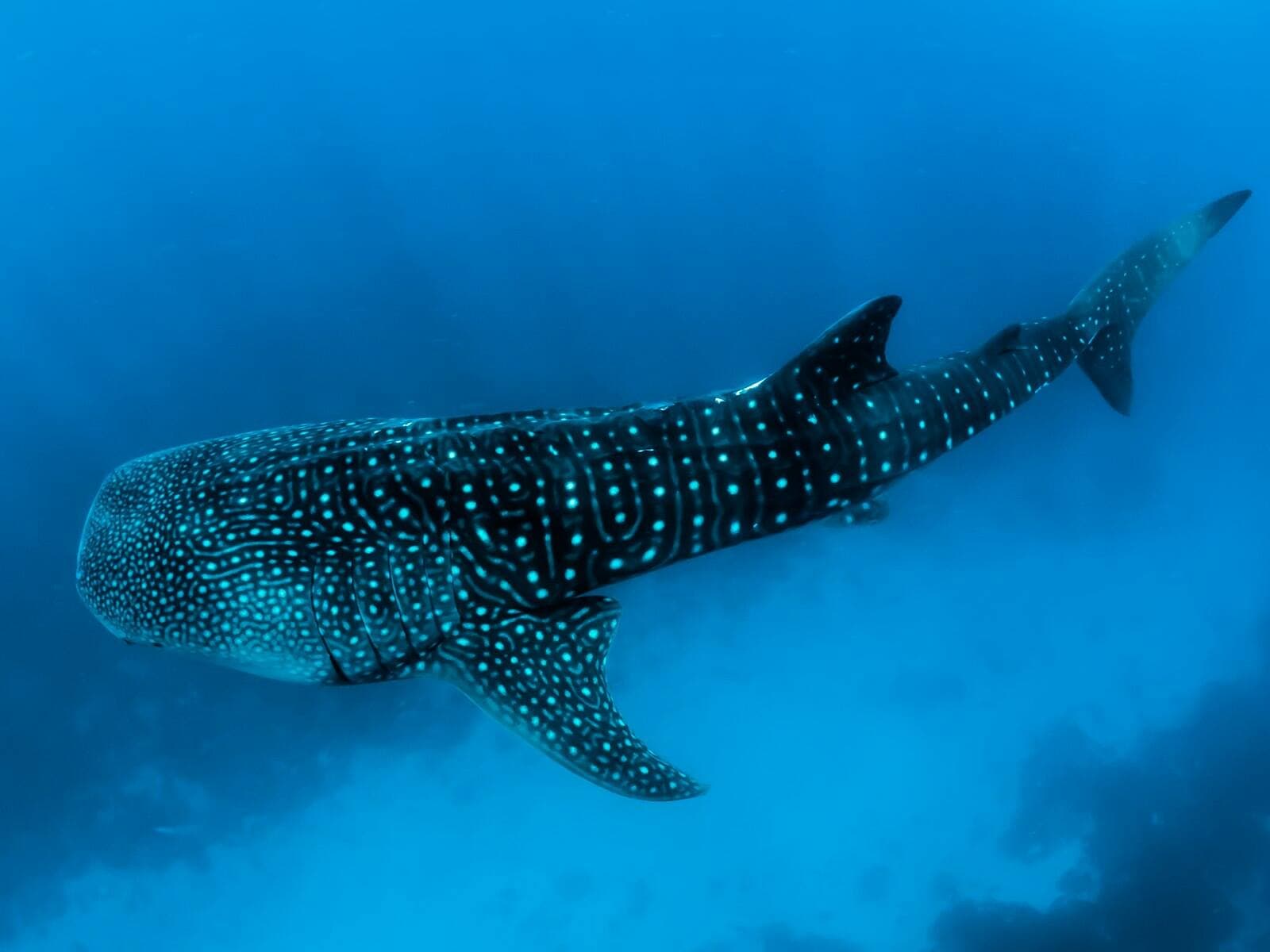
Most visitors come for the whale sharks, which gather off the reef from about March to July. Encounters are on licensed snorkel trips, with spotter planes finding the sharks. From about July to October, humpback whales migrate past, and some operators run in-water humpback swims. Manta rays are seen around Coral Bay, and there are dugongs and turtles in the lagoon. Scuba diving centres on Exmouth's Navy Pier, a small area under a working military pier packed with fish and invertebrates, and on the Muiron Islands just off the cape, plus the outer reef from Coral Bay.
The water is about 26–29°C in late summer and falls to about 21–23°C from July to September, when a 5 mm suit is sensible. January to March brings cyclone risk and strong winds can blow in spring and summer, so March to September is the main season.
Getting there and how you dive
Getting there
Fly from Perth to Learmonth (for Exmouth), about two hours. Coral Bay is about 150 km south of Exmouth by road.
Who it suits
Open Water is enough for most diving. Whale shark and humpback swims are snorkel trips and need no certification.
Dive sites
- Blizzard RidgeRidge at the Muiron Islands covered in soft coral, with turtles and schooling fish.
- LabyrinthMuiron Islands maze of gullies and overhangs; sharks, rays and turtles.
- DibleyMuiron Islands reef with hard and soft coral and plenty of reef fish.
- Lighthouse BayReef near the tip of the cape, dived from Exmouth when conditions allow.
- BundegiSheltered reef on the Exmouth Gulf side; easy shore dive and snorkel.
- Bill's BayCoral gardens straight off the beach at Coral Bay; snorkelling and easy dives.
- Turquoise BayBeach in Cape Range National Park with a drift snorkel over the reef; watch the current at the gap.
- Helga's TunnelsMaze of tunnels and caves off Lighthouse Bay; a green turtle cleaning station.
- The Cod Spot (South Muiron)Potato cod gather at this Muiron Islands site.
- The Keyhole (Muiron Islands)Swim-through and reef at the Muiron Islands.
- The Gap (Muiron Islands)Channel between North and South Muiron with current and pelagics.
- Asho's Gap (Coral Bay)Coral Bay site named after the skipper who found it; reef sharks and turtles.
- The Canyon (Coral Bay)Coral channel at 6–7 m, good for beginners.
- Gulliver's (Exmouth)Exmouth Gulf reef site.
What you'll see
Know the risks
- Cyclone season, roughly January to March, can stop boats
- Strong winds and chop in spring and summer
- Remote: the nearest chamber is far away and flights are limited
Plan the trip
- Dive shops
Where Ningaloo Reef dive centres are based and what to check before you book. Shop list in progress.
How to choose a dive shop - Dates and people
Post your dates and how many of you. Divers who know the boats and shops, or are going the same weeks, reply in the community.
Find divers / ask dates - Dive insurance
Most travel policies exclude scuba or cap the depth. Check yours covers diving before you go.
Dive accident cover from DAN ↗
Some of these links may earn us a commission at no cost to you. It never changes what we recommend. How this site is funded
Ask other divers
Questions
When is the best time to dive Ningaloo Reef?
March to September: whale sharks from about March to July, humpbacks from about July to October. Peak months on our calendar: April, May, June, July, August, September.
What is the water temperature in Ningaloo Reef?
About 26–29°C in late summer, falling to about 21–23°C from July to September. 5 mm in winter.
Can Open Water divers dive Ningaloo Reef?
Open Water is enough for most diving. Whale shark and humpback swims are snorkel trips and need no certification.
How strong is the current in Ningaloo Reef?
Tidal current at Navy Pier and the Muiron Islands; the lagoon is usually calm.
What should divers watch out for in Ningaloo Reef?
Cyclone season, roughly January to March, can stop boats. Strong winds and chop in spring and summer. Remote: the nearest chamber is far away and flights are limited.
Sources
- Whaleshark-N-Dive: Ningaloo Reef seasons
- Whaleshark-N-Dive: Ningaloo marine calendar
- Divernet: Diving Western Australia, Ningaloo to Albany
- Dive Adventures: Western Australia
- Ningaloo Reef sea temperature by month (seatemperature.info)
- Divernet: Ningaloo Reef dive guide
Last reviewed 2026-11. Where sources disagree we use the more conservative range.