Best time to dive Poor Knights Islands
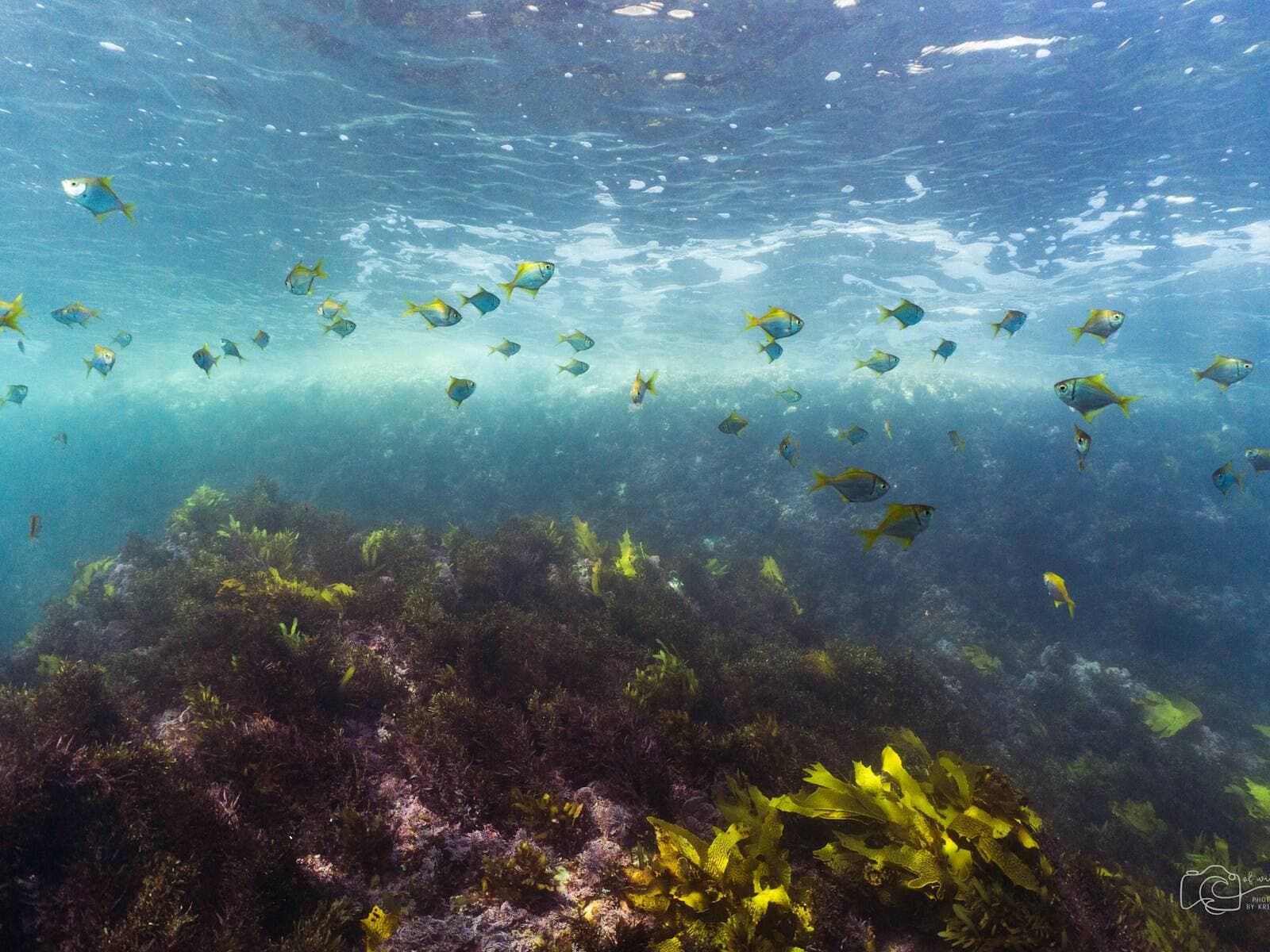
Arches, sea caves and kelp walls in one of New Zealand's oldest marine reserves, with subtropical fish carried south by a warm current.
At a glance
- Best months
- Diveable all year
- Water
- 14–23°CAbout 14–16°C in winter (July to September) and 20–23°C in late summer. 7 mm, or a drysuit in winterWetsuit month by month →
- Visibility
- 10–30 m
- Current
- ModerateUsually mild in the sheltered bays; some current at the arches and outer points
- Certification
- Open WaterMinimum Open Water
- How you dive
- Land-based
When to go
Diveable all year; December to April has the warmest water and calmest seas.
- JanuaryPeak seasonWater 20–22°CSome rain
Summer: warm water, stingrays, busy holiday season.
- FebruaryPeak seasonWater 21–23°CSome rain
Warmest water; subtropical fish. One of the best months.
- MarchPeak seasonWater 20–22°CSome rain
Warm and settled. A good month.
- AprilPeak seasonWater 19–21°CSome rain
Water still warm; quieter.
- MayGoodWater 17–19°CRainy
Cooling; good visibility on calm days.
- JuneGoodWater 16–17°CRainy
Winter begins; more wind and swell.
- JulyGoodWater 15–16°CRainy
Cold; 7 mm or drysuit. Clear water on calm days.
- AugustGoodWater 14–16°CRainy
Coolest water; fewer trips.
- SeptemberGoodWater 14–16°CSome rain
Cold; spring weather is changeable.
- OctoberGoodWater 15–17°CSome rain
Water starts to warm.
- NovemberGoodHeld at Good: cold water for hereWater 17–19°CSome rain
Warming; good conditions return.
- DecemberPeak seasonWater 19–21°CSome rain
Summer starts; calm and warm.
What makes each month
Each thing worth diving here is rated on its own, month by month: its own season first, then held back a step when the weather is poor or the water is unusually cold for this place. The calendar above takes the best of them. Cold only counts against a month when the highlight does not come with it, so a macro site is never judged by manta-and-visibility rules.
- Arches, caves and subtropical fish
Warmest water and calmest seas from December to April, with stingrays in summer; winter water is 14–16°C.
- Weather and sea
- Water °C212221201817161515161820
Cold for here
Overview
The Poor Knights Islands are the remains of ancient volcanoes about 23 km off the Tutukaka Coast in Northland, on New Zealand's North Island. The sea around them has been a marine reserve since 1981, and no fishing is allowed.
A warm current from the north brings subtropical fish that are rare elsewhere in New Zealand, so divers see them alongside temperate species, kelp, sponges and colourful invertebrates. The islands are full of arches and caves. Rikoriko Cave is one of the world's largest sea caves, and boats can motor inside. Northern Arch is a deep arch at the north end where schools of fish and, in summer, stingrays gather. Blue Maomao Arch is a shallower arch filled with blue maomao. Off Tutukaka, the navy ships HMNZS Tui and HMNZS Waikato were sunk as artificial reefs.
The water is about 14–16°C in winter and up to about 23°C in late summer, and visibility is often 20–30 m. Day trips run from Tutukaka with several operators.
Getting there and how you dive
Getting there
Fly to Whangārei or drive about two and a half hours north from Auckland to Tutukaka, where dive boats leave for the islands.
Who it suits
Open Water is enough for most sites. Northern Arch and the outer walls go deep, so watch your depth.
Dive sites
- Northern ArchDeep arch at the north end of Tawhiti Rahi with schooling fish and, in summer, stingrays; current at times.
- Blue Maomao ArchShallow arch filled with schools of blue maomao; one of the most photographed sites.
- Rikoriko CaveHuge sea cave on Aorangi; boats motor inside, and divers and snorkellers explore the entrance.
- Middle ArchArch between the main islands, usually sheltered, with scorpionfish, moray eels and sponges.
- Cream GardenWall covered in sponges, jewel anemones and invertebrates.
- HMNZS TuiFormer navy research ship sunk as an artificial reef off Tutukaka in 1999, at about 30 m.
- HMNZS WaikatoNavy frigate sunk as an artificial reef off Tutukaka in 2000, at about 30 m.
- Tie Dye Arch (The Pinnacles)Arch on the Pinnacles, covered in sponges and colourful encrusting life.
- Barren ArchArch on the northern side of the islands.
- Labrid ChannelChannel between the two main islands; Blue Maomao Arch lies here.
- Southern ArchArch at the south of Aorangi with schooling fish.
- SugarloafOne of the most consistent sites; stingrays, morays and a sea cave by the arch.
- Cleanerfish BayRocky kelp-forest bay.
- Ngaio RockRock with walls and kelp.
- Fred's PinnaclePinnacle off the islands; deeper dive.
- Landing Bay PinnaclePinnacle and Giant Staircase near Landing Bay.
- Bird RockRock with walls and schooling fish.
What you'll see
Know the risks
- Cold water for most of the year
- About an hour each way by boat in open ocean
- No landing on the islands: they are a nature reserve
Plan the trip
- Dive shops
Where Poor Knights Islands dive centres are based and what to check before you book. Shop list in progress.
How to choose a dive shop - Dates and people
Post your dates and how many of you. Divers who know the boats and shops, or are going the same weeks, reply in the community.
Find divers / ask dates - Dive insurance
Most travel policies exclude scuba or cap the depth. Check yours covers diving before you go.
Dive accident cover from DAN ↗
Some of these links may earn us a commission at no cost to you. It never changes what we recommend. How this site is funded
Ask other divers
Questions
When is the best time to dive Poor Knights Islands?
Diveable all year; December to April has the warmest water and calmest seas. Peak months on our calendar: January, February, March, April, December.
What is the water temperature in Poor Knights Islands?
About 14–16°C in winter (July to September) and 20–23°C in late summer. 7 mm, or a drysuit in winter.
Can Open Water divers dive Poor Knights Islands?
Open Water is enough for most sites. Northern Arch and the outer walls go deep, so watch your depth.
How strong is the current in Poor Knights Islands?
Usually mild in the sheltered bays; some current at the arches and outer points.
What should divers watch out for in Poor Knights Islands?
Cold water for most of the year. About an hour each way by boat in open ocean. No landing on the islands: they are a nature reserve.
Sources
- Divernet: The legendary Poor Knights Islands
- Seafriends: The Poor Knights Marine Reserve
- Tourism New Zealand: Poor Knights Islands
- Nigel Marsh Photography: Poor Knights Islands
- NZ Herald: Riches of Poor Knights Islands Marine Reserve explored
- Dive Site Directory: Poor Knights
Last reviewed 2026-11. Where sources disagree we use the more conservative range.