Best time to dive Roatán and the Bay Islands
Easy reef and wall diving close to shore, with Utila's whale sharks next door.

At a glance
- Best months
- March to May
- Water
- 26–30°CAbout 26°C in winter to 30°C in late summer; a 3 mm suit or a shortyWetsuit month by month →
- Visibility
- 10–30 m
- Current
- MildUsually light; some exposed walls have moderate current
- Certification
- Open WaterMinimum Open Water
- How you dive
- Land-based
When to go
March to May; diveable all year, but mid-October to February is rainier and less clear.
- JanuaryGoodWater 27°CRainy
Rainy season, and cold fronts (northers) can close north-side sites; operators move dives to the sheltered west and south.
- FebruaryGoodWater 26°CSome rain
Coolest water of the year. Rain eases through the month and visibility improves, though northers can still disrupt north-side dives.
- MarchPeak seasonWater 27°CDry
Dry season, with calmer seas and good visibility. Whale sharks are most often reported off Utila from now to April.
- AprilPeak seasonWater 27°CDry
Often the driest month, with calm seas and some of the best visibility of the year.
- MayPeak seasonWater 28°CDry
Still mostly dry, with warming water and good visibility. The last month before hurricane season.
- JuneGoodHeld at Good by the weatherWater 28–29°CSome rain
Hurricane season starts. The water is warm, seas are usually calm and showers become more frequent.
- JulyGoodHeld at Good by the weatherWater 28–29°CSome rain
Warm water and generally calm conditions, with afternoon showers and some hurricane risk.
- AugustGoodHeld at Good by the weatherWater 29–30°CSome rain
Among the warmest water of the year. Usually calm, with hurricane risk rising.
- SeptemberGoodHeld at Good by the weatherWater 29–30°CSome rain
Warm water and usually calm seas, but the peak of hurricane season and more rain.
- OctoberGoodWater 29–30°CRainy
Water still near its warmest, but heavy rain from mid-month can bring runoff and lower visibility.
- NovemberGoodWater 28°CRainy
One of the wettest months. Northers start, north-side sites can close and runoff lowers visibility.
- DecemberGoodWater 27–28°CRainy
Rain and cold fronts continue; dives often move to the sheltered west or south side when the north is rough.
What makes each month
Each thing worth diving here is rated on its own, month by month: its own season first, then held back a step when the weather is poor or the water is unusually cold for this place. The calendar above takes the best of them. Cold only counts against a month when the highlight does not come with it, so a macro site is never judged by manta-and-visibility rules.
- Walls and reefs
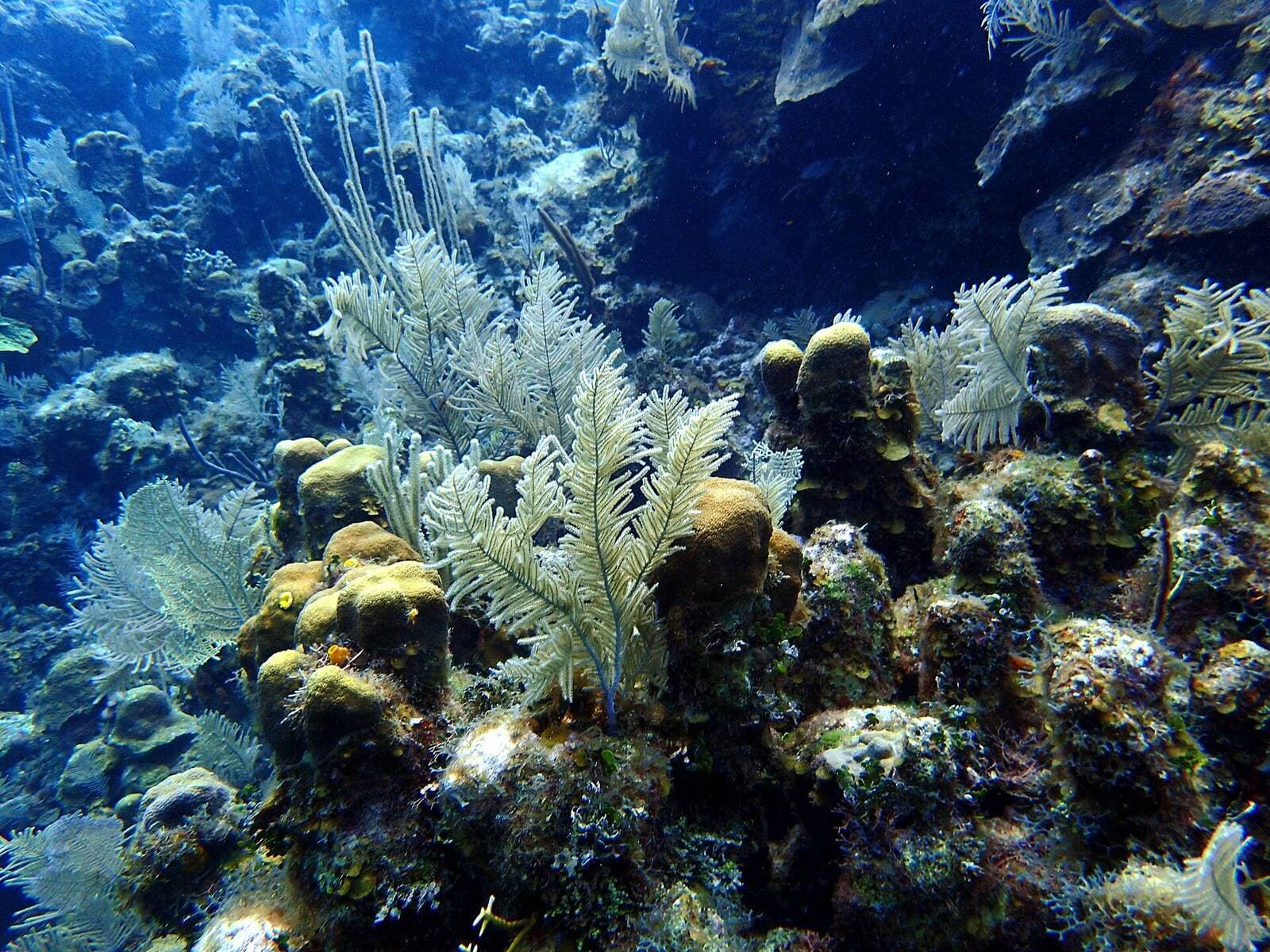
Dry with good visibility from March to May and usually calm through the summer; rain runoff lowers visibility from mid-October to February.
- Weather and sea
- Water °C272627272829293030302828
Overview
Roatán is the largest of the Bay Islands, off the north coast of Honduras on the southern end of the Mesoamerican Reef. The reef lies close to shore, so most dives are a short boat ride from West End, West Bay or Sandy Bay. Walls, canyons, swim-throughs and a few wrecks make up the diving, along with turtles, groupers, moray eels and plenty of reef fish.
Conditions are generally easy. Current is usually light, many sites are sheltered and the water is warm all year, so Roatán is a popular place to learn to dive and to build experience. The deeper sites, such as the El Aguila wreck at around 30 m and the more exposed walls, are better for Advanced divers. Much of the west end lies within a marine park, and divers pay a small park fee through their dive shop.
Roatán is diveable all year. The rainier months run from about mid-October to February, when runoff can reduce visibility, sometimes sharply. March to May is usually the driest and clearest period. The Atlantic hurricane season runs from June to November.
Utila, a smaller island to the west, is known for whale sharks, which can turn up in any month, with March to May often named as the best chance. Encounters are by snorkel only and are never guaranteed. Most divers base themselves in West End or West Bay on Roatán and dive with a local shop.
Getting there and how you dive
Getting there
Roatán's international airport (RTB) near Coxen Hole has nonstop flights from several US hubs, including Delta from Atlanta, and seasonal flights from Canada. From La Ceiba on the mainland it is a 20-minute flight or a ferry of about 1.5 hours. There are no direct flights from Europe, so Europeans usually connect in the US.
How you dive
Most diving is by boat, with rides of about 5 to 10 minutes from West End or West Bay to sites in the Roatán Marine Park. A typical day is a two-tank morning trip with an optional single-tank dive in the afternoon.
Wildlife seasons
- Whale sharks off Utila: seen in any month, most often February to April, with a second peak reported in autumn; snorkel encounters, never guaranteed
Who it suits
Open Water. Most reefs are shallow and sheltered; Advanced for the deeper wrecks and current sites.
Dive sites
- Mary's PlaceNarrow volcanic crevices and canyons in a wall; good light for photography, can be busy.
- El AguilaCargo ship sunk in 1997, lying at about 30 m off Sandy Bay next to a wall; groupers and moray eels. Advanced.
- West End WallWall at the island's western tip; a common place for bigger animals, sometimes with current.
- Spooky ChannelNarrow sand channel between reef walls from about 6 to 27 m; dim light and sea whips.
- Hole in the WallCrevice through the wall with sponges and reef fish.
- Prince Albert wreckFreighter wreck near Sandy Bay; easy depth.
- Bear's DenSwim-through and cave with silversides.
- Cara a CaraShark dive site off the south coast.
- Odyssey WreckLarge cargo ship sunk as an artificial reef off West Bay.
- Blue ChannelSand channel and reef near West End, good for training.
- Coco View WallWall off the CoCo View resort on the south side.
- Overheat ReefSloping reef near West End with turtles and coral.
- Black Hills (Utila)Seamount off Utila with schooling fish.
- Duppy Waters (Utila)North-side wall off Utila.
- Airport Caves (Utila)Caves and swim-throughs off the south of Utila.
- Moon Hole (Utila)South-side reef with lots of critters.
- Halliburton Wreck (Utila)Cargo ship sunk as an artificial reef at about 30 m.
- Jado Trader (Guanaja)Freighter on its side at about 33 m; one of the Caribbean's best wrecks.
What you'll see
| Animal | J | F | M | A | M | J | J | A | S | O | N | D |
|---|---|---|---|---|---|---|---|---|---|---|---|---|
| Whale sharkOff Utila, mostly snorkel encounters; seen in any month, most often February to April. | January: possible | February: best | March: best | April: best | May: possible | June: possible | July: possible | August: possible | September: possible | October: possible | November: possible | December: possible |
Know the risks
- Reduced visibility after heavy rain, mainly mid-October to February
- Hurricane season June to November
- Busy sites near the cruise ship and resort areas
Compare
Plan the trip
- Dive shops
5 dive centres and day boats at Roatán and the Bay Islands, where they are based and what to check before you book.
See Roatán and the Bay Islands dive shops - Dates and people
Post your dates and how many of you. Divers who know the boats and shops, or are going the same weeks, reply in the community.
Find divers / ask dates - Dive insurance
Most travel policies exclude scuba or cap the depth. Check yours covers diving before you go.
Dive accident cover from DAN ↗
Some of these links may earn us a commission at no cost to you. It never changes what we recommend. How this site is funded
Ask other divers
Questions
When is the best time to dive Roatán and the Bay Islands?
March to May; diveable all year, but mid-October to February is rainier and less clear. Peak months on our calendar: March, April, May.
What is the water temperature in Roatán and the Bay Islands?
About 26°C in winter to 30°C in late summer; a 3 mm suit or a shorty.
Can Open Water divers dive Roatán and the Bay Islands?
Open Water. Most reefs are shallow and sheltered; Advanced for the deeper wrecks and current sites.
How strong is the current in Roatán and the Bay Islands?
Usually light; some exposed walls have moderate current.
What should divers watch out for in Roatán and the Bay Islands?
Reduced visibility after heavy rain, mainly mid-October to February. Hurricane season June to November. Busy sites near the cruise ship and resort areas.
When is the best time to see marine life in Roatán and the Bay Islands?
Whale sharks off Utila: seen in any month, most often February to April, with a second peak reported in autumn; snorkel encounters, never guaranteed.
Sources
- Bluewater Dive Travel: Scuba diving in Roatán
- PADI Blog: Best dive sites in Honduras
- Frommer's: Scuba diving in Roatán
- Weather2Travel: Roatán weather by month
- Seatemperature.net: Roatán water temperature in August
- Lonely Planet: Best time to visit Honduras
- FlightsFrom: Direct flights from Roatán (RTB)
- Ferryscanner: La Ceiba to Roatán
- Reef Builders: Seven dive sites in Roatán
- Islaguru: Best time to visit Utila
- Scuba Diving: Bay Islands dive guide
Last reviewed 2026-10. Where sources disagree we use the more conservative range.