Best time to dive Tubbataha Reefs
A protected atoll in the middle of the Sulu Sea, open for three months a year.

At a glance
- Best months
- Mid-March to mid-June only
- Water
- 27–29°C3 mm wetsuitWetsuit month by month →
- Visibility
- 20–40 m
- Current
- ModerateModerate on the walls, stronger at some points
- Certification
- AdvancedMinimum Advanced
- How you dive
- Liveaboard
When to go
Mid-March to mid-June only; April and May are usually the calmest.
- JanuaryClosedSome rain
Park closed to diving; the open sea is too rough for the crossing.
- FebruaryClosedDry
Park closed; the season opens in mid-March.
- MarchGoodHeld at Good by the weatherWater 27–28°CDry
The season opens in mid-March. Early trips can still meet some swell.
- AprilPeak seasonWater 28–29°CDry
Usually among the calmest months, with clear, warm water.
- MayPeak seasonWater 28–29°CSome rain
Calm seas and the warmest water of the season. Trips fill months ahead.
- JuneGoodHeld at Good by the weatherWater 28–29°CRainy
The last trips run until mid-June, with weather becoming less predictable.
- JulyClosedRainy
Park closed to diving.
- AugustClosedRainy
Park closed to diving.
- SeptemberClosedRainy
Park closed to diving.
- OctoberClosedRainy
Park closed to diving.
- NovemberClosedSome rain
Park closed to diving.
- DecemberClosedSome rain
Park closed to diving.
What makes each month
Each thing worth diving here is rated on its own, month by month: its own season first, then held back a step when the weather is poor or the water is unusually cold for this place. The calendar above takes the best of them. Cold only counts against a month when the highlight does not come with it, so a macro site is never judged by manta-and-visibility rules.
- Walls, sharks and turtles
The park opens only from mid-March to mid-June; April and May are usually the calmest.
- Weather and sea
- Water °C––28292929––––––
Overview
Tubbataha Reefs Natural Park sits in the middle of the Sulu Sea, a long overnight crossing from Puerto Princesa on Palawan. It is a UNESCO World Heritage Site and one of the most strictly protected reefs in Asia, with walls of hard coral, reef sharks, turtles and big schools of fish.
The park is open to divers only from about mid-March to mid-June. Outside that window, monsoon winds make the crossing impractical. April and May usually have the calmest seas and the best visibility. Only a few liveaboards hold permits, so trips sell out well in advance.
Diving is on deep walls in open water, far from any help. Advanced certification and good experience are recommended.
Who it suits
Advanced Open Water recommended. Dives are on deep walls in open ocean, far from help.
Dive sites
- Shark AirportLarge cleaning station on a sloping terrace around 20 m; whitetip reef sharks resting on the reef.
- Amos RockWall with big groupers, snapper and Napoleon wrasse; hard and soft coral.
- Malayan WreckWreck at the North Atoll's southern tip; grey reef and whitetip sharks, hammerheads at times.
- Delsan WreckCleaning station near a wreck on the South Atoll; big fish and sharks.
- Jessie Beazley ReefSmall reef northwest of the atolls; sharks and branching coral. Current can be strong.
- Black RockReef with sharks and sea turtles.
- T-WallWall near the ranger station.
- Washing MachineCorner with strong and turbulent currents.
- Ranger StationReef near the ranger station.
- Seafan AlleyWall on the North Atoll lined with large gorgonians; pygmy seahorses on the fans.
- Staghorn PointSouthern tip of the South Atoll with dense staghorn coral; mantas are often seen.
- Ko-ok (South Atoll)Point on the South Atoll; reef sharks and sometimes hammerheads off the edge.
- Malayan WallWall on the edge of the North Atoll near the Malayan wreck; turtles and reef fish.
- South Atoll WallSteep wall dropping into deep blue on the South Atoll; sharks and turtles.
- Wall Street (North Atoll)North Atoll wall dive with sea fans and the chance of pelagics.
- Shark Airport RidgeRidge beside Shark Airport where whitetips lie on the sand.
What you'll see
| Animal | J | F | M | A | M | J | J | A | S | O | N | D |
|---|---|---|---|---|---|---|---|---|---|---|---|---|
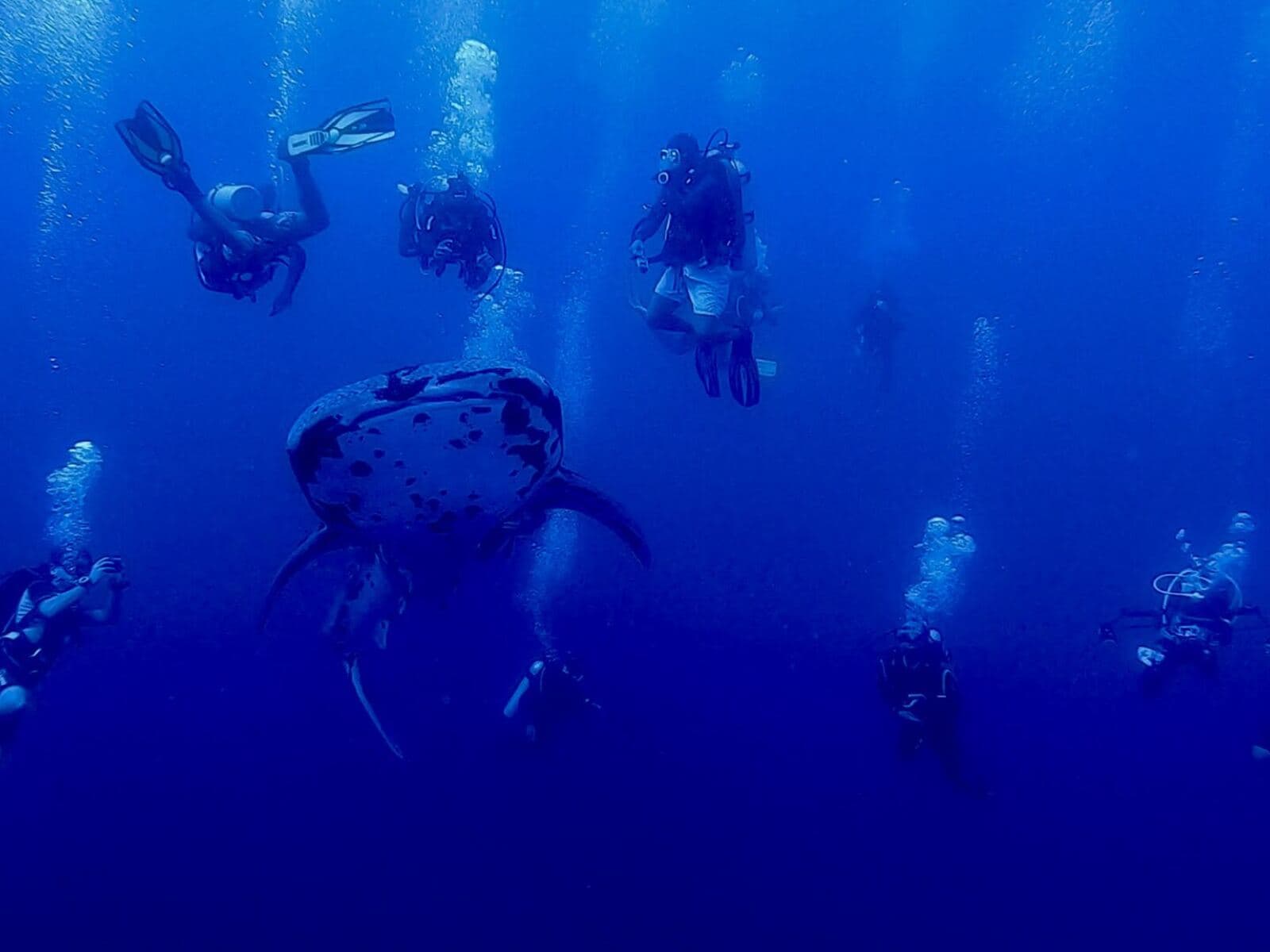
| Whale sharkOccasional, in the short March–June season. | January: not expected | February: not expected | March: possible | April: possible | May: possible | June: possible | July: not expected | August: not expected | September: not expected | October: not expected | November: not expected | December: not expected |
| Manta raysOccasional, in the March–June season. | January: not expected | February: not expected | March: possible | April: possible | May: possible | June: possible | July: not expected | August: not expected | September: not expected | October: not expected | November: not expected | December: not expected |
Know the risks
- Season lasts about three months and fills fast
- Long open-sea crossing
- No medical help nearby
Plan the trip
- Liveaboards
Tubbataha Reefs is reached by liveaboard only. 5 boats sail here; compare routes, nights and prices.
See the 5 Tubbataha Reefs boats - Dates and people
Post your dates and how many of you. Divers who know the boats and shops, or are going the same weeks, reply in the community.
Find divers / ask dates - Dive insurance
Remote sites and strong currents make evacuation costly. Check your policy covers diving to the depth you plan.
Dive accident cover from DAN ↗
Some of these links may earn us a commission at no cost to you. It never changes what we recommend. How this site is funded
Ask other divers
Questions
When is the best time to dive Tubbataha Reefs?
Mid-March to mid-June only; April and May are usually the calmest. Peak months on our calendar: April, May.
What is the water temperature in Tubbataha Reefs?
3 mm wetsuit.
Can Open Water divers dive Tubbataha Reefs?
Advanced Open Water recommended. Dives are on deep walls in open ocean, far from help.
How strong is the current in Tubbataha Reefs?
Moderate on the walls, stronger at some points.
What should divers watch out for in Tubbataha Reefs?
Season lasts about three months and fills fast. Long open-sea crossing. No medical help nearby.
Sources
- Dive The World: Tubbataha best time of year
- Liveaboard.com: Best time to dive in Tubbataha
- Bluewater Dive Travel: Tubbataha liveaboard guide
- Dive the World: Tubbataha dive sites
- Tubbataha Reef sea temperature in April (seatemperatures.net)
Last reviewed 2026-10. Where sources disagree we use the more conservative range.