Best time to dive Turks and Caicos
Walls that drop thousands of metres a short ride from shore, reef sharks, and humpback whales in winter.
At a glance
- Best months
- All year
- Water
- 24–29°CAbout 24–26°C from January to March and 28–29°C in late summer. 3–5 mmWetsuit month by month →
- Visibility
- 20–40 m
- Current
- MildUsually little current on the walls
- Certification
- Open WaterMinimum Open Water
- How you dive
- Land-based or liveaboard
When to go
All year; January to April for humpback whales; hurricane season June to November.
- JanuaryPeak seasonWater 24–26°CDry
Humpback season begins; northerly swells some days.
- FebruaryPeak seasonWater 24–25°CDry
Peak humpback season; coolest water.
- MarchPeak seasonWater 24–25°CDry
Humpbacks; calm on the west sides.
- AprilPeak seasonWater 25–26°CDry
Last humpbacks; water warms.
- MayPeak seasonWater 26–27°CDry
Calm and clear. A good month.
- JunePeak seasonWater 27–28°CSome rain
Hurricane season starts; usually calm.
- JulyPeak seasonWater 28–29°CSome rain
Warm and calm; storms possible.
- AugustGoodHeld at Good by the weatherWater 28–29°CRainy
Warmest water; hurricane risk rising.
- SeptemberGoodHeld at Good by the weatherWater 28–29°CRainy
Peak hurricane season.
- OctoberGoodHeld at Good by the weatherWater 28–29°CRainy
Hurricanes still possible; quiet.
- NovemberPeak seasonWater 27–28°CSome rain
Hurricane season ends; good diving returns.
- DecemberPeak seasonWater 25–27°CDry
Dry season; busy over the holidays.
What makes each month
Each thing worth diving here is rated on its own, month by month: its own season first, then held back a step when the weather is poor or the water is unusually cold for this place. The calendar above takes the best of them. Cold only counts against a month when the highlight does not come with it, so a macro site is never judged by manta-and-visibility rules.
- Walls and clear water
Walls and 30 m visibility all year, so the month is decided by the weather: hurricane season runs June to November, peaking in September.
- Weather and sea
- Water °C252525262728292929292826
Overview
The Turks and Caicos are a British Overseas Territory at the southern end of the Bahamas chain. The islands sit on shallow banks that end abruptly in walls dropping into very deep water, often within a few hundred metres of shore.
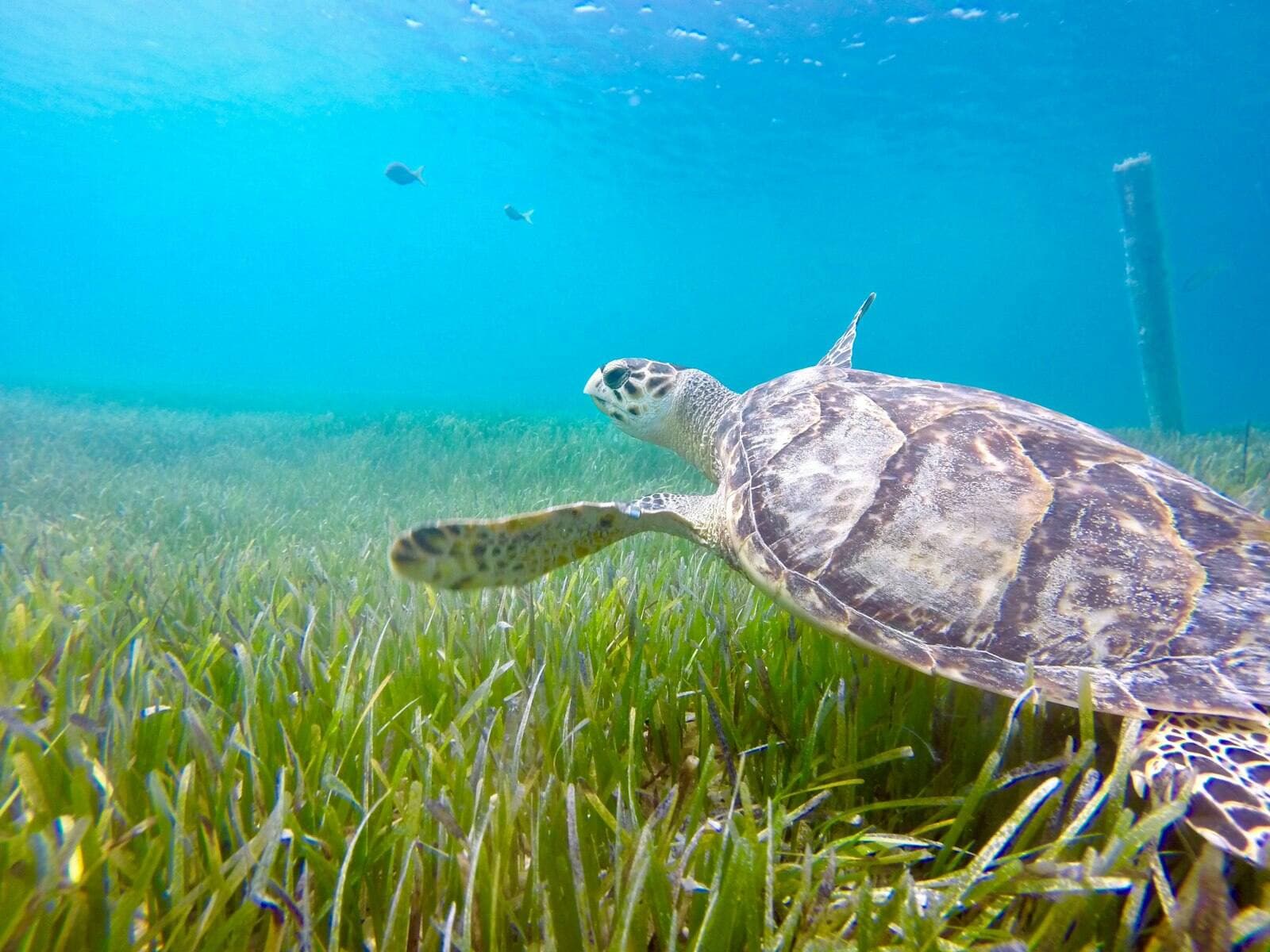
Most diving is from Providenciales, with boats to Northwest Point, West Caicos and French Cay, where walls, sharks, eagle rays and turtles are common. Grand Turk, the capital island, has a wall just off its west coast, reached in minutes from the dock, and Salt Cay is a quieter base. From about January to April humpback whales migrate through the Turks Island Passage, and licensed operators on Grand Turk and Salt Cay run whale-watching and in-water encounters. Liveaboards also run from Providenciales.
The water is about 24–29°C, and visibility is often 30 m. The diving is good all year; hurricane season runs from June to November.
Getting there and how you dive
Getting there
Fly to Providenciales, with direct flights from the US, Canada and London. Short flights connect Grand Turk and Salt Cay.
Who it suits
Open Water is enough for most diving. Walls begin at about 12–15 m and drop far beyond recreational depth, so watch your depth.
Dive sites
- Shark HotelWall at Northwest Point, Providenciales, where Caribbean reef sharks are often seen.
- AmphitheatreBowl-shaped wall section at Northwest Point with sponges and black coral.
- Eel GardenSand patch and reef off Grace Bay with garden eels and stingrays; easy.
- Elephant Ear CanyonWest Caicos wall known for very large elephant-ear sponges.
- Coral GardensGrand Turk reef and wall top with turtles and reef fish, close to shore.
- Black ForestGrand Turk wall with black coral trees.
- McDonald'sGrand Turk wall with a coral arch shaped like the famous golden arches.
- TunnelsGrand Turk wall with swim-throughs cutting into the reef.
- Salt Cay HumpbacksWaters off Salt Cay where humpback whales pass from about January to April; licensed encounters.
- Thunderdome (Northwest Point)Old dome structure on the sand; top night and macro dive.
- Rock Garden (West Caicos)Wall with coral heads and sponges.
- Spanish Anchor (West Caicos)Old ship's anchor embedded in coral in a swim-through on the wall edge.
- Gullies (West Caicos)Cuts, channels and overhangs with black coral trees.
- The Driveway (West Caicos)One of the most diverse sites in the islands.
- French CayRemote cay with walls; best known for shark sightings.
- Gorgonian Wall (Grand Turk)Grand Turk wall with big sea fans.
- The Library (Grand Turk)Wall site off the Grand Turk library.
- English Point (Grand Turk)Southern Grand Turk wall.
What you'll see
Know the risks
- Hurricane season, June to November
- Walls drop past 2,000 m: watch your depth
- Winter northerly swells can close north-facing sites
Plan the trip
- Liveaboards
Liveaboards reach sites day boats can't. Compare routes, nights and prices.
How to choose a liveaboard - Dive shops
Where Turks and Caicos dive centres are based and what to check before you book. Shop list in progress.
How to choose a dive shop - Dates and people
Post your dates and how many of you. Divers who know the boats and shops, or are going the same weeks, reply in the community.
Find divers / ask dates - Dive insurance
Most travel policies exclude scuba or cap the depth. Check yours covers diving before you go.
Dive accident cover from DAN ↗
Some of these links may earn us a commission at no cost to you. It never changes what we recommend. How this site is funded
Ask other divers
Questions
When is the best time to dive Turks and Caicos?
All year; January to April for humpback whales; hurricane season June to November. Peak months on our calendar: January, February, March, April, May, June, July, November, December.
What is the water temperature in Turks and Caicos?
About 24–26°C from January to March and 28–29°C in late summer. 3–5 mm.
Can Open Water divers dive Turks and Caicos?
Open Water is enough for most diving. Walls begin at about 12–15 m and drop far beyond recreational depth, so watch your depth.
How strong is the current in Turks and Caicos?
Usually little current on the walls.
What should divers watch out for in Turks and Caicos?
Hurricane season, June to November. Walls drop past 2,000 m: watch your depth. Winter northerly swells can close north-facing sites.
Sources
- Zublu: Turks and Caicos
- Undercurrent: Turks and Caicos chapbook 2024
- Caribbean Magazine: Best time to visit Turks and Caicos
- PADI Travel: Turks and Caicos liveaboards
- Dive The World: Turks and Caicos dive sites
Last reviewed 2026-11. Where sources disagree we use the more conservative range.