Best time to dive Wakatobi
Remote, healthy hard-coral reefs and walls with clear water and gentle current.
At a glance
- Best months
- March to May and September to December
- Water
- 25–30°CAbout 28–29°C from November to March, dropping to about 25–26°C in July and August. 3 mm most of the year, 5 mm in the cool monthsWetsuit month by month →
- Visibility
- 15–40 m
- Current
- ModerateMostly mild to moderate; some points and channels run stronger on big tides
- Certification
- Open WaterMinimum Open Water
- How you dive
- Land-based or liveaboard
When to go
March to May and September to December; July and August are cooler and windier.
- JanuaryGoodBest for: Hard coral and walls, Pygmy seahorses on the walls · Held at Good by the weatherWater 28–29°CRainy
Wet season with northwest winds; still good diving on the sheltered side.
- FebruaryGoodBest for: Hard coral and walls, Pygmy seahorses on the walls · Held at Good by the weatherWater 28–29°CRainy
Wet season. Warm water and few divers.
- MarchPeak seasonBest for: Hard coral and walls, Pygmy seahorses on the wallsWater 28–29°CSome rain
Rains ease and seas calm. One of the best months.
- AprilPeak seasonBest for: Hard coral and walls, Pygmy seahorses on the wallsWater 28–29°CSome rain
Calm seas between the monsoons and clear water. One of the best months.
- MayPeak seasonBest for: Hard coral and walls, Pygmy seahorses on the wallsWater 27–29°CDry
Calm and dry; good visibility.
- JuneGoodBest for: Hard coral and walls, Pygmy seahorses on the walls · Held at Good by the weatherWater 26–28°CDry
Southeast trade winds start to pick up; the water begins to cool.
- JulyGoodBest for: Hard coral and walls, Pygmy seahorses on the walls · Held at Good by the weatherWater 25–27°CDry
Cooler water and windy, choppy crossings. Fish spawning brings big numbers of fish.
- AugustGoodBest for: Hard coral and walls, Pygmy seahorses on the walls · Held at Good by the weatherWater 25–27°CDry
Coolest month. Many divers wear 5 mm; some days are rough.
- SeptemberPeak seasonBest for: Hard coral and walls, Pygmy seahorses on the wallsWater 26–28°CDry
Winds drop and the water warms again. A good month.
- OctoberPeak seasonBest for: Hard coral and walls, Pygmy seahorses on the wallsWater 27–29°CDry
Calm, warm and clear. One of the best months.
- NovemberPeak seasonBest for: Hard coral and walls, Pygmy seahorses on the wallsWater 28–29°CSome rain
Still calm before the wet season. One of the best months.
- DecemberGoodBest for: Hard coral and walls, Pygmy seahorses on the walls · Held at Good by the weatherWater 28–29°CRainy
Wet season starts; diving is still good on most days.
What makes each month
Each thing worth diving here is rated on its own, month by month: its own season first, then held back a step when the weather is poor or the water is unusually cold for this place. The calendar above takes the best of them. Cold only counts against a month when the highlight does not come with it, so a macro site is never judged by manta-and-visibility rules.
- Hard coral and walls
Calm and clear between the monsoons, March to May and September to November; July and August are cooler and windier, with big fish spawning.
- Pygmy seahorses on the walls
Macro on the house reef all year.
- Weather and sea
- Water °C292929292827262627282929
Overview
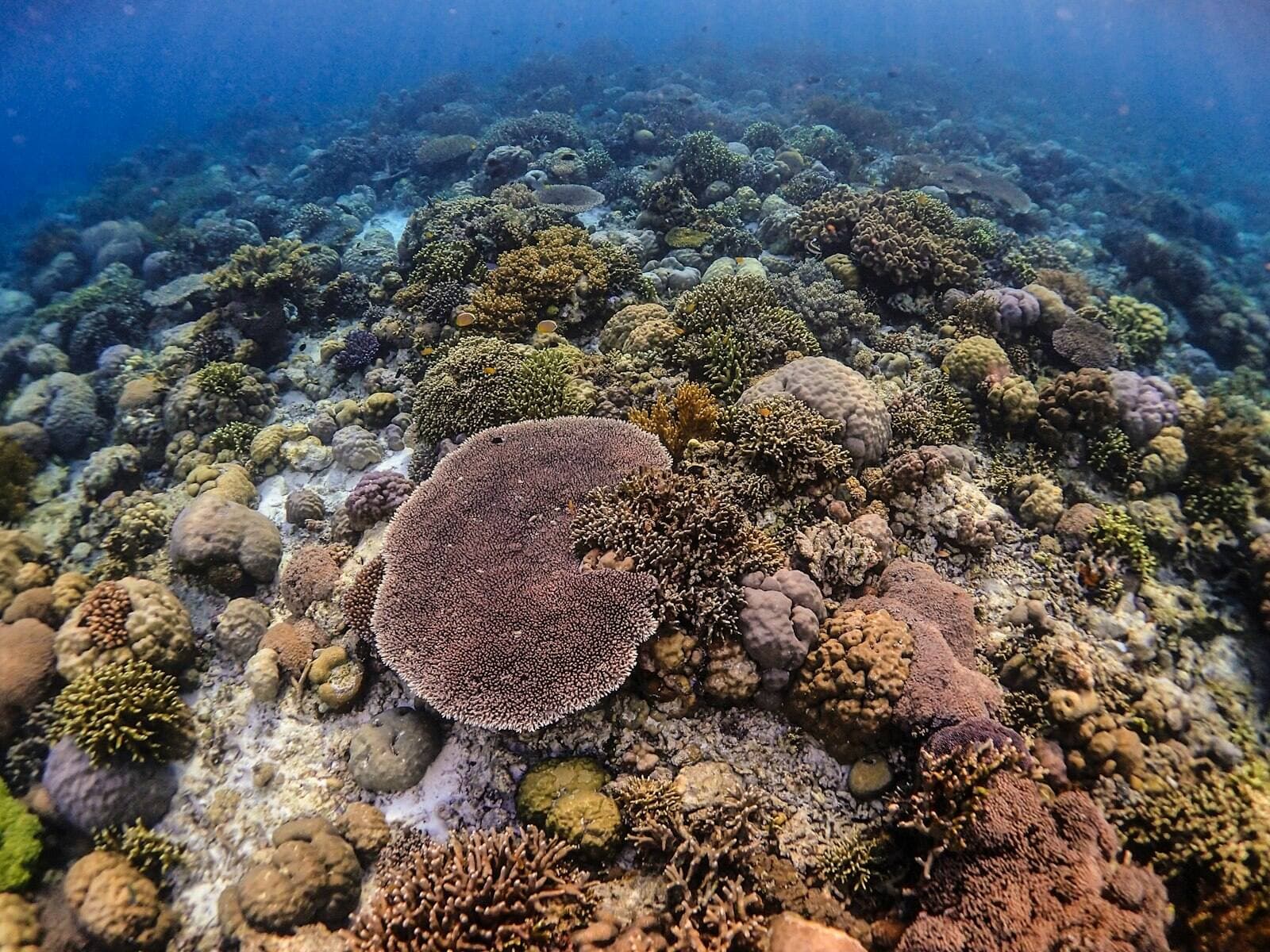
Wakatobi is a national park and marine reserve in Southeast Sulawesi, named after its four main islands: Wangi-Wangi, Kaledupa, Tomia and Binongko. Its reefs are among the healthiest in Indonesia, with dense hard coral, sea fans and walls dropping into deep blue water.
This is relaxed, easy-going diving. Most sites are sloping reefs, walls and pinnacles with mild or moderate current, and the visibility is usually 20 m or better. Macro photographers look for pygmy seahorses, ornate ghost pipefish and nudibranchs; big-animal sightings are less common than in Komodo or Raja Ampat. Wakatobi Dive Resort on Onemobaa and a few smaller operators on Wangi-Wangi and Tomia dive the reefs, and some liveaboards include Wakatobi on Banda Sea routes.
The water is about 28–29°C from November to March and cools to about 25–26°C in July and August, when the southeast trade winds also bring choppier seas. March to May and September to December are generally the most comfortable months.
Getting there and how you dive
Getting there
Fly to Kendari or Makassar, then on to Wangi-Wangi (Matahora). Wakatobi Dive Resort runs its own charter flight from Bali to its airstrip on Tomia.
Who it suits
Open Water is enough for most sites, including the house reefs. Walls drop deep, so good buoyancy matters more than certification level.
Dive sites
- House ReefWakatobi Resort's famous shore dive: a long reef from the shallows to a wall, good day and night.
- RomaPinnacle rising to about 2 m from deep water, covered in coral and reef fish. Easy and very popular.
- CornucopiaWall with overhangs and sea fans; turtles and macro life.
- BladeLong, narrow seamount rising from a deeper ridge; schooling fish and soft coral.
- Teluk MayaSheltered bay with a coral slope; one of the most varied sites for small creatures.
- Lorenzo's DelightReef slope and wall known for pygmy seahorses on the sea fans.
- Turkey BeachGentle slope near Tomia where turtles feed; good for a relaxed dive.
- Mari MabukSteep wall off Tomia with big sea fans and occasional pelagic fish in the blue.
- MagnificaPinnacle with magnificent anemones and table corals; cuttlefish at times.
- Table Coral CitySeamount whose upper slopes are covered in table and branching corals.
- The ZooOne of the fishiest reefs in the area; dense schools and reef life.
- Dunia Baru"New world": a coral-dense reef platform with sand patches and big bommies.
- Waiti RidgeClosest site to the resort; a ridge leading to a pinnacle with pavona coral and feather stars.
- Fan 38Walls of sea fans, split into east and west dives; about 18 m average.
What you'll see
Know the risks
- Remote: long transfers and limited medical help; the nearest chamber is far away
- Cooler water and stronger southeast winds in July and August
- Deep walls: watch depth and no-decompression time
Plan the trip
- Liveaboards
Liveaboards reach sites day boats can't. Compare routes, nights and prices.
How to choose a liveaboard - Dive shops
Where Wakatobi dive centres are based and what to check before you book. Shop list in progress.
How to choose a dive shop - Dates and people
Post your dates and how many of you. Divers who know the boats and shops, or are going the same weeks, reply in the community.
Find divers / ask dates - Dive insurance
Most travel policies exclude scuba or cap the depth. Check yours covers diving before you go.
Dive accident cover from DAN ↗
Some of these links may earn us a commission at no cost to you. It never changes what we recommend. How this site is funded
Ask other divers
Questions
When is the best time to dive Wakatobi?
March to May and September to December; July and August are cooler and windier. Peak months on our calendar: March, April, May, September, October, November.
What is the water temperature in Wakatobi?
About 28–29°C from November to March, dropping to about 25–26°C in July and August. 3 mm most of the year, 5 mm in the cool months.
Can Open Water divers dive Wakatobi?
Open Water is enough for most sites, including the house reefs. Walls drop deep, so good buoyancy matters more than certification level.
How strong is the current in Wakatobi?
Mostly mild to moderate; some points and channels run stronger on big tides.
What should divers watch out for in Wakatobi?
Remote: long transfers and limited medical help; the nearest chamber is far away. Cooler water and stronger southeast winds in July and August. Deep walls: watch depth and no-decompression time.
Sources
- Wakatobi Dive Resort: Diving seasons
- Swisscontact: Wakatobi destination brochure
- Bluewater Dive Travel: Scuba diving in Wakatobi National Park
- Divernet: 10 top Wakatobi dive sites
- Original Diving: Best time to dive in Wakatobi
Last reviewed 2026-11. Where sources disagree we use the more conservative range.