Cocos Island
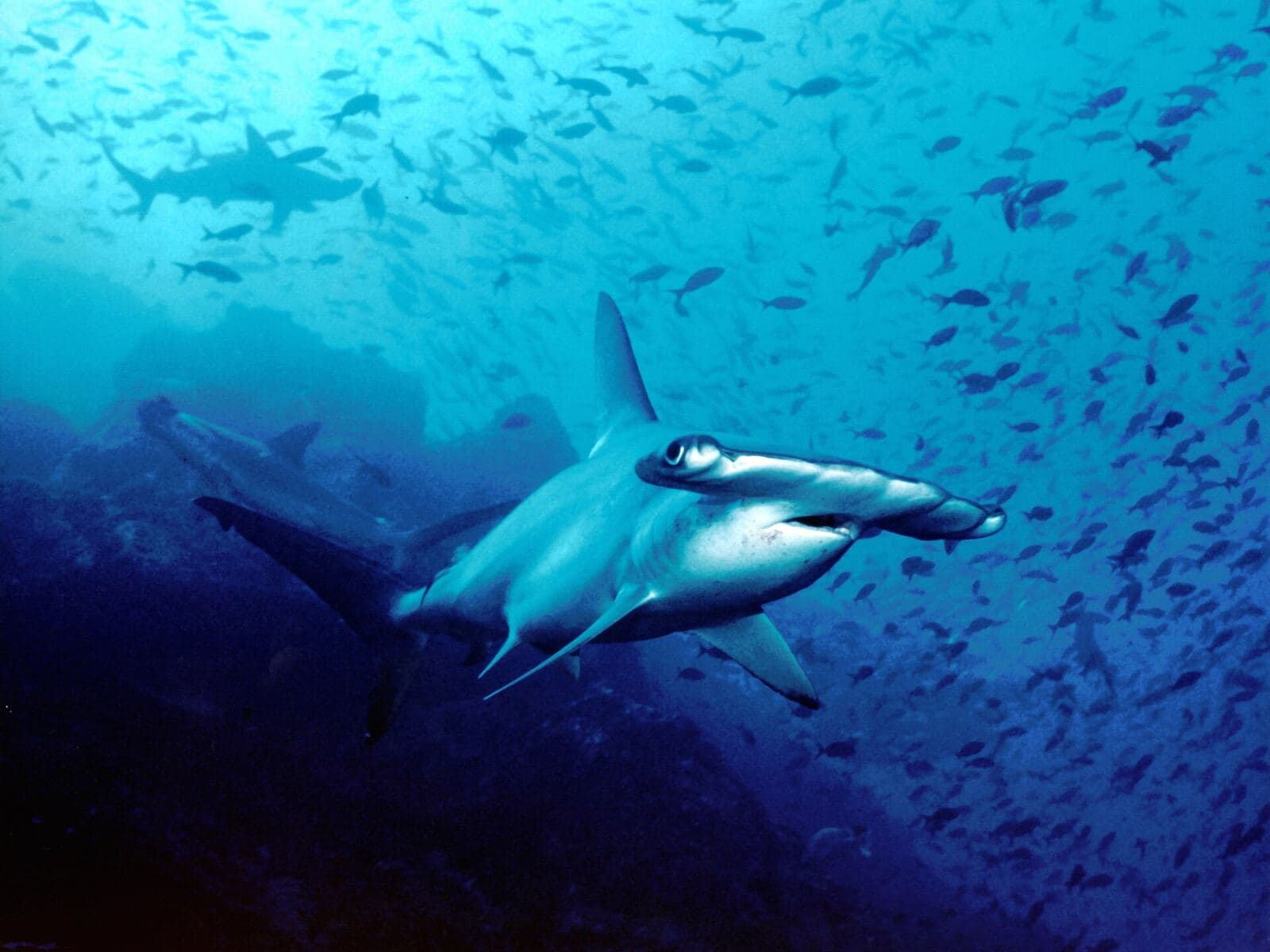
Schools of scalloped hammerheads at seamounts a 36-hour sail from the mainland.

At a glance
- Best months
- June to November for the biggest hammerhead schools
- Water
- 20–28°CSurface about 25–28°C; thermoclines can drop to around 20°C or lower. A 5 mm suit with hood is common
- Visibility
- 10–30 m
- Current
- StrongStrong, with surge; open-water descents and blue-water drifts
- Certification
- AdvancedMinimum Advanced
- How you dive
- Liveaboard
When to go
June to November for the biggest hammerhead schools (rougher, lower visibility); December to May is calmer and clearer.
Overview
Cocos Island lies in the eastern Pacific about 530 km southwest of mainland Costa Rica. It is a national park and a UNESCO World Heritage Site, with fishing banned in the surrounding waters. Underwater it is best known for large schools of scalloped hammerhead sharks, along with whitetip reef sharks, silky sharks, eagle rays, marbled rays and dense schools of jacks.
There is no way to visit except by liveaboard. Boats sail from Puntarenas and the crossing takes around 36 hours each way, so trips usually last 7 to 10 nights with several full days of diving. Only a small number of licensed operators work here, and park fees are added to the trip price.
These are serious dives. Most sites are rocky pinnacles and seamounts rather than coral reefs, current is often strong, surge is common and thermoclines can be cold. Divers hold onto rock at cleaning stations to watch the sharks and then drift off into blue water. Operators usually ask for Advanced Open Water and around 50 logged dives, and dive accident insurance is required.
Diving runs all year. The wet season from about June to November tends to bring the largest hammerhead schools but also rougher crossings and lower visibility. December to May is usually calmer and clearer, with hammerheads still seen in smaller groups. Check the dates and requirements with your operator, and plan around the remoteness, since medical help is far away.
Who it suits
Advanced Open Water with experience in current and open water. Operators often ask for around 50 logged dives.
Dive sites
- Bajo AlcyoneOffshore seamount with hammerhead schools, jacks and tuna; deep and in strong current. Experienced divers.
- Dirty RockVolcanic boulders and pinnacles; hammerheads at cleaning stations, a little more sheltered.
- Dos Amigos GrandeLarge rock with an arch that hammerheads, whitetips and eagle rays swim through.
- ManuelitaIslet off the northeast coast; hammerheads on the deep side, a calmer coral garden inshore.
What you'll see
Know the risks
- Strong current and surge
- Cold thermoclines
- About 36 hours by sea from Puntarenas; evacuation takes a long time
- Rough crossings, especially in the wet season
Sources
- Liveaboard.com: Best time to dive in Cocos Island
- Dive The World: Best times and conditions for scuba diving Cocos Island
- Dive The World: Cocos Island National Park
- Visit Centroamérica: Isla del Coco National Park
Last reviewed 2026-10. Where sources disagree we use the more conservative range.